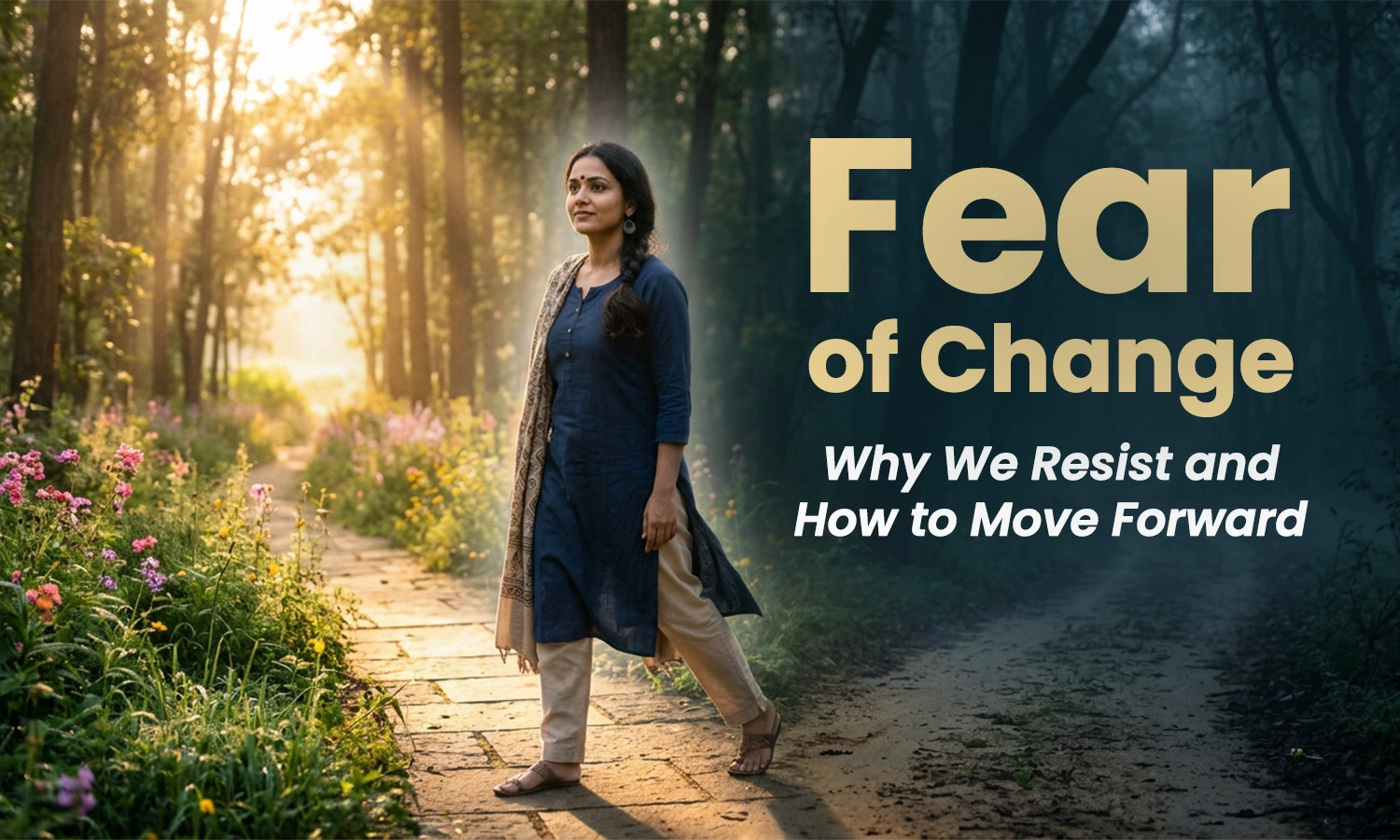
If the thought of doing something new makes your stomach tighten, you are not broken. You are human. The fear of change is wired into the brain as a survival tool. Your mind prefers the familiar because the familiar has kept you alive so far. The problem begins when this protective instinct stops you from growing. This article looks at where the fear of change comes from, why your brain treats new paths as danger, and how to move forward without pretending the fear does not exist.
Where the Fear of Change Really Comes From
Your brain spends most of its time on autopilot, following routines it has built over years. Any disruption to that pattern sends panic signals through the nervous system. This is the root of the fear of change. It is not weakness, it is biology trying to keep you safe inside your comfort zone.
There is also a fear of the new way of thinking itself, because the brain is simply not used to it. Recognising this is liberating. The discomfort you feel is a signal that you are leaving familiar ground, not proof that you are making a mistake.
Fear of Uncertainty and the Trap of Old Beliefs
People spend an estimated ninety five percent of their time replaying the past and worrying about future uncertainties. This constant rehearsal feeds the fear of uncertainty and keeps you stuck. Curiously, research shows that when people are challenged with strong evidence against their beliefs, many become even more rigid rather than changing.
Consider a diet that promises weight loss but asks you to give up carbohydrates. Many people become defensive and decide the plan is not for them, even when the evidence is clear. This emotional resistance is a normal brain response, and naming it is the first step to softening it.
Why the Comfort Zone Feels Safe but Keeps You Small
Being stuck in your own beliefs is like a trap that slowly forms a negative emotional whirlpool. You grow skeptical of everything and fearful of what happens if a new approach does not work. The comfort zone offers short term relief and long term stagnation.
Humans have survived through the ages by adapting, which is the core of evolution. Those who refuse to adapt struggle to thrive. Staying inside the comfort zone may feel protective, but it quietly narrows your options and dulls your ability to spot opportunities.
Overcoming Fear With Calculated Risks
Overcoming fear does not mean erasing it. Fear is an essential part of survival, but you cannot let it run the show. Accepting fear allows you to take calculated risks and move one small step at a time. You do not have to leap. You only have to begin.
Treat the fear of failure as information rather than a verdict. Set a goal you can review weekly, and forgive yourself for the slow days instead of quitting. This gentle, structured approach reduces change anxiety because the brain learns that the new behaviour is safe.
Turning Emotional Resistance Into Momentum
When you let go of old blocks and resentments, new energy enters your system. That energy feels like curiosity and even excitement, and it comes with fresh opportunities. The willingness to be open is what dissolves emotional resistance over time.
The fear of change will not vanish completely, and it should not. A healthy amount of fear keeps you thoughtful. The aim is to stop letting the fear of change make your decisions, so that you can act with courage and clear eyes.
Fear of Failure and the Fear of Change Often Travel Together
Behind much of the fear of change sits a quieter fear of failure. We avoid the new path not because it is dangerous, but because we are afraid of looking foolish or falling short. Naming this distinction helps, because the fear of failure shrinks when you treat mistakes as part of learning rather than as verdicts on your worth.
Research on mindset shows the brain forms deeper connections when you engage with errors instead of avoiding them. Seen this way, the fear of change loses some of its power, because every attempt, successful or not, is teaching your brain something useful.
How to Reduce Change Anxiety With Small Experiments
You do not have to overhaul your life to move past the fear of change. Run small experiments instead. Choose one tiny new action, try it for a week, and observe what happens. Small experiments lower anxiety because they feel safe to the brain.
Set a goal you can review weekly and forgive yourself for the slow days. Each completed experiment is evidence that leaving the comfort zone did not harm you, and that evidence steadily reduces emotional resistance over time.
When Fear Is Useful and When It Is Not
Fear is an essential part of survival, and a healthy amount keeps you thoughtful and careful. The aim is never to erase it. The aim is to stop the fear of change from making your decisions for you.
As the writer Maya Angelou suggested, if you cannot change a situation, you can change your attitude toward it. That reframing is the heart of overcoming fear. You acknowledge the fear of uncertainty, then choose your next step with clear eyes rather than letting fear choose for you.
A Realistic Timeline for Working Through Fear of Change
Fear does not disappear overnight, and it does not need to. The goal is to keep moving while the fear settles. Expect the first week of any new effort to feel uncomfortable, the first month to feel uneven, and the second month to feel more natural as your brain forms new pathways. If you treat the discomfort as a normal part of the process rather than a warning to stop, the fear of change slowly loses its grip and your confidence to adapt grows.
FAQs
A strong fear of change is normal, because the brain prefers the familiar and treats uncertainty as risk. This fear of uncertainty once kept people safe, so your comfort zone feels protective even when it holds you back. Awareness is the first step to overcoming fear.
Overcoming fear works best in small steps. Take one calculated risk, let your brain see that you handled it, then take the next. Each success reduces change anxiety and slowly loosens the emotional resistance that keeps you stuck.
Fear of change and change anxiety often overlap, since both involve worry about an uncertain outcome. A little fear is useful because it sharpens focus, but when fear of uncertainty stops you from acting, gentle, gradual exposure helps you move forward.
Leave your comfort zone in small doses rather than giant leaps. Pick one manageable challenge, expect some discomfort, and treat any fear of failure as feedback. This steady approach reduces emotional resistance while building real confidence.
Working through the fear of change is easier with steady, judgment free support. If you would like guidance as you take your next step, visit https://coachingwithgeeta.com/book-a-session/ to learn more and book a session.