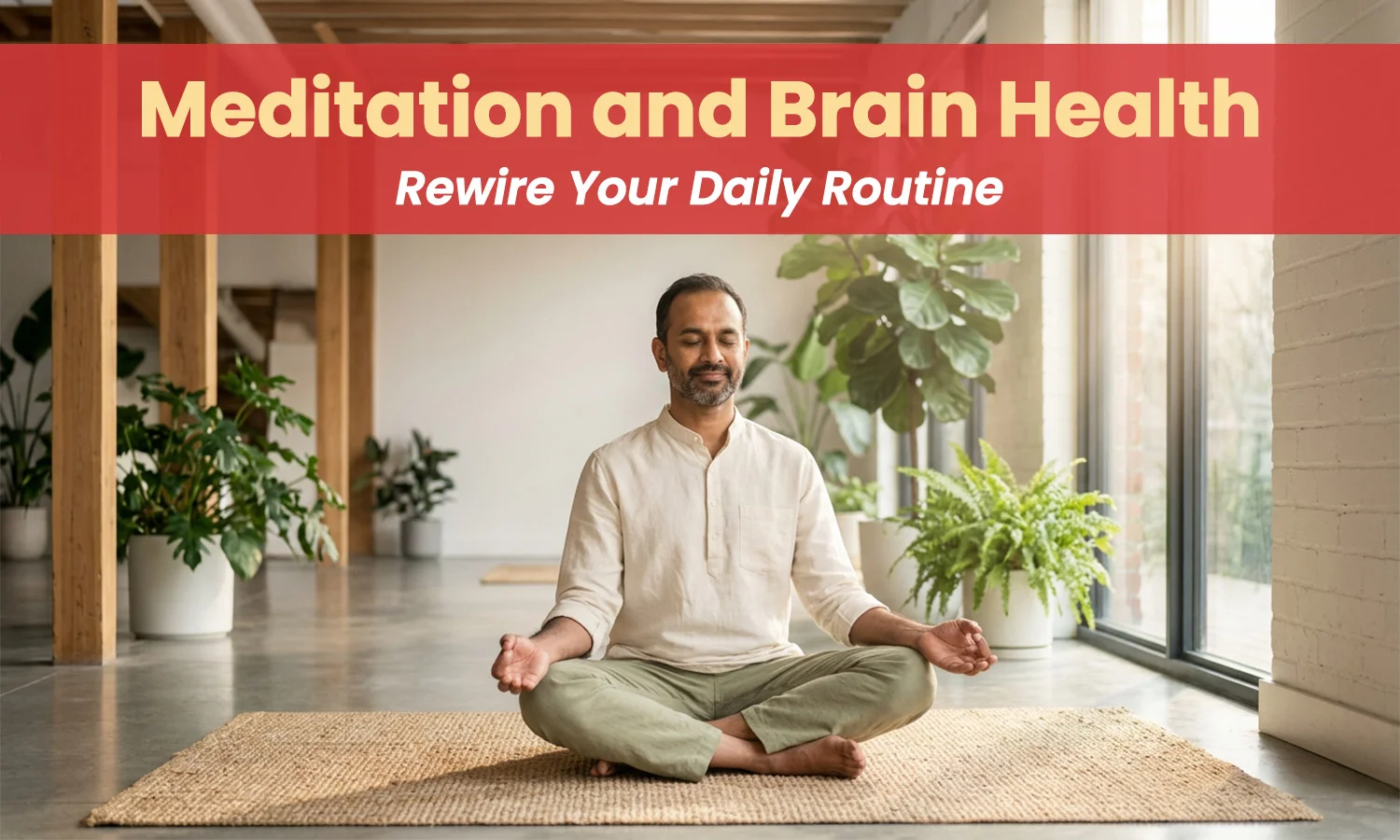
Meditation is often imagined as something mystical, reserved for hermits and gurus sitting cross legged on a mountain. That picture keeps many people from a practice that could genuinely protect their minds. The truth is far more practical. Meditation and brain health are closely linked, and the basic technique is simple enough for anyone to learn. This article explains how meditation and brain health connect, what the science says, and how to start without any special equipment or beliefs.
Meditation and Brain Health: Simpler Than You Think
Meditation does not require a special posture or a quiet temple. The act of slowing your breath and observing your thoughts come and go is a form of meditation in itself. You can practice it in a chair, with your back as straight as possible.
This accessibility matters, because meditation and brain health benefits come from consistency, not perfection. Guided meditation, with the many apps now available, makes it even easier to begin and to stay on track.
How Stress Harms the Brain
Chronic stress is hard on the brain. Researchers have linked sustained high cortisol to a smaller hippocampus, the region central to memory, and to a faster decline in people with Alzheimer’s disease. Stress also promotes high blood pressure and unhealthy cholesterol.
This is why stress relief is not a luxury. Protecting the brain from constant stress supports mental wellness today and helps guard cognition for the years ahead. Meditation and brain health work together precisely here.
The Calm Mind Advantage and Focus Improvement
A calm mind is a clearer mind. When you reduce stress, you gain time and energy, and problems that once felt overwhelming start to look like opportunities. This is one of the most underrated meditation benefits.
Regular practice also supports focus improvement. Deep, controlled breathing, often used in meditation, has been shown to improve working memory, the short term memory you use to hold and work with information. A calm mind simply performs better.
Meditation Benefits Backed by Neuroscience
Researchers at Northwestern University, led by Christina Zelano, found that the rhythm of breathing creates electrical activity in the amygdala, hippocampus, and olfactory cortex. These limbic regions govern emotion, memory, and learning.
Since slow, nasal breathing sits at the heart of meditation, these findings help explain the meditation benefits people report for mood and recall. Meditation and brain health are not vague ideas, they rest on measurable biology.
Build a Routine for Lasting Mental Wellness
You can pair meditation with brain gym activities such as Sudoku and memory games to keep the mind active. Combining mindful living with these challenges keeps your brain young and able to learn well into later life.
Start small with guided meditation, protect your stress relief time, and stay consistent. Over weeks and months, meditation and brain health reinforce each other, giving you a calm mind today and stronger mental wellness for the future.
How Often Should You Meditate?
Consistency matters more than length. Around ten minutes in the morning and ten minutes in the evening is a practical target for meditation and brain health. Short, regular sessions train the mind more effectively than rare long ones.
Treat the practice like brushing your teeth, a small daily act of care. Over weeks, this steady rhythm builds a calm mind and supports the focus improvement that makes the rest of your day easier.
Guided Meditation Versus Silent Practice
Beginners often find guided meditation easier, because a voice gives the mind something to follow. The many apps available make this simple to start, which removes the guesswork that stops people early.
As you grow more comfortable, you may prefer silent practice, simply observing your breath and thoughts. Both paths deliver meditation benefits. Choose whichever keeps you consistent, since consistency is what protects mental wellness.
Pairing Meditation With Brain Gym Activities
Meditation works well alongside mental challenges. Brain gym activities such as Sudoku, memory games, and puzzles that improve hand and eye coordination keep the mind active and engaged.
Combining mindful living with these challenges, supported by deep breathing, keeps the brain young and able to learn. Together they form a routine for meditation and brain health that protects memory and supports a calm mind well into later life.
What to Expect in Your First Month of Practice
Many people give up on meditation because they expect instant calm and then feel they are doing it wrong when their mind keeps wandering. A wandering mind is not failure. Noticing that your attention has drifted and gently returning it is the actual practice, and each return is a small act of focus improvement. Over a month of short daily sessions, these returns add up to a steadier, calmer mind.
Meditation and brain health are linked through this repeated training. By lowering stress, regular practice helps protect the brain regions involved in memory and learning. In the first week you may simply notice you are less reactive. By the third or fourth week, many people report better sleep and a clearer head during the day, which are practical meditation benefits rather than vague promises.
Keep the bar low so the habit survives. Five to ten minutes a day, done consistently, supports mental wellness far more than an occasional long session. A calm mind is built through frequency, not intensity, and that is good news for anyone with a busy schedule.
Frequently Asked
Meditation and brain health are linked through stress reduction. By lowering stress, regular practice helps protect brain regions tied to memory and learning. The meditation benefits include a calmer mind, better focus improvement, and stronger mental wellness over time.
Consistency matters more than length. Five to ten minutes daily supports mental wellness more than an occasional long session. With regular practice, the meditation benefits, including stress relief and a calm mind, build gradually over a few weeks.
Neither is better for everyone. Guided meditation helps beginners because the instructions hold your attention, while silent practice suits those who prefer space. Both support meditation and brain health, so choose what keeps you consistent.
Yes. Returning your wandering attention during practice is itself focus improvement, and slow, mindful living calms the nervous system for real stress relief. Over time this builds a calm mind and supports overall mental wellness
Take the Next Step
Building a meditation practice for brain health is easier with steady guidance. If you would like support creating a routine that lasts, visit https://coachingwithgeeta.com/book-a-session/ to learn more and book a session. This article is for general information and is not a substitute for medical advice.