
Overview
What are cognitive distortions? They indicate automatic, inaccurate thinking habits that make situations feel worse than they are. Common cognitive distortion examples include all-or-nothing thinking, mind reading, and catastrophizing, all part of wider negative thinking patterns. Left unchecked, these toxic thinking patterns can deepen pessimistic thinking and repetitive negative thoughts. Naming them clearly is the first step toward breaking negative thinking patterns for good.
Defining the Thinking Traps
“What are cognitive distortions?” is a question that comes up often in Coach Geeta’s coaching sessions, especially with clients who feel stuck in the same mental spirals. Cognitive distortions are automatic thought habits that distort reality, usually making a situation seem more threatening, permanent, or personal than it actually is.
These patterns are not a sign of weakness. They are learned habits, often built up over years of stress, criticism, or uncertainty, and they can be unlearned with the same consistency they were formed with.
What Are the Different Cognitive Distortions
What are the different cognitive distortions that show up most often in daily life? A few of the most common include the following.
- All-or-nothing thinking, where a situation is seen as either a total success or a total failure
- Mind reading, which is assuming you know what someone else is thinking without evidence
- Catastrophizing, which means expecting the worst possible outcome from a minor setback
- Overgeneralization, where a person treats one disappointing event as proof of a permanent pattern
- Emotional reasoning, which is believing something is true simply because it feels true
Cognitive Distortion Examples From Everyday Life
Concrete cognitive distortion examples make these patterns easier to spot. A missed reply to a message might trigger the thought “they are upset with me,” which is mind reading. A single mistake at work might trigger “I always mess things up,” which is overgeneralization. A delayed decision might trigger “if I choose wrong, everything will fall apart,” which is catastrophizing.
Coach Geeta often asks clients to write down the exact thought as it appears, then match it against these categories. This small shift, from reacting to observing, creates space between the thought and the emotional response it usually triggers.
Understanding Pessimistic Thinking
Pessimistic thinking meaning, in simple terms, is the tendency to expect negative outcomes as the default, even without clear evidence. It often overlaps with several cognitive distortions at once, particularly catastrophizing and overgeneralization, and it can quietly shape decisions around career, relationships, and personal growth.
Repetitive Negative Thoughts and Toxic Patterns
Repetitive negative thoughts are the natural result of unaddressed cognitive distortions. When the same distorted thought repeats without challenge, it becomes familiar, and the mind starts treating familiarity as truth. Over time, this can harden into toxic thinking patterns that affect confidence, relationships, and overall well-being.
Negative thinking patterns are rarely isolated to one area of life. A person who catastrophizes at work often catastrophizes at home too, since the underlying habit, not the specific situation, is what drives the response.
Examples of Negative Thinking Patterns in Relationships and Work
Examples of negative thinking patterns often appear in subtle ways, such as assuming a partner’s short reply means anger, or assuming a manager’s silence means disappointment. These interpretations feel automatic and convincing, yet they are rarely checked against the actual facts of the situation.
Breaking Negative Thinking Patterns
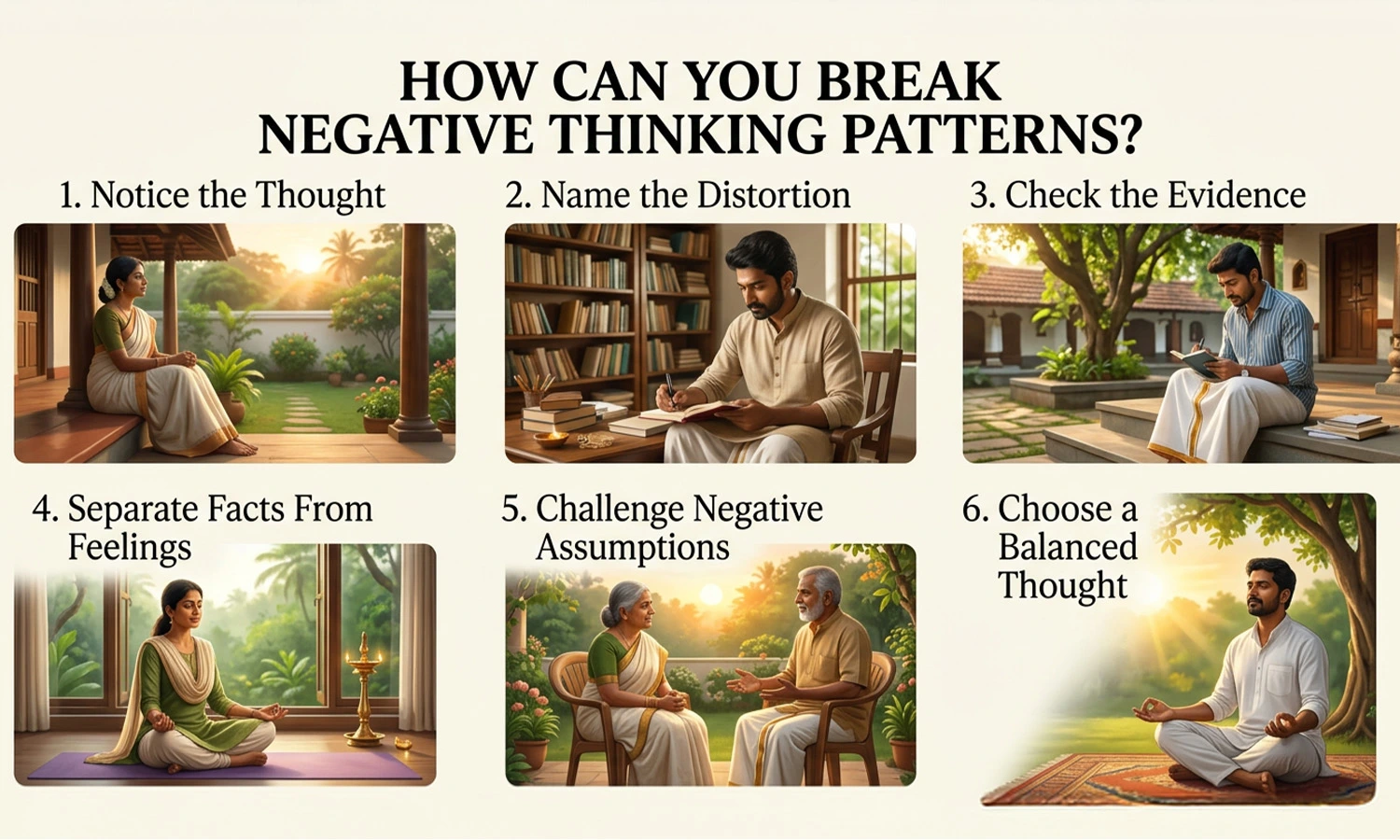
Breaking negative thinking patterns starts with naming the distortion the moment it appears, then asking a simple, grounding question: What evidence actually supports this thought? Coach Geeta’s ontological coaching approach builds this skill gradually, helping clients replace automatic reactions with intentional, evidence-based responses.
Her book, “The Game of Change,” includes practical exercises for identifying personal thought patterns, making it a useful companion for readers who want to work through these habits at their own pace, alongside guided coaching support when deeper change is needed. For more practical strategies to reduce workplace negativity and create a healthier, more positive work environment, read Coach Geeta’s 7 tips to minimize workplace negativity.
Key Takeaways
- What are cognitive distortions? They come down to automatic thought habits that distort how a situation truly looks.
- Common cognitive distortion examples include mind reading, catastrophizing, and all-or-nothing thinking.
- Repetitive negative thoughts often signal an unaddressed distortion rather than an accurate read of reality.
- Negative thinking patterns tend to repeat across different areas of life, not just one situation.
- Breaking negative thinking patterns begins with naming the thought and checking it against real evidence.
Replacing Cognitive Distortions With Calmer Thinking
If your mind keeps reaching for the worst possible interpretation of ordinary situations, you can learn to catch and change that habit. Coach Geeta’s coaching sessions help clients identify their own cognitive distortions and replace them with clearer, calmer thinking. Read “The Game of Change” or connect with Coach Geeta directly to start building steadier thought patterns today.
FAQs
What are cognitive distortions in simple terms?
They are automatic thinking habits that make a situation seem more negative, permanent, or personal than the facts actually support, and understanding what are cognitive distortions is often the first step toward calmer thinking.
How can I tell if I have toxic thinking patterns?
If you frequently expect the worst outcome, assume others are upset with you without evidence, or treat single mistakes as permanent flaws, these are common signs of toxic thinking patterns worth examining.
What is the fastest way to start breaking negative thinking patterns?
Write the exact thought down as it appears, then ask what concrete evidence supports it. This small practice is often enough to begin breaking negative thinking patterns consistently.
Is pessimistic thinking the same as depression?
Not necessarily. Pessimistic thinking meaning refers to a thinking style, while depression is a broader emotional state, though the two can overlap and reinforce each other over time.