What is the fear of attachment called?
The fear of attachment is commonly described in psychology as avoidant attachment or fearful-avoidant attachment. In attachment theory, these patterns develop when emotional closeness is felt to be unsafe or unpredictable. As a result, the mind learns to protect itself by creating distance from intimacy.
It may be referred to as avoidant attachment, fear of intimacy, or even a fear of attachment phobia when it becomes intense and starts affecting daily life. In some cases, it is also linked to the fear of falling in love, where emotional closeness triggers anxiety rather than comfort.
This pattern can also overlap with a broader fear of people or emotional vulnerability. It is one of the common types of fear that develops from past experiences, especially when trust or safety was once broken.
Why Getting Close Feels Unsafe for Some People
For many individuals, the fear of attachment is not a conscious decision. It is often a learned response formed during early relationships. If closeness once led to rejection, criticism, or emotional pain, the brain starts associating intimacy with danger.
This can create a push-pull pattern in relationships. You may crave connection but suddenly feel uncomfortable or overwhelmed when someone gets too close. This internal conflict is a classic sign of fear of attachment in relationships, for example, like the fear of falling in love.
You might feel tense, restless, or emotionally numb when intimacy increases. These reactions are rooted in past emotional experiences and general fear responses stored in the nervous system.
Fear of Attachment vs Independence: Understanding the Difference
It is easy to confuse independence with the fear of attachment because both can look similar on the surface. In both cases, a person may prefer spending time alone, making their own decisions, and relying on themselves. The real difference lies in the intention behind these behaviours.
The fear of attachment, however, comes from self-protection. Closeness may feel unsafe, so distance becomes a way to avoid emotional pain.
This difference is most visible in relationships:
| Feature | Healthy Independence | Fear of Attachment |
|---|---|---|
| Commitment | Open to deep connection | Feels trapped as closeness increases |
| Intimacy | Comfortable sharing emotions | Shuts down after vulnerable moments |
| Support | Accepts help when needed | Avoids depending on others |
Understanding this difference is the first step toward building healthier, more secure relationships.
The Fastest Way to Change Attachment Fear: Awareness First
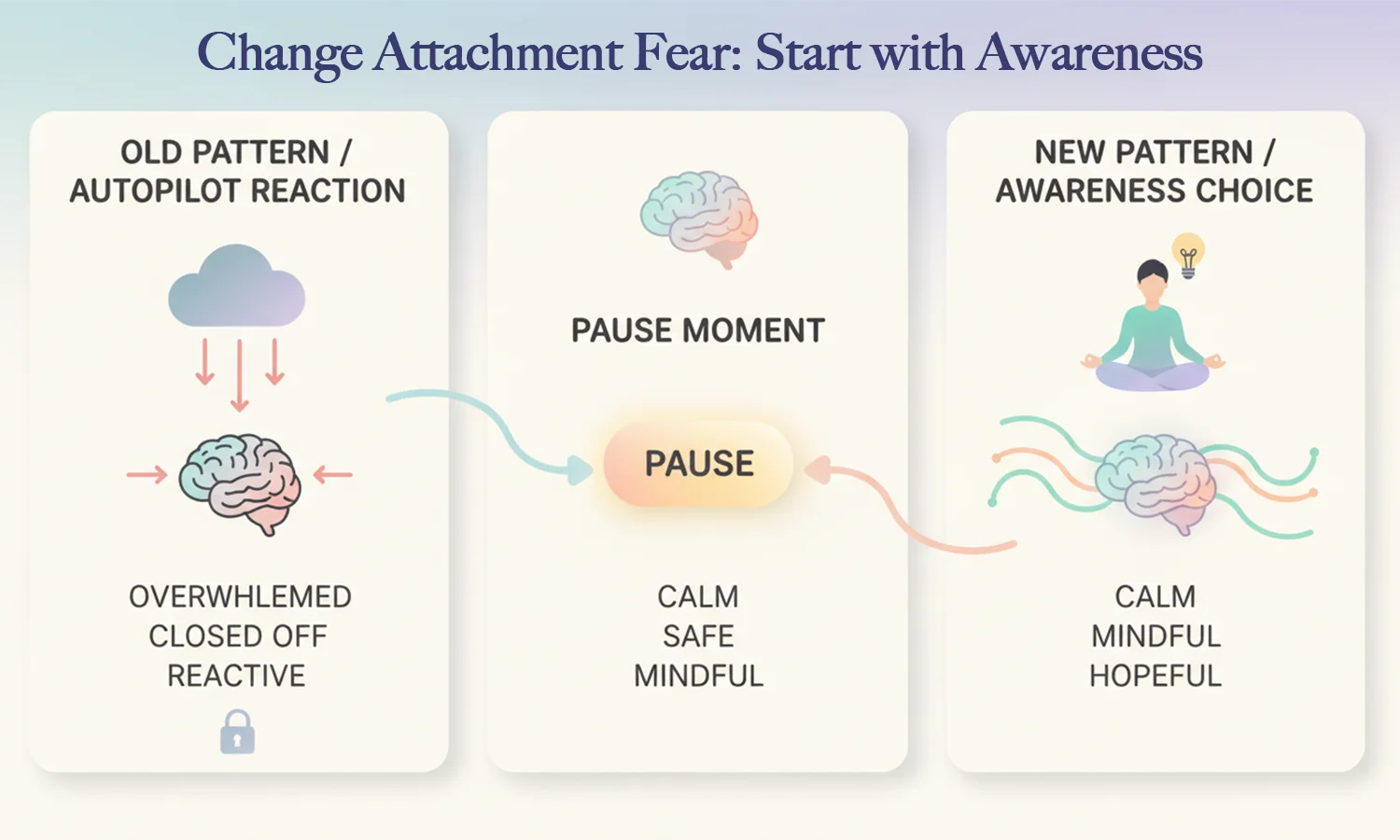
The fastest shift in the fear of attachment begins with awareness. Most attachment patterns operate on autopilot. The brain reacts before you consciously understand what is happening.
When you notice the urge to withdraw, you can pause and say, “This is my attachment fear showing up.” This small moment of awareness gives you the power to choose a different response.
Instead of running away or shutting down, you can stay present for a few extra seconds. Over time, these small choices create new emotional patterns. This is how people begin overcoming fear of failure, emotional closeness, and other deep-rooted anxieties.
Creating Healthy Attachment While Staying True to Yourself
Healthy attachment does not mean losing your independence. It means moving from isolation to interdependence, where two people support each other while still maintaining their individuality.
Start with clear boundaries. Instead of disappearing when you feel overwhelmed, communicate your needs. For example, you can say, “I care about this relationship, but I need some quiet time to recharge.” This keeps the connection intact while protecting your space.
Another important step is maintaining your own identity. Continue your hobbies, friendships, and personal goals.
Conclusion
The fear of attachment is not a weakness or a permanent part of who you are. It is often a protective pattern that is formed to keep you safe. Coaching with Geeta, you can access practical tools, emotional healing techniques, and personalized sessions designed to help you feel safe in closeness without losing yourself.
FAQs
It is where emotional closeness triggers anxiety instead of comfort. It often develops from past experiences of rejection, loss, or emotional inconsistency. Over time, the mind learns to protect itself by avoiding deep emotional bonds.
Not exactly. Commitment issues often involve uncertainty about long-term decisions, while the fear of attachment is more about emotional closeness. Someone may want a relationship but still feel anxious about vulnerability, which creates distance.
Start with self-awareness and emotional regulation. Notice your triggers, communicate your needs calmly, and build a stable routine that gives you a sense of security.
Practice honest communication, maintain personal boundaries, and seek support if needed. With time and consistent effort, your nervous system can learn that closeness does not have to mean danger.