The fear of rejection can affect many areas of life—from relationships to career choices. It can make you hesitate to express your thoughts, avoid opportunities, or stay silent even when something matters to you. This feeling is strong because it is linked to the natural human need for acceptance and belonging.
Understanding this response is the first step toward overcoming it. When you learn how it works, you can begin to make small shifts in your thinking and behaviour.
What Is Fear of Rejection and Why Does It Hurt So Much?
This experience is the worry about being ignored, abandoned, or not accepted by others. Some people refer to it as rejection sensitivity or social fear, especially when it becomes a persistent pattern.
Rejection hurts deeply because humans are wired for connection. In early human societies, being rejected by a group could threaten survival. Because of this, the brain still reacts strongly when someone says “no.”
That is why rejection in love, friendships, or work situations can feel deeply personal, even when it is simply a matter of a mismatch.
The Hidden Link Between Rejection and Self-Worth
The fear of rejection is often closely tied to self-worth. When your confidence depends heavily on others’ opinions, rejection feels like a personal failure rather than a simple mismatch.
People who struggle with low self-esteem may interpret even small setbacks as proof that they are not good enough. This creates a cycle:
- Fear of rejection leads to avoidance.
- Avoidance reduces opportunities for success.
- Lack of success reinforces the fear.
Breaking this cycle starts with separating your identity from other people’s reactions.
5 Tips That Work Well to Overcome the Fear of Rejection
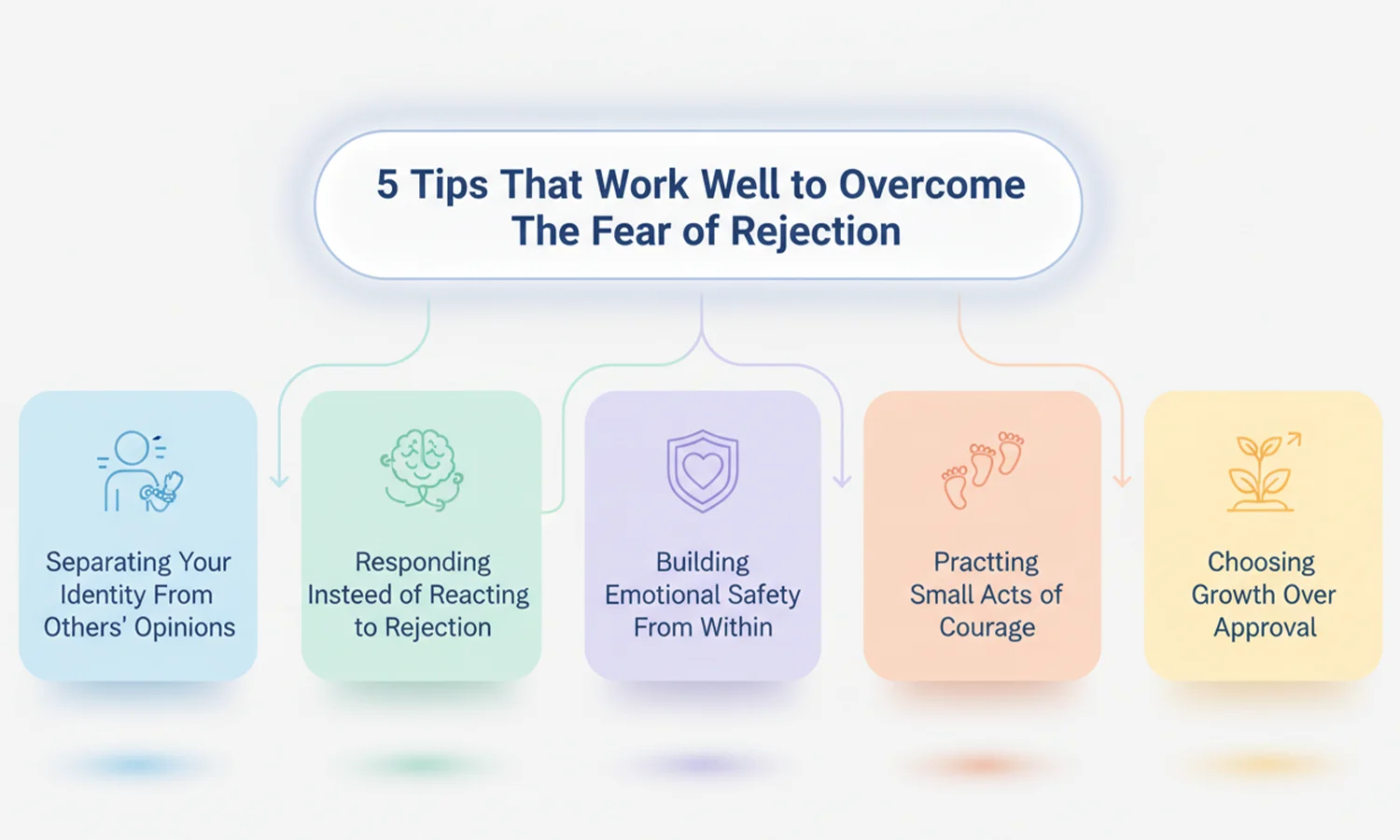
Tip 1: Separating Your Identity From Others’ Opinions
One of the fastest ways to reduce this fear is to stop tying your worth to other people’s approval. A rejection usually reflects a mismatch in needs, timing, or preferences—not your value as a person.
Instead of thinking, “I am not good enough,” reframe the situation as, “This was not the right fit.” This small mental shift protects your self-esteem.
Tip 2: Responding Instead of Reacting to Rejection
Rejection often triggers an emotional reaction. Instead of reacting immediately, pause and give yourself time to process the situation.
Take a few deep breaths and remind yourself that this feeling will pass. When you respond calmly instead of reacting impulsively, you maintain your dignity and confidence.
Tip 3: Building Emotional Safety From Within
If your sense of safety depends on others’ approval, the fear of rejection will always feel strong. Building emotional security within yourself is essential.
Focus on your personal values, strengths, and achievements. When you feel confident about who you are, rejection loses its power over you.
Tip 4: Practising Small Acts of Courage
Confidence grows through action. Instead of avoiding rejection, start with small, low-risk situations.
For example:
- Ask a simple question in a meeting.
- Start a short conversation with someone new.
- Share your opinion in a group discussion.
These small actions help reduce anxiety and build resilience over time.
Tip 5: Choosing Growth Over Approval
When approval becomes your main goal, rejection feels like failure. But when growth becomes your focus, rejection becomes a learning experience.
Ask yourself:
- What did I learn from this experience?
- What can I improve next time?
This shift helps you move forward with more confidence.
Choosing Self-Worth Over the Fear of Rejection
Overcoming the fear of rejection begins with choosing self-worth over approval. When you stop relying on others to define your value, rejection loses its emotional intensity.
Focus on building a strong internal foundation—one based on your values, strengths, and personal growth. The more secure you feel within yourself, the less power rejection holds over your decisions.
If this fear is holding you back from relationships, opportunities, or self-expression, guided support can make a meaningful difference. Through coaching with Geeta, you can learn practical techniques to build self-worth, handle rejection calmly, and move forward with confidence.
Key Takeaways
- The fear of rejection is linked to our need for belonging and acceptance.
- It often develops when self-worth depends on others’ opinions.
- Small acts of courage help reduce the fear over time.
- Emotional safety must come from within, not external approval.
- Growth-focused thinking makes rejection easier to handle.
FAQs
The fear of rejection is called rejection sensitivity or social fear when it becomes intense and persistent.
Yes, it can develop from early experiences such as criticism, neglect, or inconsistent emotional support.
You may fear rejection because your self-worth is tied to others’ opinions, or because of past experiences that made rejection feel painful or unsafe.
Start by separating your self-worth from others’ opinions, practising small acts of courage, and focusing on personal growth instead of approval.