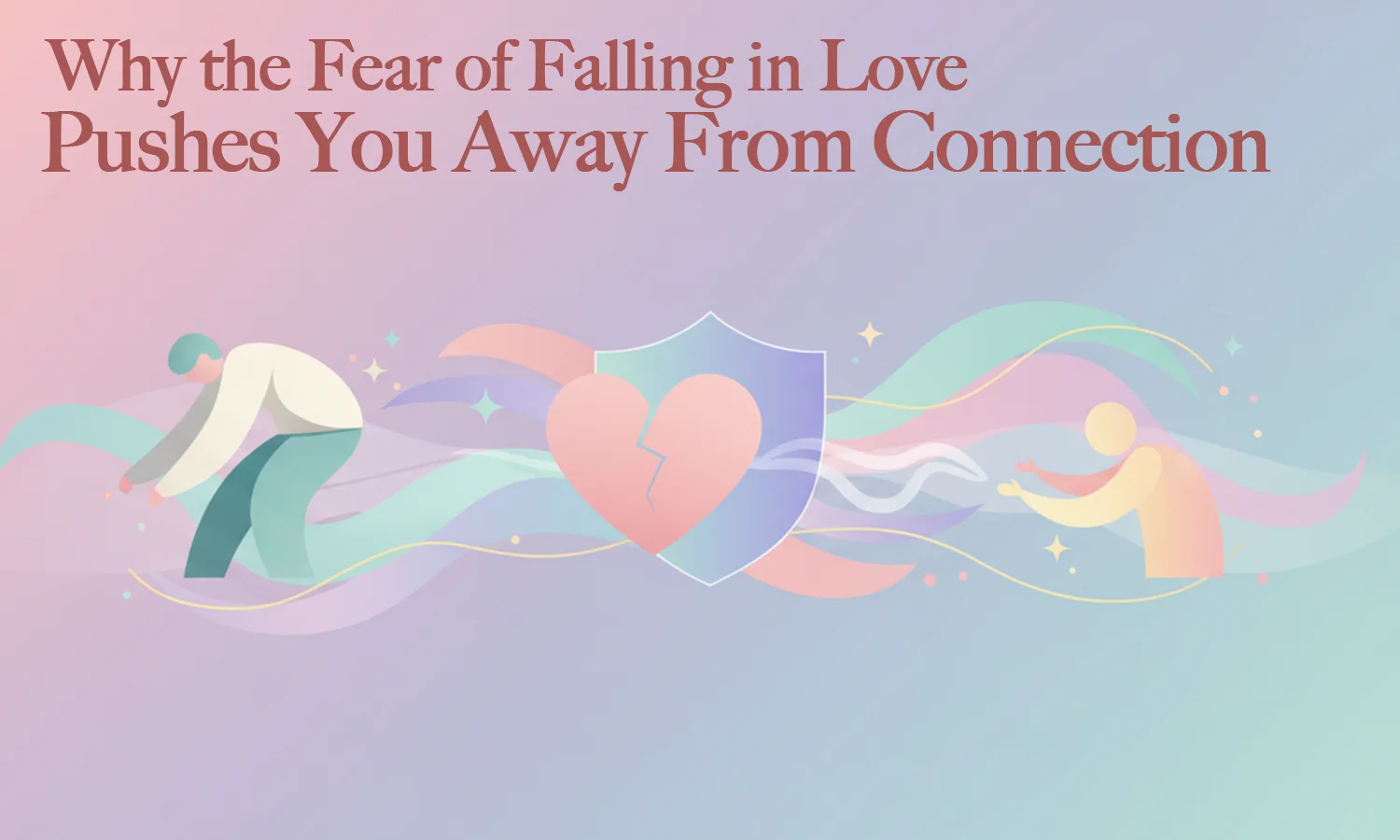
The fear of falling in love is more common than most people admit. Many want connection but pull away when things get serious. This conflict often comes from past hurt, trust issues, or emotional wounds that were never healed. Love offers support, but it also requires vulnerability, which can feel risky. Understanding this response is the first step toward building safer, more fulfilling relationships.
Why Love Feels Risky Even When You Want It?
Love can feel risky because it requires openness and emotional exposure. The fear of falling in love often comes from the brain’s natural survival response. When you care about someone, you also create the possibility of loss, rejection, or heartbreak.
For people who carry a fear of love, this emotional risk feels overwhelming. Past experiences may have taught them that closeness leads to pain. As a result, the mind builds invisible emotional walls to prevent future hurt.
This is a natural response. Emotional vulnerability affects identity, trust, and self-worth, which is why it feels so intense.
Emotional Vulnerability vs Emotional Danger
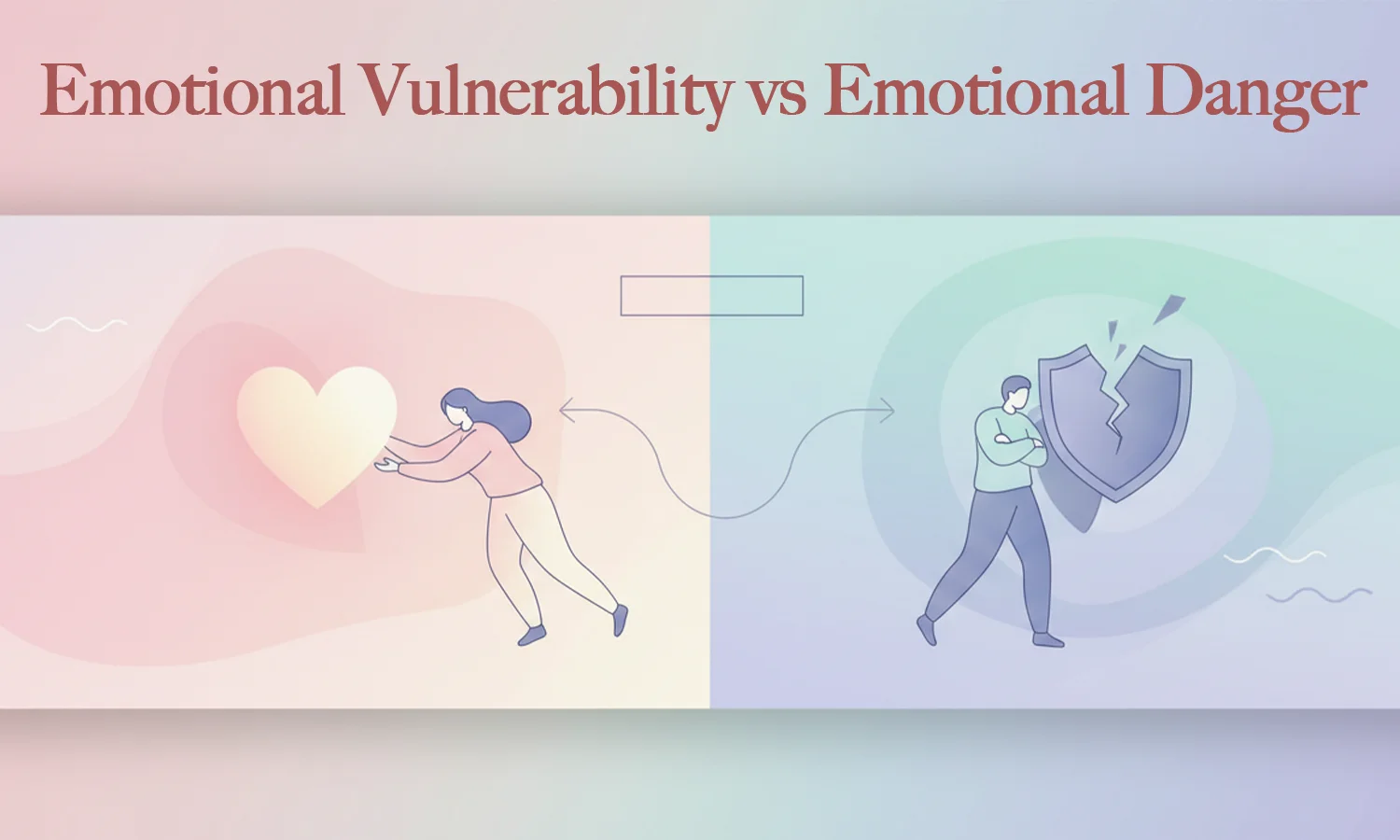
Not all vulnerability is unsafe. There is a big difference between healthy openness and emotional danger. The fear of falling in love often grows when people cannot distinguish between these two experiences.
Emotional vulnerability means choosing to share your thoughts and feelings. It builds trust and a deeper connection. Even when responses are imperfect, you still grow.
Emotional danger, however, happens when a relationship involves manipulation, constant criticism, or disrespect. In such cases, vulnerability becomes exposure rather than connection.
People who have been hurt may develop a fear of trusting others. They may avoid closeness even with caring partners.
How Past Hurt Creates Emotional Armour?
Past heartbreak or neglect can create emotional armour. This is a protective layer built to prevent future pain. The fear of falling in love often grows from this response.
Repeated emotional hurt makes the brain more alert to threats. It begins to treat closeness as dangerous, even when the situation is safe. Over time, emotional distance feels more comfortable than connection.
Some people also fear losing someone so deeply that they avoid love altogether. While this protects them from pain, it also blocks real intimacy.
Top Signs You’re Afraid of Falling in Love
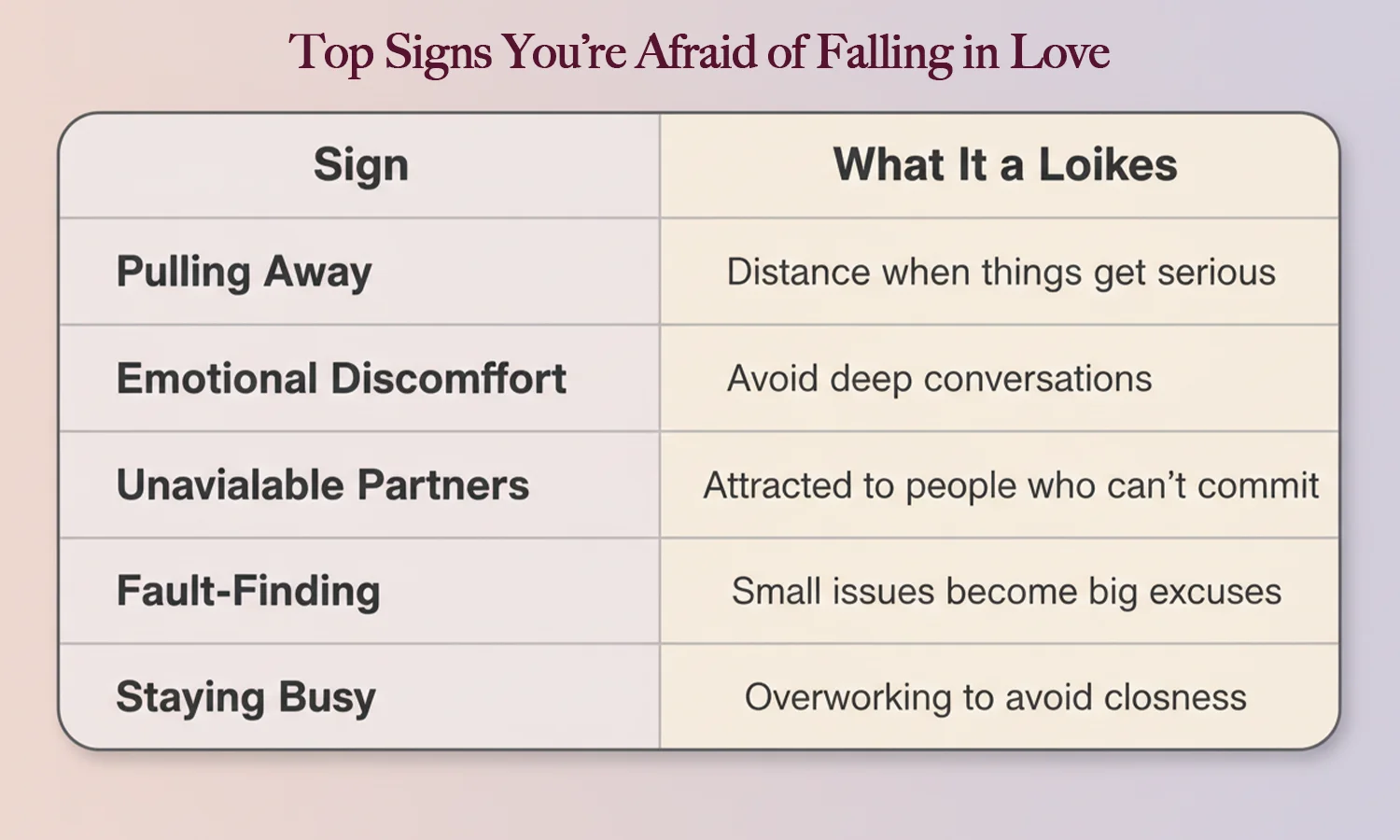
This fear often appears through subtle behaviours. Some common signs include:
- Pulling away when relationships become serious
- Feeling uncomfortable after emotional conversations
- Choosing emotionally unavailable partners
- Finding small faults to justify the distance
- Staying extremely busy to avoid closeness
These habits usually form as protection from emotional pain.
Allowing Love Without Losing Yourself
Letting go of the fear of falling in love does not mean losing independence. Healthy relationships allow both people to stay true to themselves.
Maintain your routines, friendships, and goals. This keeps your identity strong. At the same time, practice small moments of openness, like expressing needs or sharing honest feelings.
Over time, these small steps show your mind that connection does not have to mean losing yourself. Instead, it can become a source of strength, stability, and growth.
Conclusion
The fear of falling in love is often a protective response shaped by past experiences. While it may guard you from pain, it can also keep you away from meaningful connections. By understanding your patterns and taking small steps toward openness, relationships can begin to feel safer.
If you are ready to move beyond this fear, the right guidance can help. Through Coaching with Geeta, you can access practical tools and personalized sessions that support emotional healing and stronger relationships.
Key Takeaways
- The fear of falling in love often comes from past emotional hurt.
- The brain may treat vulnerability as a threat to protect you.
- Emotional vulnerability is different from emotional danger.
- Small steps toward openness help rebuild trust.
- Healthy love supports your identity instead of taking it away.
FAQs
You may feel this way because of past heartbreak, rejection, or trust issues. When the mind links love with pain, it builds emotional barriers for protection.
Yes, this response is common after emotional pain. The mind may avoid closeness to prevent another hurt, but this can change over time.
This pattern can create distance, mixed signals, or avoidance. Addressing it early helps build healthier and more stable connections.
Yes, love can feel safe again when trust is built slowly with emotionally healthy partners. As you work through the fear of falling in love, closeness can begin to feel supportive instead of threatening.