The fear of people that they can make even simple interactions feel overwhelming. You may avoid conversations, feel tense in groups, or worry constantly about how others see you. This fear is more common than you might think. It often develops from past experiences, low self-confidence, or difficulty trusting others.
While the fear of people can feel strong, it is not permanent. With the right understanding and small steps, you can start feeling safer and more comfortable around others.
What Is Fear of People (Anthropophobia) or Social Fear?
The fear of people is sometimes called anthropophobia. It describes intense discomfort or anxiety around others, regardless of the situation. In everyday language, it is often referred to as social fear or social anxiety.
In some cases, it may become strong enough to interfere with daily life. This is not just shyness. It is a deep emotional response that can affect work, relationships, and confidence.
Among the many types of fear, social fear is very common because humans naturally depend on connection and acceptance.
Why Social Situations Trigger Fear and Anxiety?
The fear of people often comes from the brain’s survival system. In the past, being accepted by a group meant safety. Rejection could mean danger. Even today, the brain sometimes treats social rejection like a physical threat.
This is why situations such as speaking in a meeting, meeting new people, or making small talk can trigger anxiety. The mind starts imagining negative outcomes, and the body responds with tension, sweating, or a racing heart.
These reactions are normal, but when they become constant, they may turn into social anxiety patterns.
Fear of Judgment and the Need for Approval
At the heart of the fear of people is often a fear of judgment. Many worry about being seen as awkward, boring, or not good enough.This creates pressure in social situations.
Some also carry a fear of losing others, which makes them overly cautious. They may try too hard to please or avoid conflict. This behaviour often comes from difficulty trusting others.
Over time, these patterns create a cycle. The more social situations are avoided, the stronger the fear becomes.
Small Steps to Feel Safer Around People and Socialise
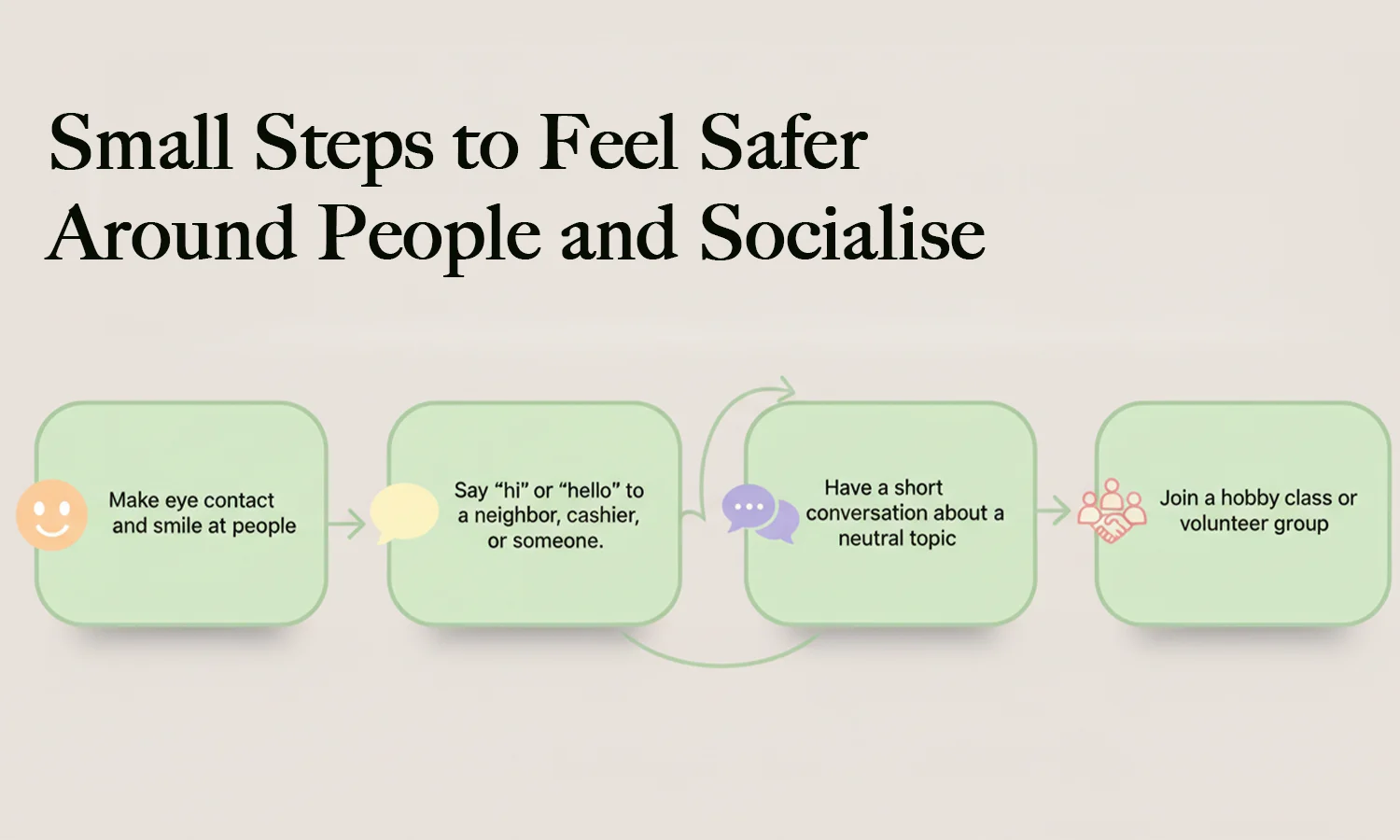
Learning how to overcome the fear of people starts with small, manageable steps. Instead of forcing yourself into stressful situations, begin with simple interactions.
Start by making eye contact and smiling at someone. Then move to short greetings, like saying “hello” to a neighbour or cashier. As comfort grows, try small conversations about neutral topics.
Choose environments where interaction feels natural, such as hobby classes or volunteer groups. These settings reduce pressure.
Each small step helps the brain learn that others are not a threat. Over time, the fear of people becomes less intense.
Showing Up Authentically Without Fear of Judgment from People
Authenticity is the opposite of social fear. When you stop trying to be perfect, interactions feel more natural. The fear of people often comes from the belief that you must impress everyone.
Instead, focus on being genuine. Share small opinions or express honest feelings in safe situations. This builds confidence.
Another helpful shift is to focus on others rather than yourself. Listen carefully and ask simple questions. This reduces pressure and makes conversations easier.
When you start valuing your own thoughts and feelings, the fear of people loses its control.
Conclusion
The fear of people often develops from past experiences, fear of judgment, or difficulty trusting others. While it may feel overwhelming, it can be reduced with small, consistent steps. Social confidence grows through gentle progress and self-acceptance.
If you are ready to move beyond the fear of people and build more confidence in your interactions, the right guidance can help. Through Coaching with Geeta, you can access practical tools and personalised support to feel calmer and more confident around others.
Key Takeaways
- The fear of people is often linked to fear of judgment and rejection.
- It may develop from past experiences or difficulty trusting others.
- Social fear is one of the most common types of fear.
- Small, gradual steps help build social confidence.
- Authentic self-expression reduces social anxiety over time.
FAQs
To overcome the fear of people, start with small interactions. Make eye contact, smile, or say a simple greeting. Gradual exposure helps your brain feel safer around others, and confidence grows over time.
The fear of people often comes from past negative experiences, fear of judgment, or low self-confidence. It may also be linked to difficulty trusting others.
When you carry strong social anxiety, your mind stays in a constant state of alertness. This mental effort can be exhausting, which is why you may feel tired after interactions.
The fear of people is closely related to social anxiety. Social anxiety often focuses on fear of judgment in specific situations, while this fear may involve discomfort around others in general.