Many people experience anxiety symptoms during stressful periods in life. While occasional anxiety is normal, persistent feelings of nervousness or worry can affect both mental and physical health. Recognising these early warning signs helps you understand when your mind may be under pressure.
These experiences often appear through both emotional and physical reactions. From constant worry to sleep disturbances and fatigue, the signs of anxiety can show up in several ways. Understanding how anxiety works is the first step toward managing it effectively.
What Are the Symptoms of Anxiety?
Anxiety symptoms can affect the body, thoughts, and behaviour. They often occur when the brain activates the “fight-or-flight” response, preparing the body to react to perceived danger. While this response is useful in real emergencies, constant activation can lead to ongoing stress.
Common physical symptoms include rapid heartbeat, muscle tension, dizziness, sweating, and digestive discomfort. Some people also notice sleep disturbances or difficulty relaxing after a stressful day.
Psychological reactions are also common. People may feel restless, irritable, or overwhelmed by worry. In certain cases, individuals experiencing generalized anxiety disorder symptoms may find it difficult to control anxious thoughts for long periods of time.
Occasionally, people report unusual sensations such as tingling in the hands or feeling disconnected from their surroundings. These are sometimes described as weird anxiety symptoms, but they are often related to the body’s stress response.
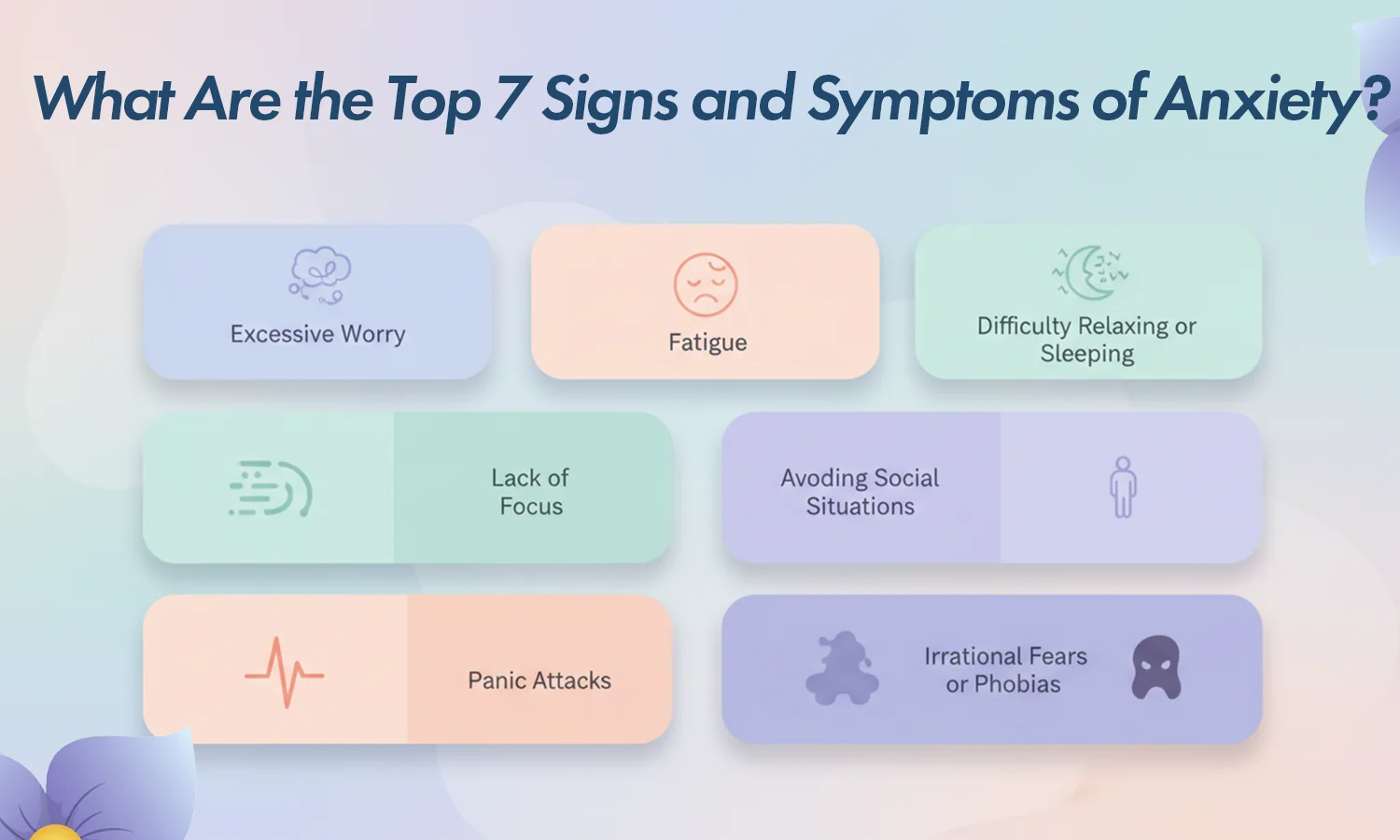
What Are the Top 7 Signs and Symptoms of Anxiety?
Excessive Worry
One of the most common anxiety symptoms is constant worry about everyday situations. This worry often feels difficult to control and may continue even when there is no clear problem.
People may imagine worst-case scenarios or repeatedly think about possible negative outcomes. Over time, this mental loop can create emotional exhaustion.
Fatigue
Anxiety often keeps the body in a state of alertness. Even though this response is meant to protect you, remaining on high alert for long periods can lead to deep exhaustion.
Fatigue caused by anxiety can feel like an “energy crash,” where a person feels drained despite having enough rest.
Difficulty Relaxing or Sleeping
Another common experience is difficulty calming the mind. When people try to sleep, anxious thoughts may become louder because there are fewer distractions.
This can lead to insomnia or restless sleep. Over time, poor sleep may worsen the overall effects of anxiety on mood and concentration.
Lack of Focus
Anxiety can make it difficult to concentrate on tasks. The brain becomes busy scanning for possible threats instead of focusing on work or conversations.
People may find themselves rereading the same information repeatedly or struggling to complete simple tasks.
Avoiding Social Situations
Some individuals begin to avoid situations that may trigger anxious feelings. Social gatherings, meetings, or public speaking may feel overwhelming due to fear of embarrassment or judgment.
This avoidance behaviour is a common way people attempt to manage discomfort, but it may reinforce anxious patterns over time.
Panic Attacks
A panic attack is an intense surge of fear that appears suddenly. During an episode, people may experience chest tightness, rapid heartbeat, sweating, dizziness, and shortness of breath.
Because the physical sensations are strong, panic attacks are sometimes mistaken for serious medical emergencies.
Irrational Fears or Phobias
Certain fears can become very intense and focused on specific situations or objects. These fears may feel out of proportion to the actual danger but still trigger strong emotional reactions.
In more intense cases, these experiences may be considered severe anxiety symptoms, especially if they interfere with everyday activities.
How Anxiety Symptoms Affect Daily Life
When anxiety symptoms continue for a long time, they can affect many areas of daily life.
At work or school, concentration difficulties may reduce productivity and make decision-making harder. Tasks that once felt simple can start to feel overwhelming.
In relationships, anxiety may cause individuals to withdraw from social interactions or avoid conversations that feel stressful. This can create misunderstandings or emotional distance.
Long-term anxiety may also influence physical health. Chronic stress keeps the body in a heightened state of alertness, which may lead to sleep issues, muscle tension, and reduced energy levels.
Simple Techniques to Manage Anxiety
Managing anxiety symptoms often begins with small steps that help calm the nervous system.
One helpful method is the 5-4-3-2-1 grounding technique. This exercise focuses your attention on the present moment by identifying things you can see, touch, hear, smell, and taste around you.
Another simple technique is box breathing, which involves inhaling, holding the breath, exhaling, and pausing for equal counts of four seconds. This breathing pattern helps regulate the body’s stress response.
Challenging anxious thoughts can also be useful. When a worry appears, asking whether it is based on facts or assumptions can help shift perspective.
Regular movement, balanced nutrition, and limiting caffeine intake can also support mental well-being and help reduce recurring stress.
Conclusion
Experiencing anxiety symptoms occasionally is a normal part of life, especially during stressful situations. When these feelings persist for longer periods, they can begin to affect emotional well-being, relationships, and daily productivity.
Recognising early warning signs helps you understand what your mind and body may be trying to communicate. With awareness and simple coping practices, many people gradually learn to manage anxiety more effectively and restore a sense of balance.
For readers who want to understand their thoughts, emotions, and stress responses more deeply, the book The Game of Change by Geeta Ramakrishnan offers valuable reflections on self-awareness, emotional balance, and personal growth. The ideas shared in the book encourage readers to observe their mental patterns and develop healthier ways of responding to stress and anxiety in everyday life.
FAQs
Yes, anxiety can cause physical reactions such as rapid heartbeat, muscle tension, dizziness, sweating, and digestive discomfort.
Stress usually appears in response to a specific situation and reduces once the situation passes, while anxiety may continue even when no clear trigger is present.
If symptoms begin interfering with daily life, relationships, sleep, or work, it may be helpful to consult a mental health professional for guidance.