Anxiety can make the mind feel constantly busy and restless. Many people look for natural ways to calm their thoughts and improve emotional balance. One helpful approach is practicing meditation techniques for anxiety, which focus on calming the body and bringing attention back to the present moment.
These practices are simple, require no special equipment, and can be done at home. With consistency, meditation can help regulate stress responses and create a sense of mental clarity. Many people begin with a short meditation for anxiety, allowing them to experience the benefits without needing long sessions.
Why Does Meditation Help Treat Anxiety?
Meditation helps reduce anxiety by calming both the mind and the body. When a person feels anxious, the brain activates the fight-or-flight response, which increases heart rate, breathing speed, and muscle tension.
Regular meditation practice can help retrain the brain’s response to stress. Research suggests that mindfulness meditation may reduce activity in the amygdala, the brain region responsible for fear and stress reactions. At the same time, meditation strengthens areas of the brain involved in emotional control and decision-making.
Certain relaxation techniques for anxiety, such as focused breathing and mindfulness practices, activate the body’s parasympathetic nervous system. This response slows the heart rate and reduces stress hormones. Over time, consistent meditation practices for anxiety can help people respond to stressful situations with greater calm and awareness.
How to Practice Meditation
Learning meditation does not require complicated preparation. The key is to create a quiet space and focus attention on the present moment.
Start by sitting comfortably in a quiet area. Keep your back relaxed but upright and allow your hands to rest naturally. Set a timer for five to ten minutes so you can focus without checking the time.
Close your eyes and bring your attention to your breathing. Notice the natural rhythm of the breath moving in and out of your body. If your mind begins to wander—which is completely normal—gently return your attention to your breathing without judging yourself.
These meditation techniques for anxiety become easier with practice. Even a few minutes each day can gradually improve focus and emotional balance.
5 Simple Meditation Techniques for Anxiety
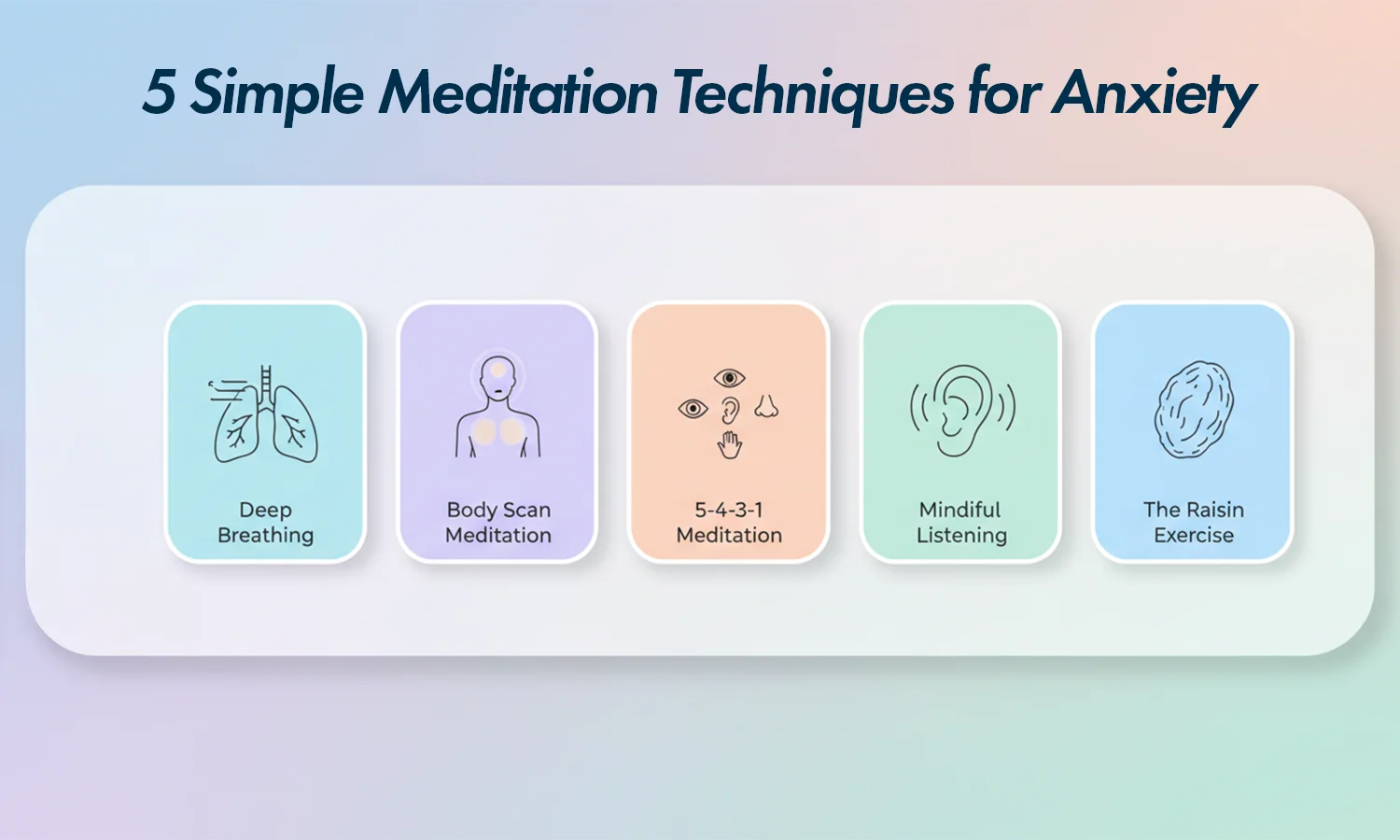
There are many types of anxiety meditation, but some are especially helpful for beginners. The following practices combine mindfulness, breathing, and sensory awareness to reduce stress.
Deep Breathing
Deep breathing is one of the most effective ways to calm the nervous system. Sit comfortably and inhale slowly through your nose while allowing your stomach to expand. Then exhale gently through your mouth.
These Deep breathing exercises for anxiety help slow the heart rate and reduce tension. Practicing this technique for a few minutes each day can significantly reduce stress levels.
Body Scan Meditation
Body scan meditation helps build awareness of physical tension stored in the body. Begin by lying down or sitting comfortably. Slowly move your attention from your toes upward through your body.
Notice sensations such as warmth, tightness, or relaxation without trying to change them. As you breathe out, imagine releasing tension from each area. This method is commonly used in meditation techniques for anxiety because it strengthens the mind-body connection.
5-4-3-2-1 Meditation
This grounding exercise uses the five senses to bring attention to the present moment.
Look around and identify five things you can see, four things you can touch, three sounds you can hear, two scents you can notice, and one thing you can taste.
This exercise works similarly to mindfulness breathing exercises by shifting attention away from anxious thoughts and toward immediate sensory experiences.
Mindful Listening
Mindful listening is a simple meditation that uses sound as an anchor for attention. Sit quietly and focus on the different sounds around you.
Try noticing distant sounds first, then closer ones. Avoid judging the sounds as pleasant or unpleasant. This technique encourages awareness and is often included among effective meditation techniques for anxiety.
The Raisin Exercise
The raisin exercise is a classic mindfulness activity designed to slow down attention. Take a small piece of food, such as a raisin, and observe it closely.
Notice its texture, smell, and appearance. Then slowly taste it while paying attention to each sensation. This practice trains the mind to focus fully on the present moment rather than worrying about the future.
Also Read: Fear of Being Alone? 7 Effective Ways to Overcome
How Meditation Supports Long-Term Anxiety Management
Regular meditation does more than provide temporary relief. With consistent practice, it can improve long-term emotional resilience.
Meditation strengthens brain regions involved in focus, emotional regulation, and decision-making. At the same time, it can reduce the brain’s sensitivity to stress triggers. This allows individuals to respond to difficult situations with greater awareness and calmness.
Many people who practice meditation for anxiety regularly notice improvements in concentration, sleep quality, and emotional balance. Over time, meditation becomes a powerful tool for maintaining mental well-being.
Conclusion
Practicing meditation techniques for anxiety can help calm the mind and restore emotional balance. Simple practices such as breathing exercises, grounding techniques, and mindful awareness encourage the mind to return to the present moment. With regular practice, meditation can strengthen emotional resilience and make it easier to respond to everyday stress.
For readers who want to understand the deeper connection between thoughts, emotions, and inner calm, the book The Game of Change by Geeta Ramakrishnan offers meaningful insights. The book reflects on mindfulness, emotional awareness, and simple practices that help people build a more balanced and peaceful way of living. Through these reflections, readers can better understand how awareness and consistent practice can gradually reduce anxiety and create lasting mental clarity.
FAQs
Yes. Meditation can help reduce anxiety by calming the nervous system and improving emotional regulation. Regular practice trains the mind to focus on the present moment instead of worrying about future events.
Many beginners start with five to ten minutes per day. Over time, sessions can be extended as meditation becomes more comfortable.
Breathing meditation, body scan meditation, and grounding exercises are commonly recommended because they help calm both the mind and body.
Yes. Most meditation practices can be done independently at home. Starting with simple breathing or mindfulness exercises can make it easier to build a regular habit.