Anxiety is a natural response to stress, but when it becomes frequent, it can interfere with daily life and emotional well-being. Many people today look for ways to reduce anxiety without relying entirely on medication. Lifestyle habits, mindful practices, and supportive environments can help the mind and body return to a balanced state.
Natural approaches are gaining popularity because they focus on long-term emotional stability and overall wellness. By making small changes in everyday routines, individuals can gradually learn how to reduce anxiety naturally and feel more in control of their thoughts and emotions.
Why Opt for Natural Ways to Reduce Anxiety?
Choosing natural approaches to manage anxiety can offer several benefits. These methods focus on improving both mental and physical health while helping people develop stronger coping mechanisms.
One reason people explore ways to reduce anxiety naturally is to avoid potential side effects that may come with certain medications. Natural practices such as exercise, meditation, and healthy nutrition support the body’s natural stress response.
Another advantage is that these strategies build sustainable habits. Instead of temporarily masking symptoms, they help individuals deal with anxiety by understanding their triggers and developing healthier responses.
Natural methods also support overall wellness. Activities such as mindfulness, physical movement, and spending time outdoors can help people calm anxiety naturally while improving mood, energy levels, and mental clarity.
10 Natural Ways to Reduce Anxiety
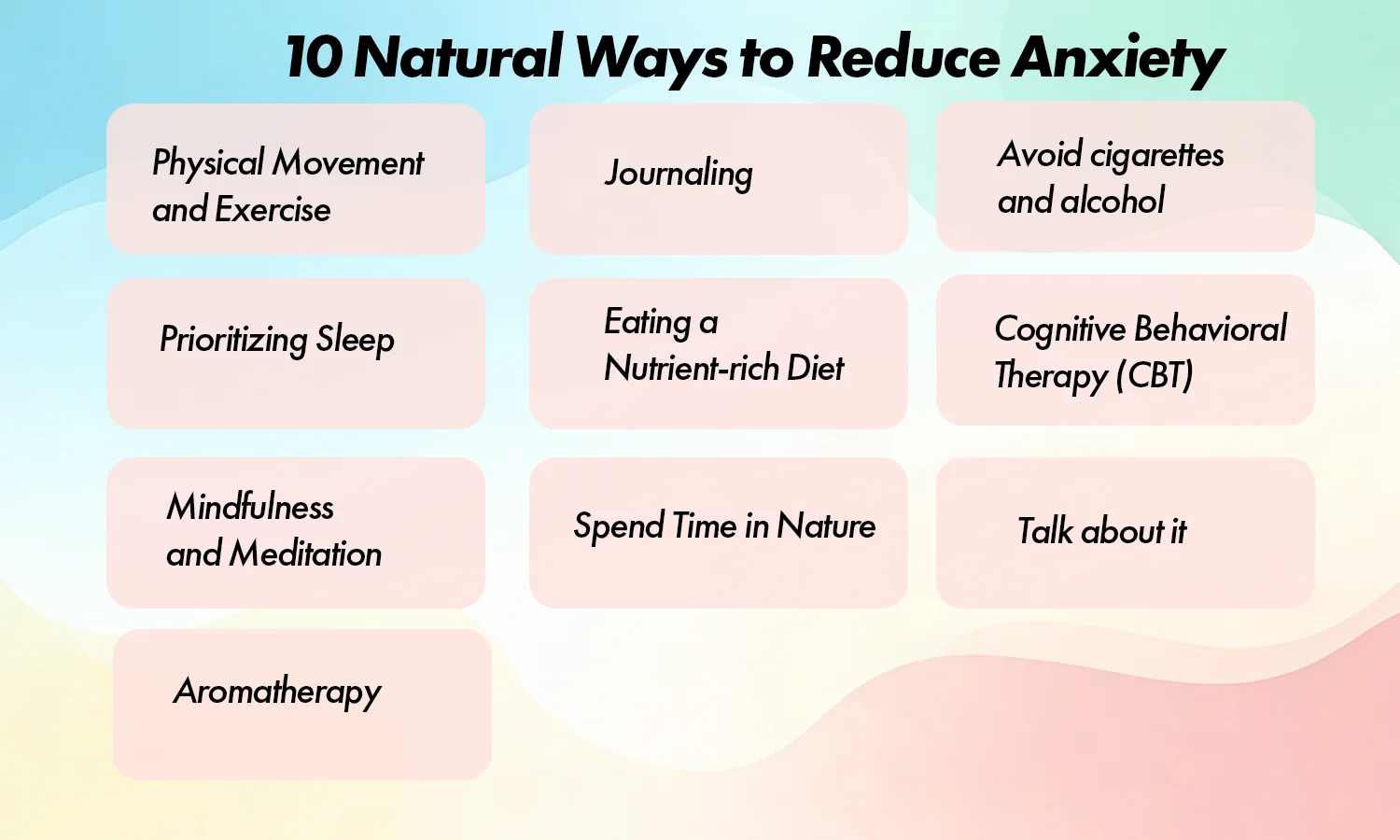
Many daily habits can support emotional balance and help manage anxious thoughts. The following strategies are considered some of the most effective ways to reduce anxiety naturally.
1. Physical Movement and Exercise
Regular exercise releases endorphins, which are natural mood boosters. Even simple activities like walking, yoga, or stretching can provide a natural way to relieve anxiety fast by reducing stress hormones and releasing built-up tension.
2. Prioritizing Sleep
Sleep plays a vital role in emotional regulation. Lack of sleep can make the brain more reactive to stress and increase anxious thoughts. Maintaining a consistent sleep routine can support healthier mental balance.
3. Mindfulness and Meditation
Mindfulness helps people focus on the present moment instead of worrying about the future. Meditation techniques can calm racing thoughts and improve emotional awareness.
4. Aromatherapy
Essential oils such as lavender, chamomile, and bergamot are often used in aromatherapy to promote relaxation. The calming scent can help reduce stress and support emotional comfort.
5. Journaling
Writing down thoughts and emotions allows individuals to process their worries more clearly. Journaling can reveal patterns in anxious thinking and help people understand what triggers their stress.
6. Eating a Nutrient-Rich Diet
Nutrition also influences emotional well-being. Foods rich in omega-3 fatty acids, magnesium, and vitamins help support brain function and stabilize mood.
7. Spend Time in Nature
Spending time in nature can significantly lower stress levels. A short walk in a park or natural setting can refresh the mind and reduce feelings of tension.
8. Avoiding Cigarettes and Alcohol
Although some people turn to substances to cope with stress, they can actually worsen anxiety over time. Reducing these habits supports better sleep, emotional stability, and physical health.
9. Cognitive Behavioral Therapy (CBT)
CBT is a well-researched psychological approach that helps individuals recognize and change negative thought patterns. It provides practical tools for long-term emotional management and may even contribute to a cure anxiety approach when combined with other healthy habits.
10. Talking About It
Talking to a trusted friend, family member, or counselor can make a significant difference. Social connection helps people feel supported and less isolated when dealing with anxiety.
Many individuals find that combining these approaches becomes one of the best ways to relieve anxiety without medication.
Also Read: Fear of Being Alone? 7 Effective Ways to Overcome
Key Takeaways on Natural Ways to Reduce Anxiety
Managing anxiety is not always about eliminating stress completely. Instead, it involves learning practical ways to reduce anxiety and strengthening emotional resilience over time.
Natural strategies such as exercise, mindfulness, healthy eating, and supportive conversations help regulate the nervous system. These methods can calm the body’s “fight-or-flight” response and encourage a healthier emotional balance.
While natural approaches can be highly effective for many people, severe or persistent anxiety may still require professional guidance. Combining healthy habits with professional support can create the most balanced path toward long-term well-being.
Conclusion
Anxiety can feel overwhelming, but small lifestyle changes can make a meaningful difference. Exploring ways to reduce anxiety through physical movement, mindfulness, healthy routines, and supportive relationships can help individuals gradually regain emotional balance.
Developing these habits takes time and patience, but consistent effort can strengthen mental resilience and improve overall well-being.
For readers who want to explore deeper insights into understanding thoughts, emotions, and personal growth, the book The Game of Change by Geeta Ramakrishnan offers valuable reflections on self-awareness and emotional balance. The ideas shared in the book encourage readers to observe their mental patterns and develop healthier ways of responding to stress and anxiety in everyday life.
FAQs
Managing anxiety often involves developing healthy habits such as exercise, mindfulness, and supportive conversations. These practices can gradually strengthen emotional resilience.
The 3-3-3 rule is a grounding technique where you identify three things you see, three sounds you hear, and move three parts of your body to bring your focus back to the present moment.
Common symptoms include excessive worry, restlessness, fatigue, difficulty concentrating, and sleep disturbances.
While anxiety is a natural emotion, people who manage it effectively often maintain healthy routines, emotional awareness, supportive relationships, and stress-management techniques.