Anxiety doesn’t just appear out of nowhere; it builds through repeated thoughts, habits, and responses over time. When your mind gets used to reacting with fear or stress, it starts to feel automatic. This is why rewiring the anxious brain becomes such an important step toward feeling calmer.
The good news is that your brain is not fixed. With consistent effort and small daily changes, it can adapt and form new patterns that support calmness instead of anxiety. This shift doesn’t happen instantly, but it is possible and it starts with understanding how your mind works.
What Does It Mean to Rewire Your Brain for Anxiety?
At its core, rewiring the anxious brain means changing how your brain responds to stress and fear. Your brain constantly builds connections based on your thoughts and behaviors. When anxiety is repeated, those pathways become stronger.
But the same process can work in your favor. Through rewiring brain patterns, you begin to create new responses that feel safer and more balanced. Instead of reacting instantly with panic, your mind learns to pause and process situations differently.
This process is often described as training your brain rather than fixing it. When you consciously choose new ways to think and respond, you slowly rewire your brain patterns that no longer serve you. Over time, these new pathways become your default.
It’s important to understand that you don’t erase old patterns – you simply build stronger, healthier ones. This is where practices like mindfulness, breathing, and awareness play a key role in reprogramming brain anxiety naturally.
21-Day Techniques to Rewire the Anxious Brain and Reduce Anxiety
A structured approach can make rewiring the anxious brain feel more achievable. While change takes time, a focused 21-day routine can help you build the foundation for long-term results.
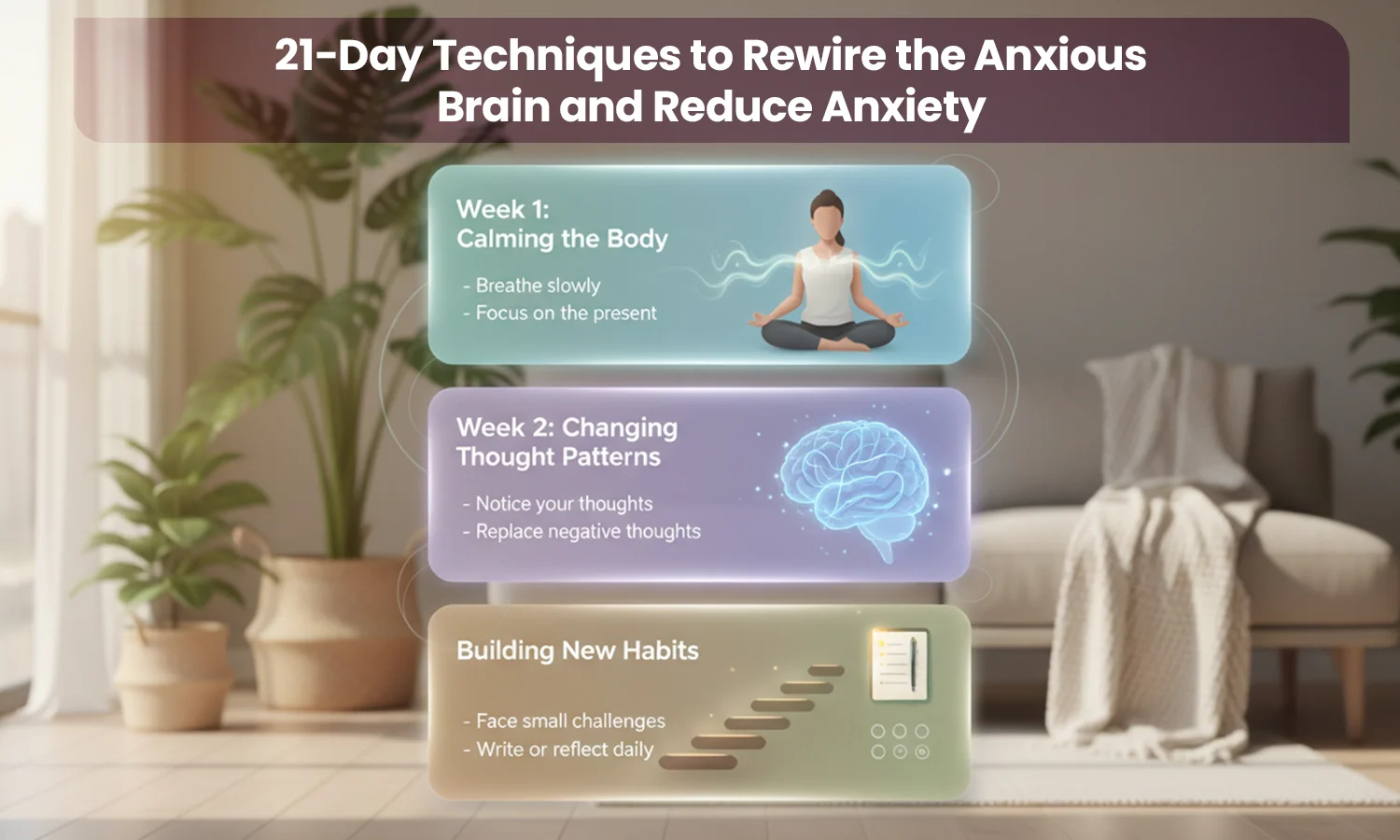
Week 1: Calming the Body
The first step is to calm your physical response. Anxiety often starts in the body before it becomes a thought.
Practicing deep breathing helps slow down your nervous system. Techniques like slow inhaling and extended exhaling signal safety to your brain. This is one of the simplest brain rewiring techniques that can be practiced anywhere.
You can also try grounding exercises that bring your attention back to the present moment. These small actions begin to reduce anxiety by shifting focus away from fear.
Week 2: Changing Thought Patterns
Once your body feels calmer, the next step is to work on your thoughts. Anxiety often grows from repeated negative thinking.
Start by observing your thoughts without reacting immediately. When you question them, you begin to weaken their hold. This is where you start to rewrite your anxious brain patterns in a more supportive way.
Replacing extreme thoughts with realistic ones helps your brain feel more stable. Over time, this practice changes how your mind interprets situations.
Week 3: Building New Habits
The final phase focuses on reinforcing new behaviors. Small actions repeated daily can shift how your brain responds to stress.
Facing situations gradually instead of avoiding them helps your mind feel more confident. This step is essential in anxiety rewiring your brain processes because it proves that you can handle discomfort.
Simple habits like journaling, gratitude, or mindful pauses can also support 21 days to rewire your brain routines. These habits create consistency, which is key for long-term change.
Building a Calmer Mind Through Brain Rewiring
Creating a calm mind is not about eliminating stress completely. It’s about learning how to return to balance more easily.
As you continue rewiring the anxious brain, your responses begin to shift naturally. You become more aware of your thoughts, more intentional with your reactions, and less controlled by fear.
Over time, your mind starts to feel less reactive and more stable. You notice that situations that once triggered anxiety no longer feel as overwhelming. This gradual change is what makes the process sustainable.
The key is consistency. Even small daily efforts contribute to a long-term shift in how your brain functions. With patience and practice, calmness becomes something you experience more often, not something you chase.
Conclusion
Rewiring your mind is not about quick fixes; it’s about creating lasting change through awareness, consistency, and small daily actions. As you continue rewiring the anxious brain, you begin to experience a quieter, more balanced state of mind that supports your overall well-being.
If you want to understand this transformation more deeply, The Game of Change by Geeta offers powerful insights into how thoughts, habits, and mindset shape your life. It provides simple yet effective perspectives that can help you take control of your emotional patterns and build a calmer inner state. You can grab your copy online to explore these ideas in a more practical and meaningful way.
FAQs
It means changing the way your brain responds to situations by building new thought patterns and behaviors that support calmness instead of stress.
Your brain may be used to reacting with anxiety due to repeated patterns. With consistent practice, you can train it to respond differently over time.
Yes, the brain has the ability to change through consistent habits and practices. With time and effort, it can develop healthier responses to stress.