Overview
Analysis paralysis is the state of overthinking a decision so much that you become unable to choose at all. It often stems from fear of mistakes, too many options, and mental fatigue. With awareness, simple decision rules, and support, you can move from frozen indecision to calm, confident action.
You have weighed every option, read every review, and made a dozen mental lists, yet you still cannot decide. The more you analyse, the harder choosing becomes. This frustrating freeze has a name, and it is analysis paralysis. It affects thoughtful, capable people who care deeply about getting things right.
Understanding the pattern is the first step to breaking free of it.
What Is Analysis Paralysis?
The analysis paralysis psychology is rooted in a fear of making the wrong choice. When every option carries perceived risk, the mind protects you by delaying, so no mistake can happen. Ironically, this avoidance often causes the very outcomes you feared.
This branch of analysis paralysis psychology connects closely to perfectionism and a dislike of uncertainty. The need for a flawless decision keeps you stuck, because no option ever feels perfect enough. Recognising this pattern helps you see that action, not endless analysis, is what finally brings relief.
The Link to Decision Fatigue
Overthinking choices drains mental energy, which leads to decision fatigue. Many people ask what is decision fatigue, and the simple answer is the drop in decision quality that follows too many choices. When you understand what is decision fatigue, you see why your judgement weakens as the day goes on.
The decision fatigue psychology shows that willpower is a limited resource. As this decision fatigue psychology plays out, common decision fatigue examples include impulse choices, avoidance, and snapping over small matters. These decision fatigue examples often appear alongside a broader lack of decision making, where even simple choices feel impossible. That lack of decision making is usually a sign of a tired, overloaded mind rather than a weak character.
How Overthinking Affects Your Body
Indecision does not only tire the mind; it strains the body too. The overthinking effects on body include tension headaches, a tight chest, disturbed sleep, and constant fatigue, because chronic worry keeps stress hormones like cortisol elevated.
These overthinking effects on body remind us that mental and physical health are deeply connected. When you calm the overthinking behind analysis paralysis, you protect your body as well as your peace of mind.
How to Break Free from Analysis Paralysis
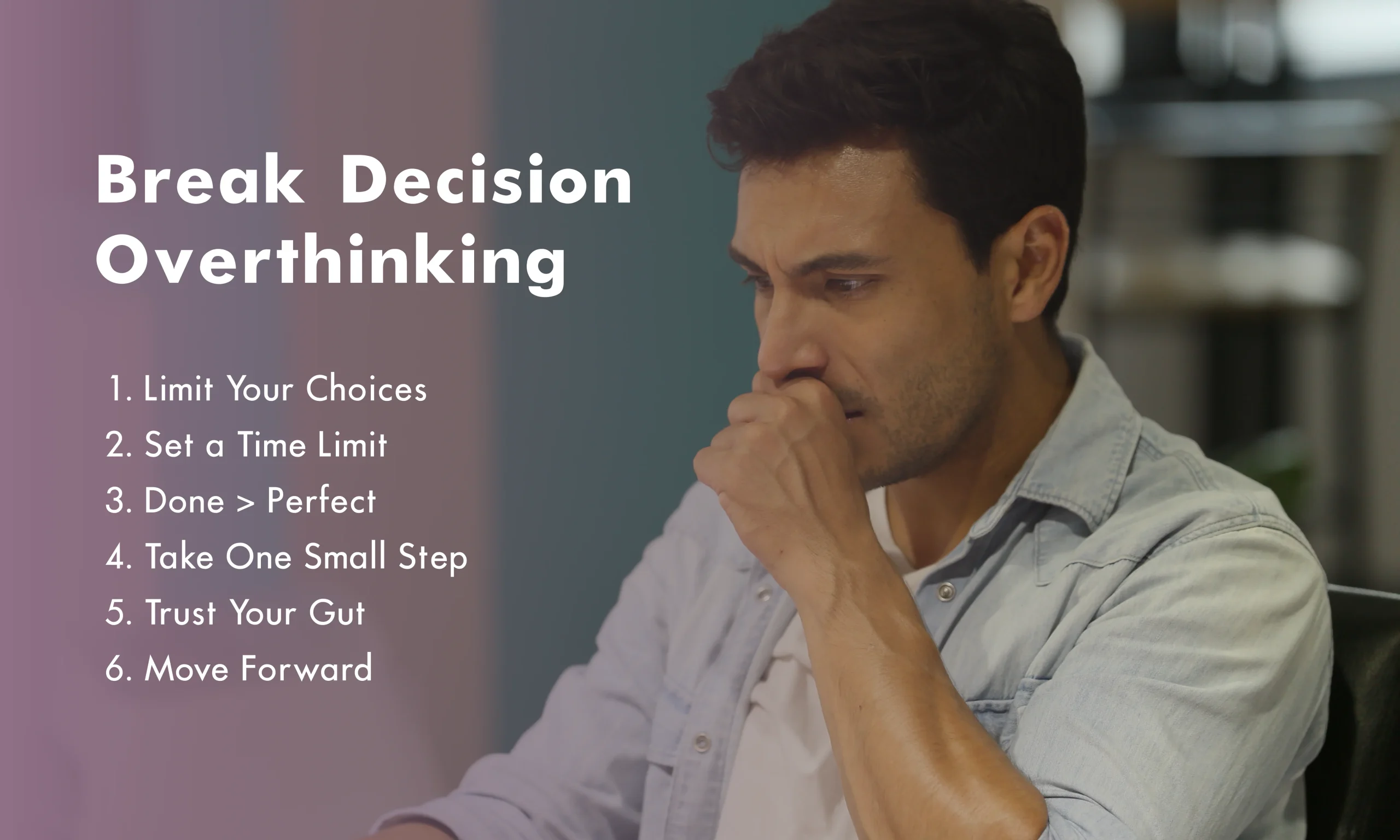
The way out is gentler than you might expect. Learning how to control overthinking starts with setting simple decision rules, such as giving yourself a deadline or limiting your options to a few strong choices. Structure reduces the pressure that fuels the freeze.
It also helps to accept that no decision needs to be perfect. Practising how to control overthinking means treating choices as experiments you can adjust rather than final verdicts. To stop overthinking a decision, take the smallest possible next step and let action build momentum. Each small choice teaches your mind that it is safe to stop overthinking and trust yourself.
Decide With Confidence Alongside Coach Geeta
Breaking a lifelong habit of overthinking is real work, and guidance makes the path far lighter. At Coach Geeta, founder and ontological coach Geeta Ramakrishnan, author of the Amazon bestselling book The Game of Change, helps people cut through mental clutter and make confident, values-led decisions.
If indecision has been stalling your progress and draining your energy, this is your moment to change that. Book a coaching conversation with Coach Geeta today and take the first step toward sharper thinking, decisive action, and a more purposeful, fulfilling life. Your best decisions deserve a clear and confident mind, and that clarity is well within your reach.
Key Takeaways
- Analysis paralysis is overthinking a decision so much that you cannot choose at all.
- It stems from fear of mistakes, too many options, and a dislike of uncertainty.
- Decision fatigue deepens the freeze, since willpower and focus weaken with overuse.
- Chronic overthinking strains the body through tension, poor sleep, and raised stress hormones.
- Simple decision rules and small actions help you move from frozen to confident.
Confident Choices Are Within Reach
A frozen mind is not a flaw, it is a sign that a decision matters to you. Understanding analysis paralysis gives you gentle, practical ways to move from stuck to steady. Be patient with yourself, celebrate each decision you make, and remember that steady support can help confident action feel natural again.
Frequently Asked Questions
What is analysis paralysis in simple terms?
Analysis paralysis is when you overthink a decision so much that you become unable to make it. Too many options and a fear of mistakes cause the freeze. It is common among thoughtful people, and it eases once you set simple decision rules and accept that no choice is ever perfect.
How is analysis paralysis linked to decision fatigue?
They are closely connected. Analysis paralysis is freezing because options feel risky, while decision fatigue is the mental tiredness from making too many choices. A drained mind struggles to commit, so the two often appear together. Both improve when you simplify choices and take small, steady action.
How do I stop overthinking my decisions?
Learning how to control overthinking starts with setting deadlines, limiting your options, and treating decisions as experiments rather than final verdicts. Taking the smallest next step builds momentum. With practice, and support when needed, you learn to stop overthinking and trust your own judgement more.
Can overthinking affect my physical health?
Yes, it can. The overthinking effects on body include tension headaches, a tight chest, poor sleep, and fatigue, because ongoing worry keeps stress hormones raised. Calming the overthinking behind analysis paralysis protects both your mind and your body, which is why gentle, early action matters.