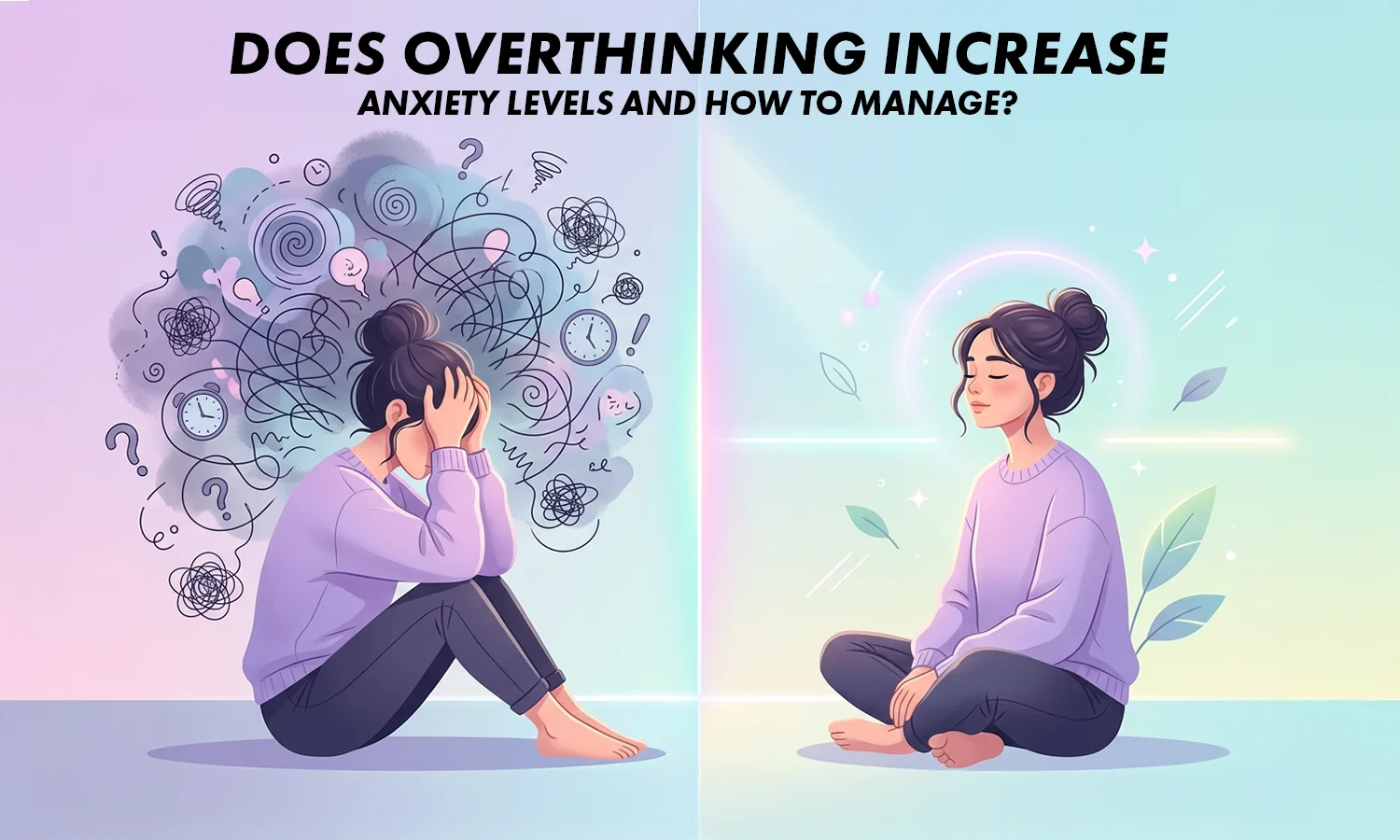
Many people experience moments when their thoughts keep repeating the same worries again and again. Questions like “What if something goes wrong?” or “Did I make the right decision?” can easily spiral into constant mental loops. This leads many people to wonder: Does Overthinking Increase Anxiety?
Overthinking often starts as an attempt to solve a problem or prepare for possible outcomes. However, instead of bringing clarity, it can create confusion, emotional stress, and mental exhaustion. When thoughts repeatedly focus on worst-case scenarios, the mind becomes trapped in worry rather than moving toward solutions.
Understanding whether Overthinking Increases Anxiety is important because it helps us recognize how our thoughts influence emotional well-being.
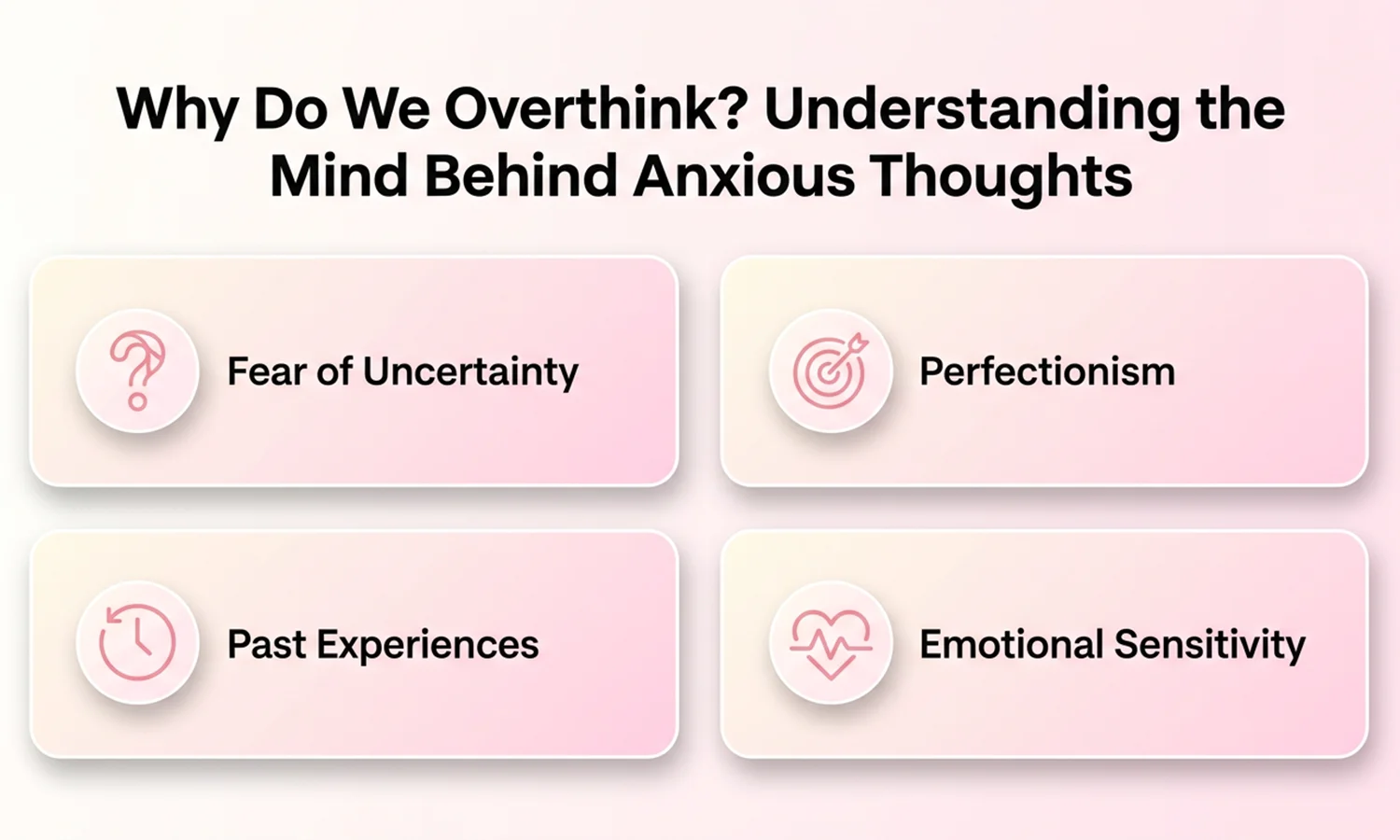
Why Do We Overthink? Understanding the Mind Behind Anxious Thoughts
Overthinking is not simply a bad habit. In many cases, it is the brain’s attempt to protect us from potential danger or mistakes. The mind tries to analyze situations repeatedly to ensure that nothing goes wrong.
However, this process can backfire. Instead of finding answers, the brain keeps searching for possibilities, creating anxiety caused by overthinking.
Several factors contribute to this pattern:
Fear of Uncertainty
Some people find it difficult to accept situations that are unclear or unpredictable. The mind keeps analyzing different outcomes in an attempt to gain certainty.
Perfectionism
When people feel pressured to make the “perfect” decision, they may replay situations again and again in their minds.
Past Experiences
Past negative experiences or failures can make the brain more cautious, leading to repeated thinking about future possibilities.
Emotional Sensitivity
Individuals who are highly aware of their emotions may experience stronger reactions to stressful situations, which can lead to dealing with overthinking and anxiety on a daily basis.
Does Overthinking Increase Anxiety Levels?: How Overthinking Creates Anxiety in the Brain
Yes, research and psychological studies show that overthinking and anxiety are closely connected. Overthinking can activate the brain’s stress response and trigger physical reactions in the body.
The brain’s amygdala, which processes fear and emotional responses, becomes more active during constant worrying. This causes the body to release stress hormones such as cortisol and adrenaline.
As a result, people may experience symptoms like:
- Increased heart rate
- Muscle tension
- Difficulty concentrating
- Trouble sleeping
- Restlessness
When these reactions occur frequently, the mind begins to associate everyday situations with danger or stress. This creates a cycle where Overthinking Increases Anxiety becomes a repeating pattern.
In some cases, individuals may search for the best medicine for overthinking, but many mental health experts emphasize that lifestyle practices and awareness often play a significant role in managing these thoughts.
Simple Tricks to Stop Overthinking
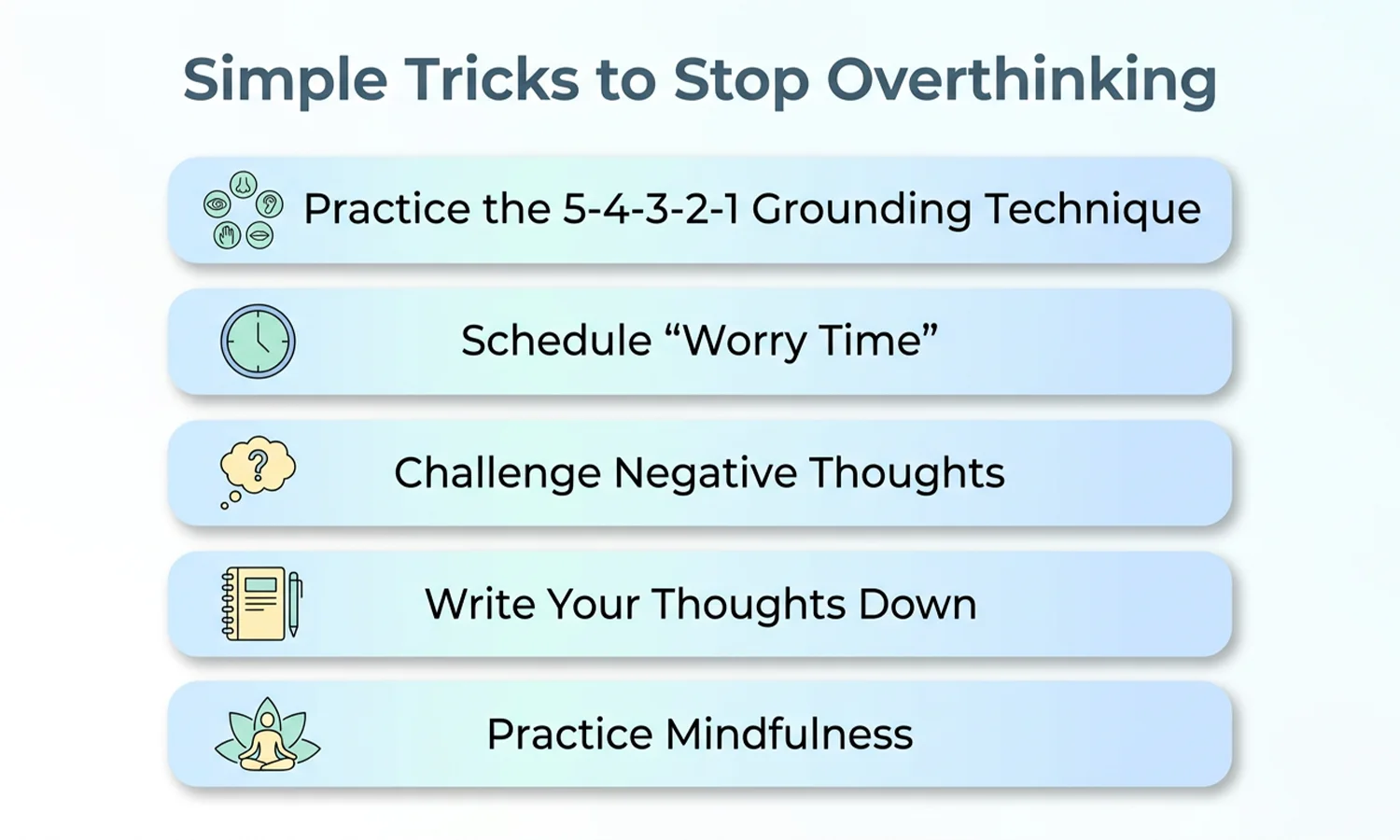
Breaking the cycle of repetitive thoughts requires small actions that interrupt the mental loop. Here are some tricks to stop overthinking that can help calm the mind.
Practice the 5-4-3-2-1 Grounding Technique
This technique helps bring your attention back to the present moment.
Identify:
- 5 things you can see
- 4 things you can touch
- 3 things you can hear
- 2 things you can smell
- 1 thing you can taste
Grounding exercises shift the brain away from worry and into awareness.
Schedule “Worry Time”
Instead of worrying throughout the day, choose a specific 15-minute period to reflect on your concerns. When worries appear outside that time, remind yourself you will address them later.
Challenge Negative Thoughts
Ask yourself whether your thoughts are based on facts or assumptions. Many worries come from imagined scenarios rather than real evidence.
Write Your Thoughts Down
A “brain dump” can help release mental pressure. Writing down your worries allows the brain to stop replaying them repeatedly.
Practice Mindfulness
Mindfulness for overthinking helps individuals observe their thoughts without reacting emotionally. Simple breathing exercises or meditation can reduce mental noise.
These techniques help people learn how to stop overthinking by gradually retraining their thought patterns.
Is Your Mind Stuck in Overthinking Mode? Here’s How to Take Back Control
When the brain is trapped in constant thinking, it often feels like there is no way to stop the cycle. However, regaining control begins with awareness.
The first step is recognizing when your mind has shifted into repetitive thinking. Instead of engaging with every thought, try observing it without judgment.
Focus on actions that bring you back into the present moment, such as walking, stretching, or completing small tasks. These activities remind the brain that it is safe to relax.
Over time, practicing these strategies helps individuals respond to stressful thoughts more calmly and prevents overthinking from controlling daily life.
Also Read:Types of Fear: How They Shape Our Behaviour and Decision-Making
Conclusion
Overthinking can often feel like an attempt to solve problems or prepare for challenges. However, when thoughts repeat endlessly without resolution, they can increase emotional stress and trigger anxiety.
Learning to notice these patterns and using simple strategies such as grounding techniques, mindfulness, and writing down worries can help reduce the mental pressure created by repetitive thinking.
For readers who want to explore deeper insights into understanding thoughts, emotions, and personal growth, the book The Game of Change by Geeta Ramakrishnan offers meaningful reflections on self-awareness and emotional balance. The ideas shared in the book encourage readers to observe their mental patterns and develop healthier ways of responding to stress and anxiety in everyday life.
FAQs
Deep breathing, grounding exercises, and physical movement can quickly reduce stress by calming the body’s nervous system.
Common triggers include stress, uncertainty, past experiences, lack of sleep, and excessive worrying about future situations.
With awareness, healthy coping techniques, and support when needed, many people learn to manage anxiety effectively and experience greater emotional balance.