
Some of the heaviest weight we carry cannot be seen. Old resentments, unspoken hurts, and fixed beliefs sit in the body and shape how we react to everything. Emotional healing and change are about setting that weight down so you can move forward freely. This is not about forgetting the past, but about releasing its grip. This article explores how emotional healing and change happen, why letting go matters, and how to build the resilience that keeps you steady through life’s shifts.
Why Emotional Healing and Change Begin With Letting Go
When you hold on to blocks and resentments, your energy stays locked in defense. Letting go of that baggage introduces new energy into your system, a lightness that often feels like joy and renewed possibility.
This release is the doorway to emotional healing and change. As the weight lifts, your attention is freed to notice opportunities you could not see before. Letting go is not weakness, it is how self healing starts.
Understanding Emotional Eating and Hidden Pain
Often a stubborn behaviour points to a deeper feeling. Many people eat emotionally, reaching for sugar or carbohydrates because they offer short term relief from an unresolved emotion. The food is not the real problem.
Emotional eating is a genuine issue that deserves attention, not shame. Recognising the feeling underneath the craving is a key step in emotional healing. This honest awareness is where a healing mindset takes shape.
Building a Healing Mindset
A healing mindset treats discomfort as a messenger rather than an enemy. Instead of pushing feelings away, you allow yourself to be vulnerable and to face them with curiosity. This openness is essential for emotional healing and change.
Practices such as introspection, working with a counsellor, and guided meditation all support a healing mindset. They give you a safe space to process what you feel, which is the heart of self healing.
Strengthening Emotional Resilience
Emotional resilience is the ability to recover after setbacks. It grows when you stop punishing yourself for slow days and instead pick up where you left off. Each gentle restart teaches your nervous system that you are safe.
Calm, steady breathing supports this process. Slow nasal breaths activate the body’s rest response, easing tension so that emotional resilience can build. Over time, this resilience becomes the backbone of emotional wellness.
From Self Healing to Lasting Emotional Wellness
As you let go, process hidden feelings, and build resilience, your relationships and health often improve. A calmer mind connects more easily and reacts less harshly, which deepens trust and reduces stress.
Emotional healing and change are a practice, not a one time event. Keep releasing old weight, keep meeting your feelings with kindness, and emotional wellness will steadily grow. Self healing is always available, at any stage of life.
Naming Your Emotions Is a First Step
You cannot heal what you will not name. Putting words to a feeling, even silently, reduces its intensity and helps the thinking brain re engage. This simple act is a quiet but powerful part of emotional healing and change.
Next time a strong feeling rises, pause and name it without judgment. This builds self awareness and a healing mindset, and it interrupts the automatic reactions that keep old pain in place. Naming is where self healing begins.
Daily Practices That Support Emotional Healing
Emotional healing and change grow from small daily practices. Slow nasal breathing calms the body and signals safety. A short reflection helps you process the day. Gentle movement releases tension stored in the body.
These practices build emotional resilience over time. Each calm restart teaches the nervous system that you are safe, which is the foundation of emotional wellness. Healing rarely happens in one dramatic moment, it accumulates through steady care.
When to Reach for Extra Support
Some wounds are too heavy to carry alone, and that is not a weakness. Working with a trained counsellor or coach can give you a safe space to process difficult feelings and move forward.
Reaching out is itself a sign of a healing mindset. Emotional healing and change are easier with support, and combining professional help with daily self healing practices gives you the strongest foundation for lasting emotional wellness.
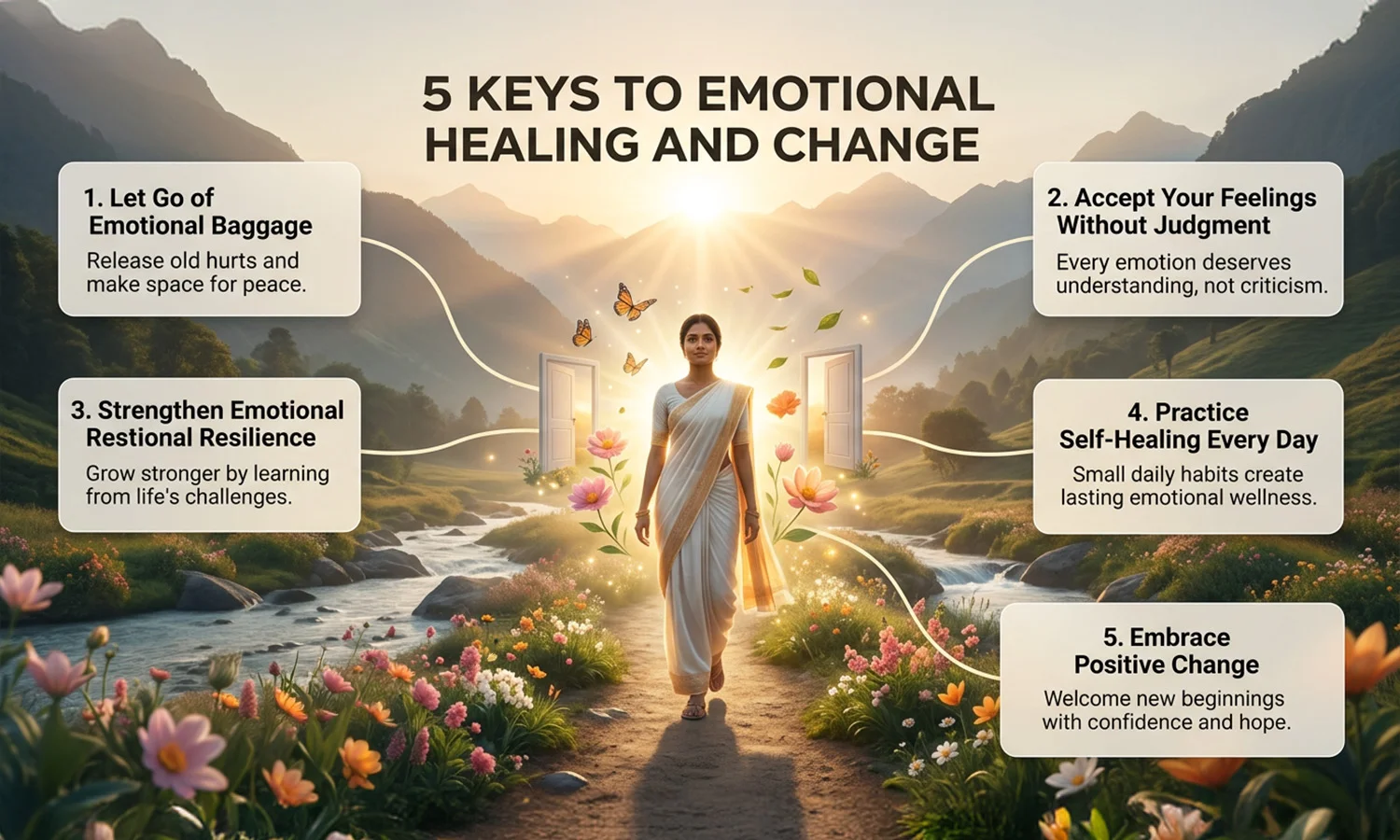
Gentle Steps That Support Emotional Healing and Change
Healing is rarely a straight line. Some days feel light and others feel heavy, and both are part of the process. The aim is not to force a permanent mood but to build a healing mindset that lets feelings move through you instead of getting stuck. When you stop fighting an emotion and simply allow it to be present, it often softens faster than expected.
Letting go is a skill that grows with practice. You can begin by naming what you feel, writing it down, or speaking it aloud to someone you trust. These small acts release pressure and strengthen emotional resilience over time. Self healing does not mean doing everything alone, and reaching out is a sign of strength rather than weakness.
With patience, emotional healing and change lead to greater emotional wellness. You begin to respond to old triggers with more space and less reaction. The past loses some of its charge, and you make room for new energy, which is the quiet joy that often follows genuine release.
Frequently Asked Questions
What Does Emotional Healing Actually Involve?
Emotional healing and change involve allowing feelings to surface, understanding them, and gradually letting go of their hold. It is rarely a straight line, but a steady healing mindset helps emotions move through you and builds emotional resilience.
How Do I Start Letting Go of Past Pain?
Begin by naming what you feel, then express it through writing or talking with someone you trust. These small acts release pressure and support self healing. Letting go is a skill that strengthens emotional wellness with practice.
How Long Does Emotional Healing Take?
There is no fixed timeline for emotional healing and change, since it depends on the person and the situation. Some days feel light and others heavy, and both are normal. A patient healing mindset and steady support build lasting emotional resilience.
What Is the Link Between Emotional Eating and Emotional Healing?
Emotional eating is often an attempt to soothe hidden feelings rather than real hunger. Recognising the emotion behind the urge is a step toward self healing. Addressing the root feeling supports genuine emotional healing and greater emotional wellness.
Take the Next Step
Emotional healing and change unfold more gently with caring support. If you would like guidance on letting go and building resilience, visit https://coachingwithgeeta.com/book-a-session/ to learn more and book a session. If you are struggling with your mental health, please also consider speaking with a qualified professional.