Many people use the terms fear and anxiety interchangeably, assuming they refer to the same emotional experience. Although these feelings may seem similar, they actually represent two different psychological responses.
Understanding fear and anxiety can help individuals recognize what they are experiencing and respond to it more effectively. Both emotions are part of the brain’s survival system, designed to alert us to potential danger. However, when these reactions become frequent or overwhelming, they can begin to interfere with daily life.
To better understand emotional well-being, it is important to explore the anxiety definition, identify the fear and anxiety difference, and recognize how these emotions influence our thoughts and behaviour.
Are Fear And Anxiety The Same?
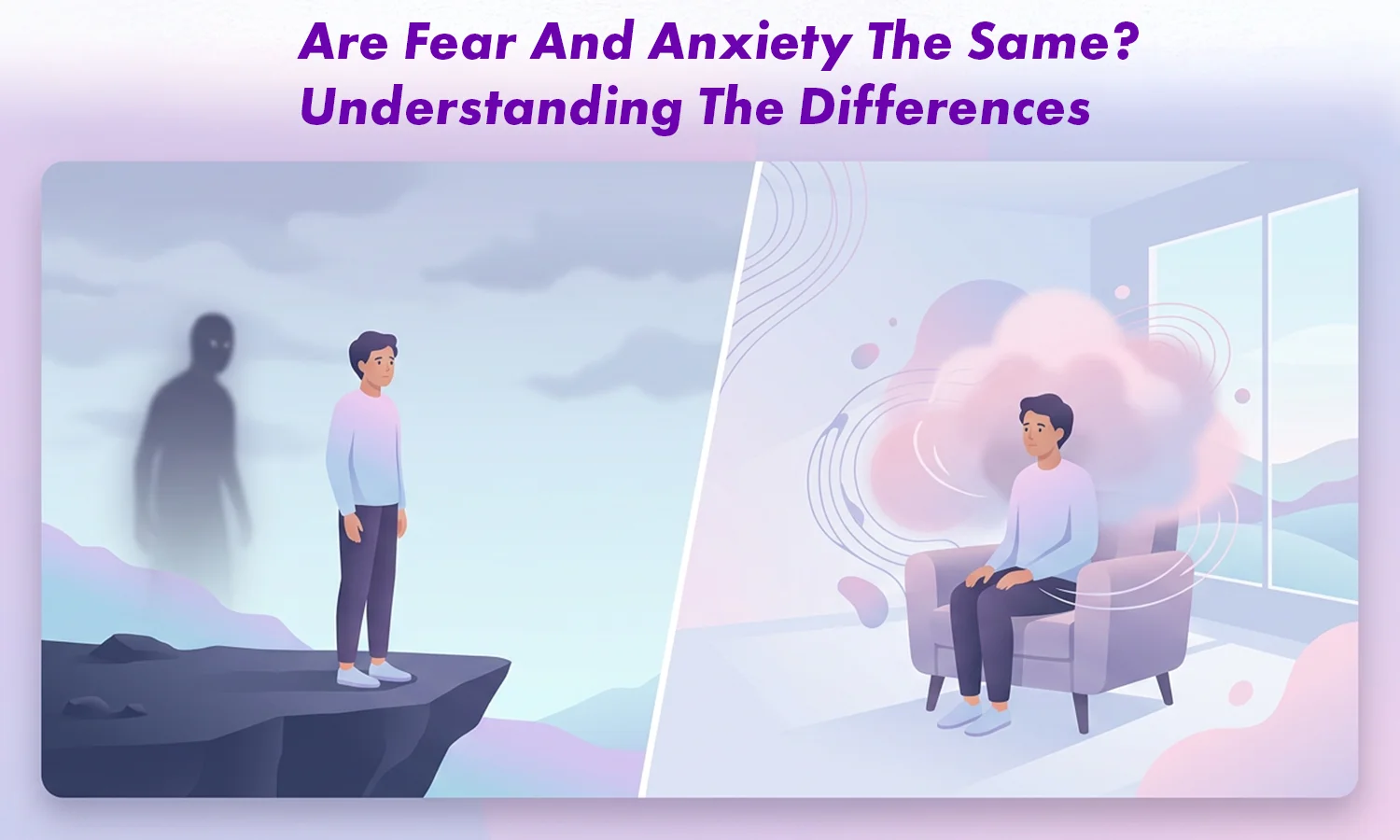
Although closely related, fear and anxiety are not exactly the same. Fear usually arises when a person encounters an immediate and clear threat. Anxiety, on the other hand, tends to occur when someone anticipates a possible future danger.
According to the commonly accepted anxiety definition, anxiety refers to feelings of worry, nervousness, or unease about uncertain events. While fear focuses on the present moment, anxiety is usually connected to what might happen in the future.
For example, seeing a dangerous animal suddenly may trigger fear because the threat is immediate. However, worrying about the possibility of encountering that animal tomorrow is anxiety. Both reactions activate the body’s stress response, but they function in different ways.
Recognizing the difference between fear and anxiety allows people to better understand their emotional responses and address them in a healthy way.
Fear and Anxiety Difference: Understanding the Key Distinction
The fear and anxiety difference becomes clearer when we look at how these emotions affect the mind and body.
Fear is usually short-term and disappears once the danger is gone. It prepares the body for quick action through the fight-or-flight response. Anxiety, however, may last longer because it is often connected to uncertain situations that have not yet occurred.
Another key difference lies in how the brain processes these emotions. Fear is typically triggered by a specific threat, whereas anxiety often develops through repeated thoughts about possible risks.
In many situations, anxiety may be linked to a hidden fear that a person may not immediately recognise. For instance, fear of failure , fear of rejection, or uncertainty can silently trigger anxious thoughts about future events.
Understanding this connection between fear and anxiety can help people become more aware of their emotional patterns and respond to them with greater clarity.
Signs That Fear and Anxiety Are Affecting Your Life
Experiencing fear and anxiety occasionally is a natural part of life. However, when these emotions become persistent, they may start affecting daily activities and emotional well-being.
One common sign is avoidance behaviour. A person might begin avoiding certain places, situations, or opportunities because they feel uncomfortable or worried about possible outcomes.
Difficulty concentrating is another indicator. Constant worry or overthinking can make it challenging to focus on tasks at work, school, or home.
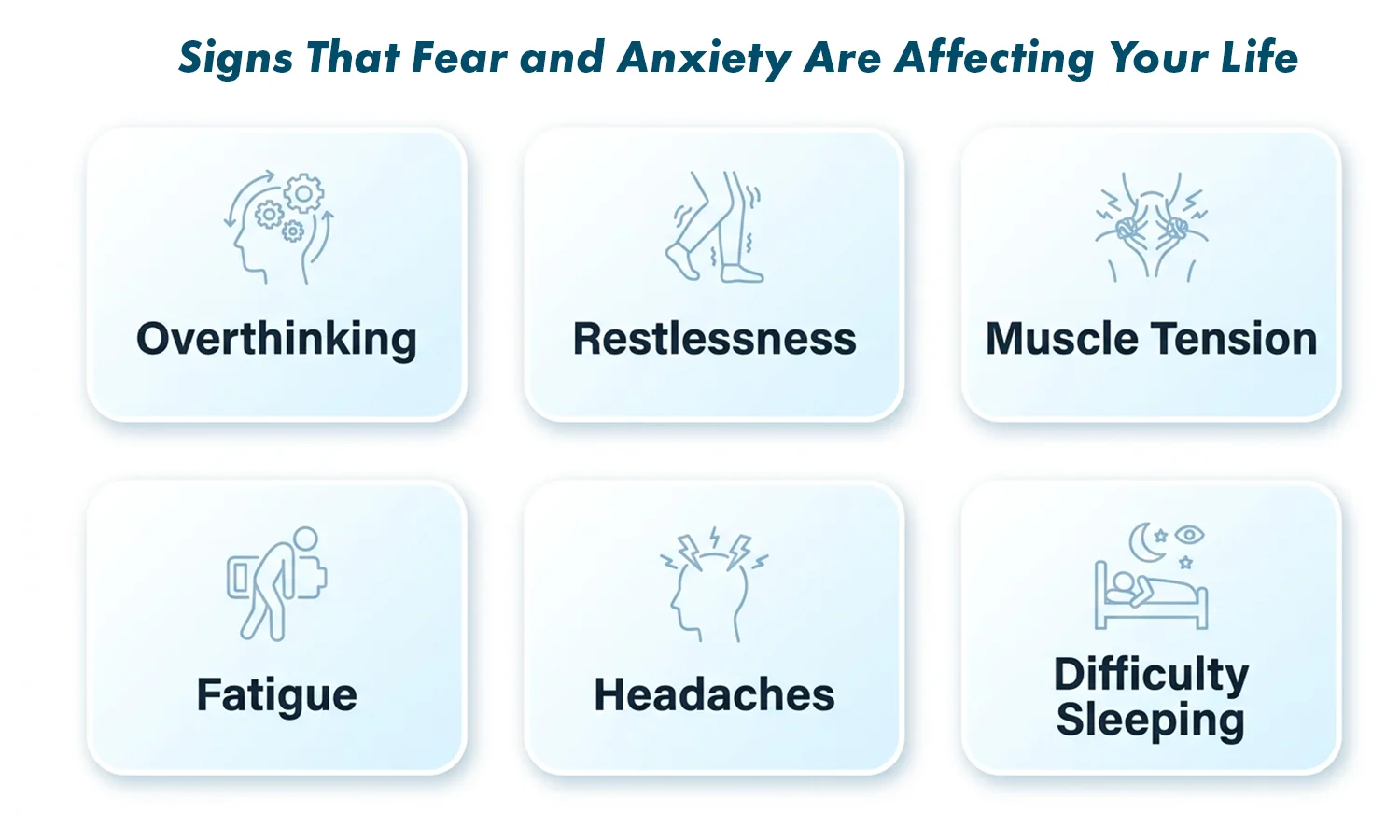
Physical symptoms may also appear. These can include restlessness, muscle tension, fatigue, headaches, or difficulty sleeping. These reactions happen because the body remains in a prolonged state of alertness.
Recognising when fear and anxiety start affecting daily routines is an important step toward improving emotional health.
Conclusion: Breaking the Cycle of Fear and Anxiety
Understanding the difference between fear and anxiety is an important step toward improving emotional well-being. While both emotions are natural protective responses, persistent worry or fear can create unnecessary stress and affect everyday life.
Developing self-awareness, practising healthy coping strategies, and learning to observe emotional triggers can help individuals manage fear and anxiety more effectively.
For readers interested in exploring deeper insights into emotional awareness and personal growth, the book The Game of Change by Geeta Ramakrishnan offers valuable perspectives. The ideas shared in the book encourage readers to observe their thoughts, understand emotional patterns, and develop healthier ways of responding to stress and uncertainty in daily life.
FAQs
Overcoming fear and anxiety often involves identifying triggers, practising mindfulness, developing positive thinking habits, and seeking professional support when needed.
Fear is an emotional response to an immediate threat, while anxiety refers to worry or unease about possible future dangers.
Fear usually appears in response to a direct threat, while anxiety develops when the mind anticipates potential risks or uncertain outcomes.
Fear can feel stronger in the moment because it prepares the body for immediate action. Anxiety may last longer because it is connected to ongoing worry about future events.