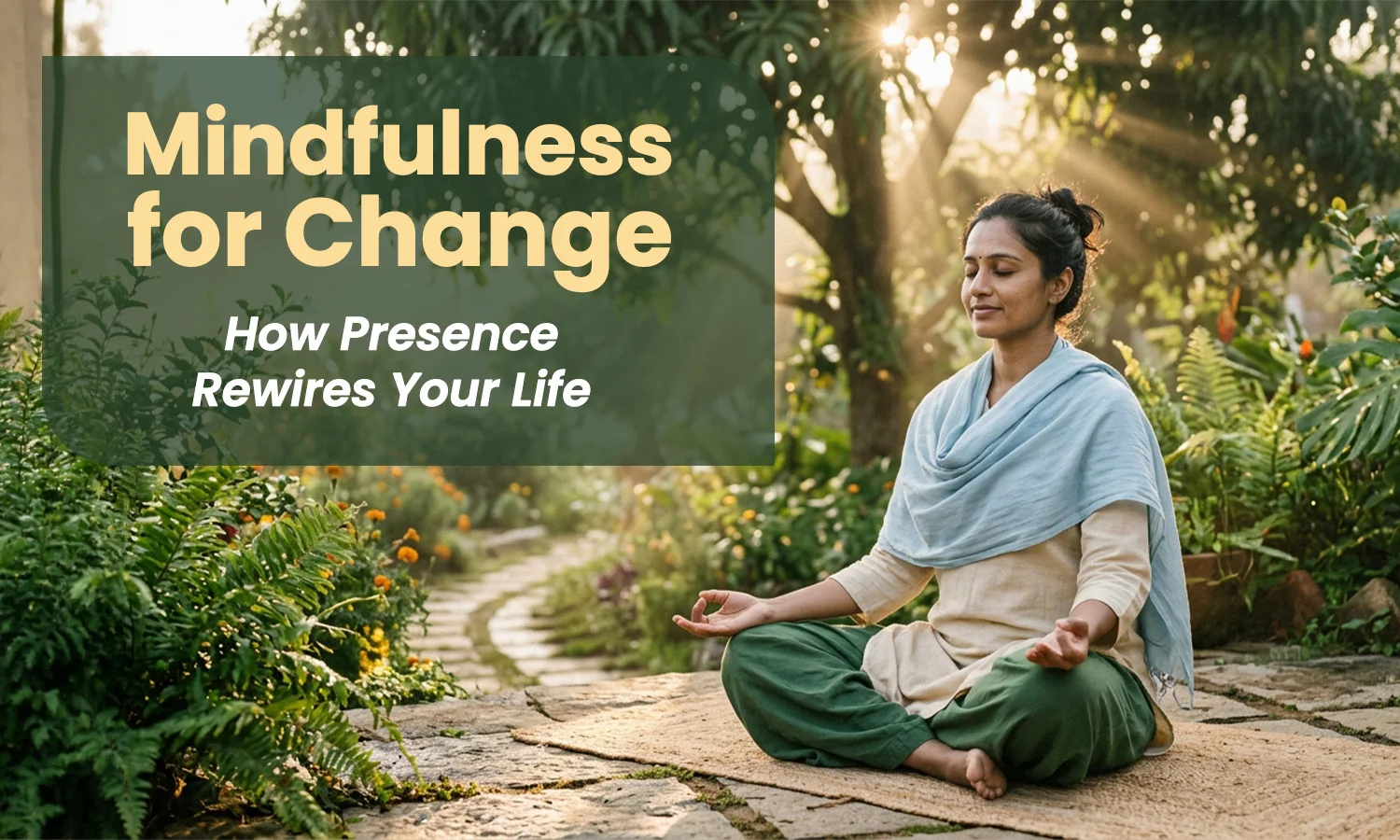
We spend most of our lives somewhere other than the present. Studies suggest people pass roughly ninety five percent of their time replaying the past or worrying about the future. That mental absence quietly blocks growth. Mindfulness for change is the practice of returning to now, where real choices are actually made. When you are present, you can finally see your patterns clearly and choose a different response. This article explains how mindfulness for change works and how to weave it into ordinary days.
Why Mindfulness for Change Matters
When your mind is stuck in the future, you live the same imagined moment over and over while missing the real one in front of you. No one can predict exactly what will happen, so rehearsing it only fuels anxiety.
Mindfulness for change interrupts that loop. By bringing attention back to the present, you create a gap between a trigger and your reaction. In that gap lives the freedom to choose, which is the whole point of present moment awareness.
Present Moment Awareness in Everyday Tasks
You do not need a meditation cushion to practice. Try taking a new route to work and noticing the people, the trees, and the flowers along the way, instead of mentally rehearsing your meeting.
This simple shift trains present moment awareness. Being observant pulls you into the now, and curiosity becomes a doorway to mindful living. The more often you practice, the more natural this presence feels.
Mindful Living Through the Senses
Cooking is an excellent mind and body exercise. The touch, smell, and colours of the ingredients connect your body with your mind and fire up your imagination of how the meal will taste.
Activities that engage the senses anchor you in the present and support mindful living. They turn routine chores into small moments of focus, which steadily builds the mental clarity that change requires.
Breathing as a Gateway to Self Awareness
Slowing your breath and observing your thoughts come and go is a form of meditation in itself. You can sit comfortably in a chair, keep your back straight, and simply watch your breath. Researchers at Northwestern University found that the rhythm of breathing shapes activity in brain regions tied to emotion and memory.
This gentle practice deepens self awareness. As you notice your thoughts without grabbing them, you begin to understand your own patterns. Self awareness is the foundation on which mindfulness for change is built.
From Mental Clarity to Emotional Balance
A present mind is a calmer mind. When stress drops, you gain time and energy, which increases your ability to see problems as opportunities. This is how mental clarity translates into better decisions.
Over time, mindfulness for change produces emotional balance, the steady inner state that lets you respond rather than react. Keep returning to the present, keep observing your breath, and that balance will grow stronger with practice.
Micro Mindfulness for Busy Days
You do not need an hour to practice mindfulness for change. Micro practices fit into ordinary moments. Take three slow breaths before answering a message. Feel your feet on the floor while the kettle boils. Notice the colours around you at a red light.
These tiny pauses build present moment awareness without disrupting your schedule. Repeated through the day, they train the mind to return to now, which is exactly where mindful living begins.
Common Misconceptions About Mindfulness
Many people think mindfulness means emptying the mind or sitting cross legged for hours. Neither is true. Slowing your breath and watching your thoughts come and go, even while seated in a chair, is a complete practice in itself.
Another misconception is that you must feel calm immediately. Mindfulness for change is about noticing, not forcing. The goal is self awareness, the ability to observe your patterns clearly, which naturally leads to greater mental clarity over time.
How Mindful Living Improves Decisions
When you are present, you create a gap between a trigger and your reaction. In that gap lives choice. Instead of snapping back out of habit, you can pause and choose a wiser response.
This is how mindfulness for change improves real decisions. As stress drops, your thinking clears, and problems start to look like opportunities. The steady result is emotional balance, the calm centre from which better choices flow
Bringing Mindful Living Into Ordinary Moments
Mindfulness for change does not require hours of silence or a special room. It can live inside the tasks you already do. Washing dishes, walking to the car, or drinking a glass of water can each become a moment of present moment awareness if you give them your full attention. The point is not to add more to your day but to be more present in what is already there.
This matters because a scattered mind tends to repeat old patterns automatically. When you slow down and notice what you are doing, you create a small gap between a trigger and your response. In that gap, choice becomes possible. That is where real change begins, and it is why mindful living supports every other habit you are trying to build.
Try anchoring your attention to your breath for the length of three slow inhales and exhales whenever you move between tasks. This brief reset builds mental clarity and restores emotional balance during a busy day. Repeated often, these short pauses deepen self awareness and make calm a more familiar state rather than a rare one.
FAQs
Mindfulness for change helps by creating a pause between a trigger and your response. In that pause you can choose a new action instead of repeating an old pattern. A regular mindfulness practice builds the self awareness that real change requires.
Present moment awareness means giving full attention to what you are doing right now. You can practise it during ordinary tasks like walking or eating. This simple mindful living habit builds mental clarity and steadies your emotional balance.
Yes. A consistent mindfulness practice calms a scattered mind, which improves mental clarity and supports emotional balance. By noticing thoughts without reacting, you build self awareness and respond to life with more steadiness.
Even a few minutes a day helps. Short, frequent moments of present moment awareness matter more than rare long sessions. Mindfulness for change grows through regular mindful living, so consistency is the goal rather than duration.
Take the Next Step
Mindfulness for change deepens with regular practice and gentle guidance. If you would like support building a mindful routine, visit https://coachingwithgeeta.com/book-a-session/ to learn more and book a session