
You cannot always control your circumstances, but you can change how you see them. That single ability is the engine behind positive thinking and change. A shift in perception lets you look at the same problem from a new angle, and that new angle often reveals a way forward you could not see before. Positive thinking is not about ignoring reality. It is about choosing a useful response to it. This article shows how positive thinking and change support each other and how to build the habit.
How Positive Thinking and Change Reinforce Each Other
Even when the situation around you stays the same, a change in perception or belief helps you see it differently. That fresh view can turn a wall into a door. This is the practical link between positive thinking and change.
As the writer Maya Angelou suggested, if you cannot change a situation, you can change your attitude toward it. A positive mindset gives you that power, and it is available in any moment you choose to use it.
Optimistic Thinking Opens Up Opportunities
When you change your mindset, problems and issues begin to look like opportunities. If you keep meeting a challenge with the same old method and the same frustration, you stay stuck with the same result.
Optimistic thinking breaks that loop. It frees you to try new approaches and to notice openings you would otherwise miss. Positive thinking and change thrive on this willingness to look for what could work.
Positive Thinking and Change at the Brain Level
Your brain is malleable, and research on neuroplasticity confirms that it can change in structure and function throughout life. Positive thinking, mindfulness, and Cognitive Behaviour Therapy are recognised ways to support this.
Cognitive Behaviour Therapy simply means changing the way you think and feel so that your behaviour follows. This is positive thinking and change in action, a deliberate practice that reshapes your mental patterns over time.
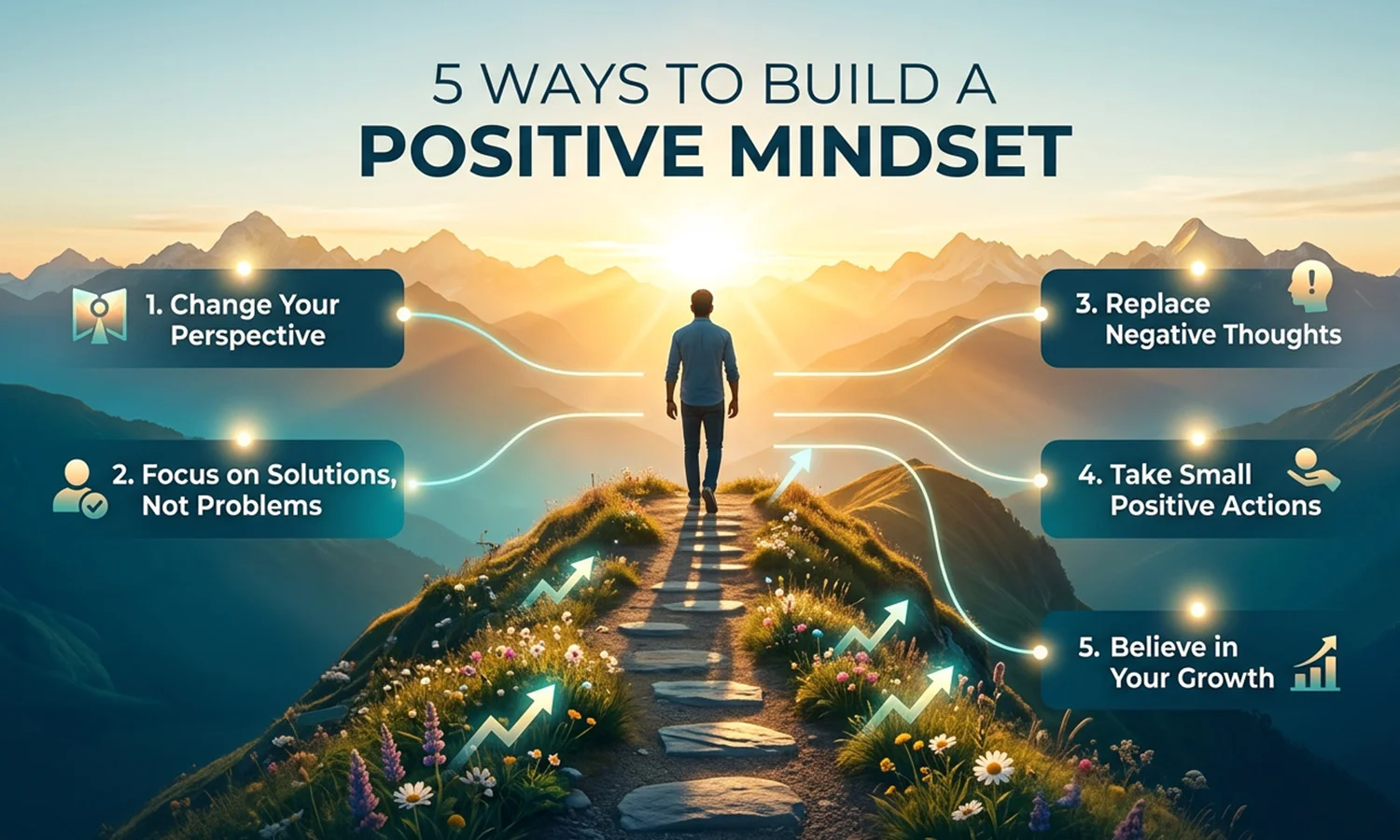
Building Self Belief Through Action
Self belief is not built by repeating empty slogans. It grows when you take small brave steps and let yourself learn from mistakes. Each completed action gives your brain evidence that you are capable.
This evidence is what gives self belief its staying power. Combined with positive thinking and change, it produces the mental strength to keep going when progress feels slow. Action and optimism feed each other.
Using Positive Affirmations Wisely
Positive affirmations can help, but only when they are paired with belief and effort. Interestingly, research shows that people whose deep beliefs are challenged head on can become more rigid, so affirmations work best when they feel genuine rather than forced.
Choose positive affirmations that you can actually accept, and back them with real steps. Done this way, positive thinking and change stop being wishful thinking and become a reliable source of mental strength and forward motion.
Positive Thinking Is Not Toxic Positivity
Positive thinking and change do not mean pretending everything is fine. Forcing a smile over real pain is toxic positivity, and it tends to backfire. Genuine positive thinking acknowledges the difficulty, then looks for a useful response to it.
This honest form of optimism is what builds mental strength. You face the situation clearly, then choose where to place your attention. A positive mindset works precisely because it is rooted in reality, not denial.
Reframing Is the Core Skill
Reframing means looking at the same situation from a different angle. Even when circumstances do not change, a shift in perception can turn a wall into a door. This is the practical engine of positive thinking and change.
Practice reframing by asking what else could be true, or what this challenge might be teaching you. Optimistic thinking grows stronger each time you find a more useful angle, and that habit steadily builds self belief.
A Daily Positive Thinking Routine
Start the day by naming one thing you are looking forward to. During the day, catch one harsh self judgment and soften it. At night, note one small win. These three steps keep positive thinking and change active.
Pair this with positive affirmations you can actually believe, and back them with real action. Done consistently, this routine turns optimism into a reliable source of mental strength rather than a passing mood.
How to Keep Positive Thinking Honest and Useful
Positive thinking and change work together only when the optimism is grounded. Pretending a hard situation is fine does not help and often backfires. Useful positive thinking acknowledges the difficulty and then looks for the part you can influence. This honest form of optimistic thinking keeps you motivated without denying reality, and it keeps your mind open to solutions you might otherwise miss.
The core skill is reframing. When you face a setback, you can ask what the situation makes possible rather than only what it took away. This question shifts your focus toward action and builds mental strength. Over time, repeated reframing strengthens self belief, because you gather evidence that you can find a path forward even when things go wrong.
Positive affirmations can support this process when they are believable. A statement you fully reject will not stick, so choose words that stretch you slightly rather than ones that feel false. Paired with real effort, a positive mindset becomes a practical tool for change rather than empty cheerfulness.
Frequently Asked Questions About Positive Thinking and Change
Does Positive Thinking Really Change Your Life?
Positive thinking and change work together when the optimism is grounded. A positive mindset will not erase problems, but it keeps you open to solutions and builds mental strength, which helps you act instead of giving up.
How Do I Build a Positive Mindset When Life Is Hard?
Build a positive mindset by acknowledging the difficulty first, then focusing on the part you can influence. This honest, optimistic thinking protects motivation and grows self belief, since you gather proof that you can find a way forward.
Do Positive Affirmations Actually Work?
Positive affirmations help when they are believable. A statement you fully reject will not stick, so choose words that stretch you slightly. Paired with real effort, positive affirmations support a positive mindset and stronger self belief.
What Is the Difference Between Positive Thinking and Toxic Positivity?
Positive thinking and change face reality and look for useful action, while toxic positivity denies real feelings. Healthy optimistic thinking allows hard emotions and still builds mental strength, which makes it far more effective than forced cheerfulness.
Take the Next Step
Positive thinking and change grow stronger with steady support and practice. If you would like guidance on building a more optimistic outlook, visit https://coachingwithgeeta.com/book-a-session/ to learn more and book a session.