What Causes Overthinking?
What causes overthinking? It is rarely one single event. It usually forms from a mix of fear of uncertainty, perfectionism, past emotional wounds, and an untrained nervous system that treats ordinary decisions like threats. Left unaddressed, this pattern can deepen into an overthinking disorder connected with anxiety and low mood. Understanding the trigger is the first real step toward a calmer, steadier mind.
Why the Mind Keeps Replaying the Same Thoughts
Why overthinking happens is a question Coach Geeta hears often in her coaching practice. Most people assume their mind is simply “too active,” but the pattern usually has a clear root. The brain is wired to scan for danger, and when real threats are rare, it turns ordinary uncertainty into something to solve endlessly.
This is where stress and overthinking intersect. A demanding job, family responsibilities, and financial pressure can keep the nervous system on alert long after the actual stressful event has passed. The mind, still in scanning mode, latches onto smaller worries and inflates them into ongoing loops.
Fear of Uncertainty as the Core Driver
Fear of uncertainty sits at the centre of most overthinking patterns. When an outcome is unknown, the mind tries to predict every possibility so it can feel prepared. This feels productive in the moment, yet it rarely leads to a decision. Instead, it produces exhaustion and a sense of being stuck between options that never resolve.
Coach Geeta often explains this using a simple frame from her ontological coaching background: the mind is not solving the problem; it is trying to eliminate the discomfort of not knowing. Recognizing this distinction is often the first shift her clients experience.
Perfectionism and the Fear of Getting It Wrong
Perfectionism and overthinking are closely linked, especially among high-achieving professionals and homemakers who hold themselves to exacting standards. When every decision feels like a referendum on someone’s worth, the mind naturally slows down, checking and rechecking before allowing any action.
This pattern often begins early, shaped by environments where mistakes were met with harsh criticism rather than gentle correction. Over time, the person learns to over-prepare and over-analyze as a form of protection, even when the situation does not call for it.
When Overthinking Becomes a Pattern, Not a Moment
For some, this way of thinking becomes so frequent that it starts to resemble an overthinking disorder, showing up as constant worry, difficulty concentrating, and a persistent sense of dread about ordinary tasks. It is not always classified as a distinct clinical diagnosis, but it is widely recognized as a symptom cluster tied to generalized anxiety.
Anxiety and overthinking feed each other in a loop. Anxious feelings prompt the mind to search for reassurance through repeated analysis, and that repeated analysis keeps the anxious feelings active. Breaking this cycle usually requires addressing both the thought pattern and the underlying emotional state.
The Link Between Overthinking and Low Mood
In more persistent cases, overthinking and depression can appear side by side. Rumination, the technical term for repetitive negative thinking, is a well-documented feature of low mood, since it keeps attention fixed on past regrets or perceived failures rather than present possibilities. Coach Geeta’s coaching approach gently interrupts this fixation by guiding clients toward small, present-focused actions rather than continued analysis.
Moving From Cause to Change
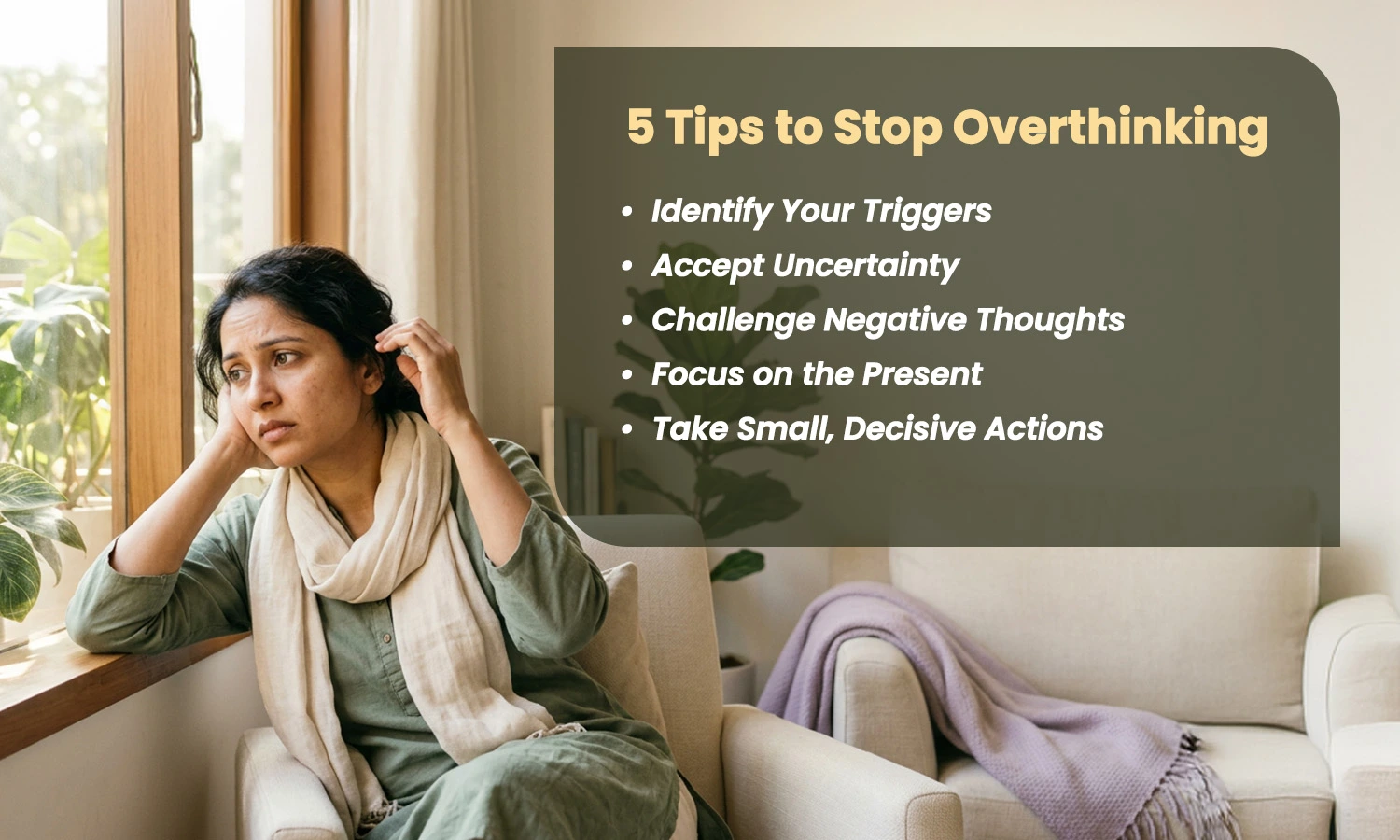
Understanding what causes overthinking does not remove the pattern by itself, but it does remove the confusion around it. Once a person can name the trigger, whether it is fear of uncertainty, perfectionism, or unresolved stress, they can begin responding differently instead of getting pulled back into the same loop.
Coach Geeta’s book, “The Game of Change,” walks readers through this process step by step, connecting the root cause of a thought pattern with practical tools for building a steadier, more grounded mind.
Key Takeaways
- What causes overthinking? It usually traces back to fear of uncertainty rather than the situation itself.
- Perfectionism and overthinking often develop together, especially in high-pressure work and home environments.
- Stress and overthinking reinforce each other when the nervous system stays alert long after the stressful moment has passed.
- Anxiety and overthinking create a loop that needs both emotional and mental attention to break.
- Recognizing the true trigger is the first practical step toward calmer, more decisive thinking.
Take the Next Step
If you keep asking yourself why your mind will not settle, understanding the cause is only the beginning. Coach Geeta’s one-on-one coaching sessions help you trace your own triggers and build a calmer, more confident way of responding to daily pressure. Explore “The Game of Change” or reach out to Coach Geeta directly to start working through your patterns with personal guidance.
FAQs
What is the single biggest cause of overthinking?
For most people, fear of uncertainty is the biggest driver, since the mind tries to predict every outcome to avoid feeling unprepared. This search for certainty rarely succeeds, which is why the thought loop continues.
Can childhood experiences cause overthinking as an adult?
Yes, environments where mistakes were harshly judged often teach the mind to over-analyze as a form of protection. This connects closely with perfectionism and overthinking patterns seen later in life.
Is overthinking always linked to anxiety?
Not always, but anxiety and overthinking are frequently connected, since anxious feelings often trigger repetitive thought loops as a way of seeking reassurance.
Can overthinking lead to depression?
Persistent rumination is a recognized feature of low mood, so overthinking and depression can develop together if the pattern goes unaddressed for a long time.