In today’s fast-moving world, it is common to feel overwhelmed, stressed, or constantly worried. Many people often ask themselves, what is anxiety, especially when these feelings begin to interfere with everyday life. While occasional worry is a natural human response, persistent anxiety can affect both mental and physical well-being.
Understanding what anxiety is is the first step toward managing it effectively. When you begin to recognize how your mind and body respond to stress, it becomes easier to take control and gradually reduce anxiety through simple and consistent practices.
What Is Anxiety and Why Does It Happen?
To understand what anxiety is, it helps to see it as the body’s natural alarm system. It prepares you to deal with challenges by increasing alertness and focus. However, this system can sometimes become overactive, reacting even when there is no real danger.
Anxiety often develops as a response to uncertainty, pressure, or past experiences. The brain is designed to protect you, but in modern life, it may interpret everyday situations like deadlines or social interactions as threats. This is why many people experience anxiety symptoms even in safe environments.
The causes of anxiety are not always simple. They usually involve a mix of biological factors, life experiences, and thought patterns. When these factors combine, the mind may stay in a constant state of alertness, making it harder to relax.
Common Anxiety Symptoms You Should Not Ignore
Recognizing early anxiety symptoms can help prevent them from becoming overwhelming. These symptoms can show up in different ways, affecting the body, thoughts, and behavior.
Physically, anxiety may appear as a racing heartbeat, sweating, fatigue, or digestive discomfort. Some people also experience restlessness or difficulty sleeping. Mentally, it often shows up as constant worry, difficulty concentrating, or a sense that something is about to go wrong.
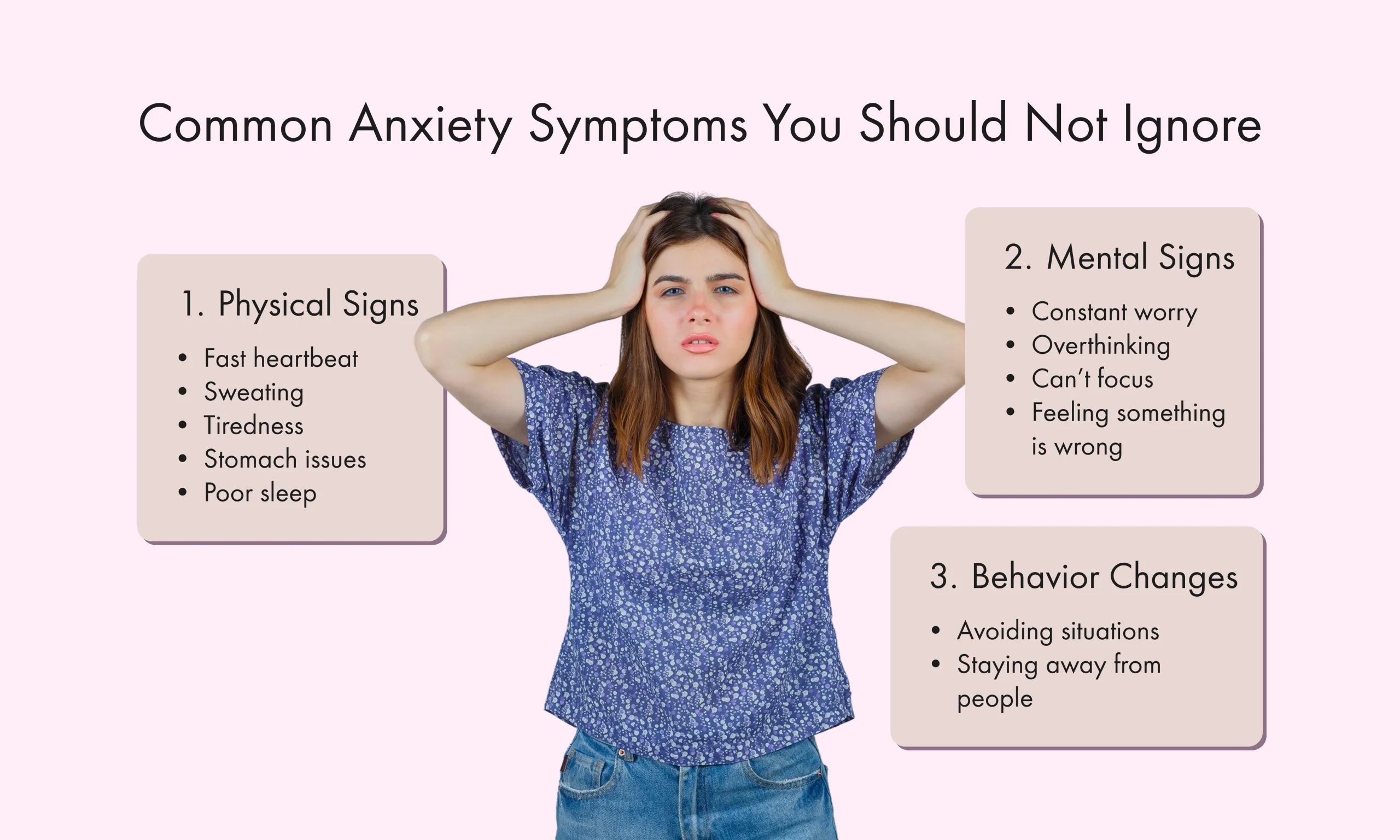
Over time, these symptoms can become more intense and may lead to severe anxiety if left unaddressed. Behavioral changes such as avoiding certain situations or withdrawing from social interactions are also common signs that should not be ignored.
What Are the Common Causes of Anxiety?
Understanding the causes of anxiety can make it easier to manage your emotional responses. Anxiety rarely has a single cause; instead, it develops through a combination of internal and external factors.
Biological factors such as brain chemistry and genetics can make some individuals more prone to anxiety. Environmental influences, including stressful life events, work pressure, or relationship challenges, also play a major role.
Lifestyle habits, such as poor sleep, excessive screen time, or high caffeine intake, can further increase stress levels. When these elements come together, they create a cycle that makes it harder to reduce anxiety naturally.
How Anxiety Works in the Brain
To truly understand what anxiety is, it helps to look at how the brain processes it. The amygdala, often called the brain’s alarm centre, detects potential threats and triggers a response. This leads to the release of stress hormones like adrenaline and cortisol.
At the same time, the prefrontal cortex – the rational part of the brain, tries to calm this reaction. However, during anxiety, this balance is disrupted, making it difficult to think clearly or stay calm.
This is why mindfulness for anxiety is often recommended. It helps strengthen the brain’s ability to regulate emotional responses and brings attention back to the present moment, reducing the intensity of anxious thoughts.
How to Recognize When Anxiety Becomes a Problem
Not all anxiety is harmful, but it becomes a concern when it starts interfering with daily life. If you find yourself constantly worried, unable to relax, or avoiding situations, it may be a sign that anxiety has gone beyond normal levels.
When anxiety begins to affect work, relationships, or overall well-being, it may also lead to long-term challenges. Recognizing these patterns early is important for overcoming anxiety and preventing it from taking control of your routine.
If these feelings persist for months or feel overwhelming, seeking guidance or support can be an important step toward recovery.
From Understanding Anxiety to Finding Inner Calm
Moving from understanding what anxiety is to actually managing it requires small but consistent efforts. Simple practices such as deep breathing, regular movement, and mindful awareness can help calm the nervous system.
Focusing on the present moment instead of future worries allows the mind to slow down. Over time, these habits help reduce anxiety and build emotional balance.
The journey of overcoming anxiety is not about eliminating stress completely but about learning how to respond to it differently. With patience and consistency, it becomes possible to create a calmer and more grounded state of mind.
Conclusion
Understanding what anxiety is is the beginning of a deeper journey toward self-awareness and emotional balance. While anxiety can feel overwhelming at times, small and consistent changes can help you gradually reduce anxiety and regain control over your thoughts and emotions.
If you are looking to understand your inner patterns more deeply and shift from stress to clarity, The Game of Change by Geeta Ramakrishnan offers valuable insights into self-awareness, mindset shifts, and personal growth. The book guides you toward understanding your responses and building a healthier relationship with your thoughts.
If this resonates with you, you can grab your copy online to explore practical tools that support long-term emotional well-being and inner calm.
FAQs
Yes, anxiety is closely related to fear, but it usually focuses on future uncertainties rather than immediate danger.
The root cause of anxiety varies for each person and may include biological factors, past experiences, and lifestyle habits.
Poor sleep, excessive stress, negative thinking patterns, and lack of relaxation can make anxiety worse over time.