Key Takeaways
- The fear of change is a natural response to uncertainty.
- Severe cases may develop into Metathesiophobia.
- The brain prefers routine and predictability for safety.
- Past experiences and fear of the unknown increase anxiety.
- Small, steady steps can help build confidence during transitions.
Understanding Fear of Change: The Basics
The fear of change is a natural human response. Most people prefer routines because they feel safe and predictable. When something new appears, the brain may interpret it as a possible threat. This reaction often makes people feel afraid of the unknown, even if the change could lead to something positive.
The fear of change usually comes from uncertainty, loss of control, or past negative experiences. Many people become scared to change because they worry about making mistakes or losing stability. This reaction is not unusual. It is part of how the brain protects itself from danger. However, when this fear becomes too strong, it may lead to avoidance, stress, or individual resistance to change in daily life.
What Is Metathesiophobia? When Fear of Change Becomes Serious
At times, the fear of change becomes intense and persistent . This condition is called Metathesiophobia, which is the clinical term for a severe fear of change.
While most people feel nervous before major transition, Metathesiophobia goes beyond normal anxiety. It may cause a person to avoid opportunities, delay decisions, or panic at the thought of doing something new. This is sometimes linked to change and resistance to change, where a person feels trapped in familiar situations even if they are unhappy.
Signs of severe fear of change may include:
- Extreme indecision
- Avoiding even small changes
- Physical symptoms such as sweating or nausea
- Strong emotional reactions to routine disruptions
If this fear lasts for a long time and interferes with daily life, professional support may help.
What Causes the Fear of Change and Why Are We Scared of It Even When It’s Positive?
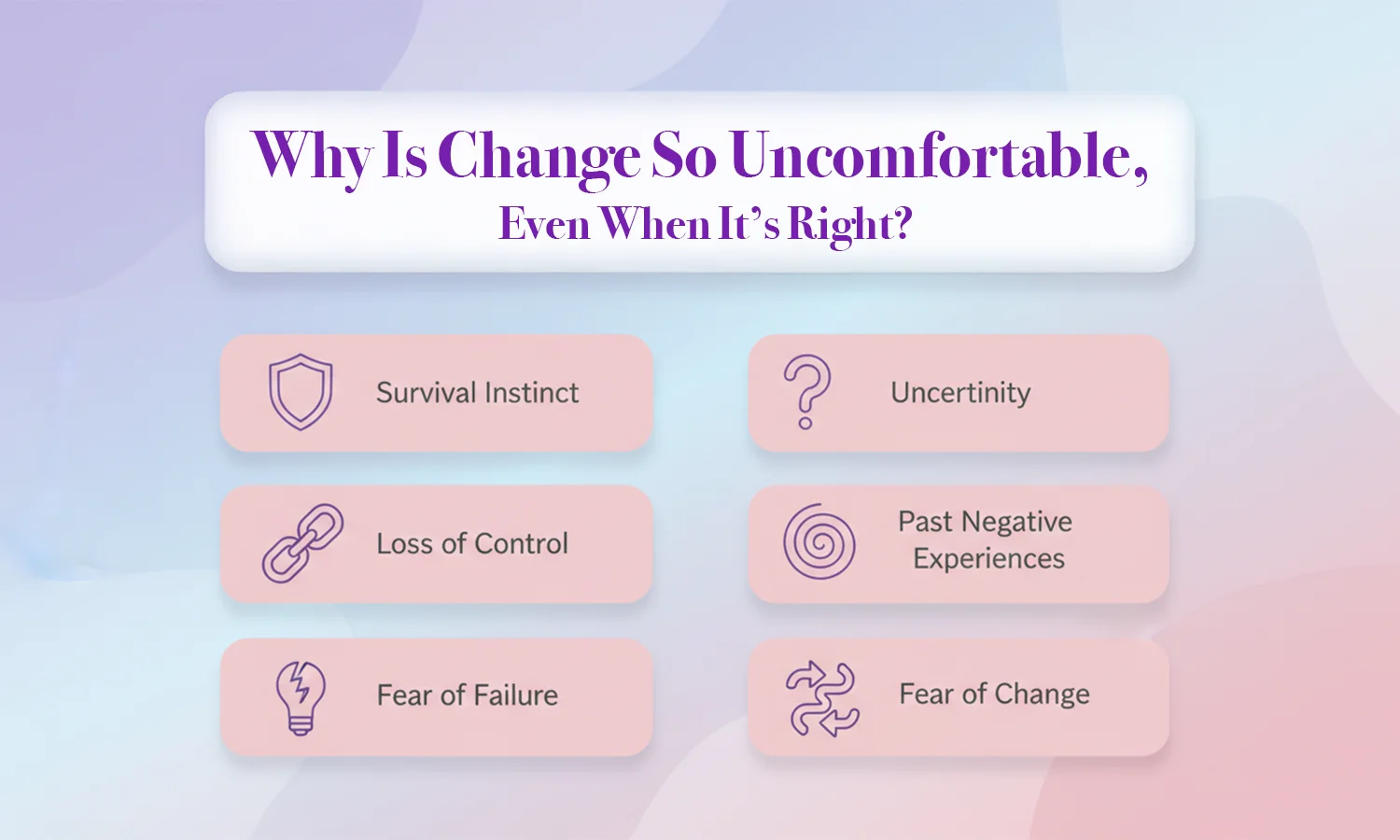
The fear of change has deep psychological and biological roots. The human brain is wired to prefer safety and predictability. When something unfamiliar appears, the brain may react as if it is a threat. This is why many people feel fear of the unknown even when the change is positive.
Some common causes include:
Survival Instinct
The brain naturally prefers familiar situations because they feel safer.
Uncertainty
Not knowing what will happen next creates anxiety and stress.
Loss of Control
When changes are forced by outside events, people may feel powerless.
Past Negative Experiences
If a previous change led to disappointment or embarrassment, the brain may try to avoid similar situations.
Fear of Failure
New roles or environments may create doubt about personal ability, which strengthens the fear of change.
These factors often work together, making even positive transitions feel uncomfortable.
Simple Ways to Overcome Fear of Change and Build Confidence
Reducing the fear of change does not require dramatic action. Small, steady steps can help you build confidence and adjust to new situations.
Start by breaking large changes into smaller steps. This makes the process less overwhelming and easier to manage. Gathering information about the upcoming change can also reduce uncertainty and make the situation feel more predictable.
Another helpful approach is to focus on what you can control. You may not control the situation itself, but you can control your preparation, attitude, and effort. Practicing mindfulness or deep breathing can calm your thoughts and reduce anxiety about the future.
Talking to supportive friends or mentors can also helps . Sharing your concerns often brings clarity and reassurance. Over time, these small actions reduce the fear of change and help you approach new situations with more confidence.
Conclusion
The fear of change is something most people experience at different stages of life. It is a natural response to uncertainty, but it does not have to control your decisions. By understanding the causes and taking small, practical steps, you can slowly build confidence and adapt to new situations. Change may feel uncomfortable at first, but it often leads to growth, learning, and new opportunities.
FAQs
If you feel a strong fear of change, start by taking small steps instead of making sudden decisions. Break the transition into manageable actions, gather information, and focus on what you can control. Over time, this reduces anxiety and builds confidence.
Yes, the fear of change can stop people from applying for new jobs, moving to better opportunities, or improving relationships. Avoiding change may feel safe in the short term, but it can limit growth and satisfaction in the long run.
There is no single answer, but many people struggle with the fear of change because it is connected to uncertainty and loss of control. Since life constantly evolves, learning to handle change is an important skill for long-term confidence and well-being.