What Is Fear of Failure and Why Does It Happen?
The fear of failure is a deep worry about making mistakes or not meeting expectations. Many people experience it at some point, especially in school, work, or relationships. But when this fear starts controlling your decisions, it can stop you from trying new things or taking healthy risks.
Psychologists describe being afraid of failure as a response to shame, criticism, or past negative experiences. It often develops in childhood environments where mistakes were punished or where success was expected at all times.
Common reasons for fear and failure anxiety include:
- Perfectionist thinking
- Fear of judgment from others
- Low self-esteem
- Past embarrassing experiences
- A belief that mistakes define your worth
When left unchecked, this fear can grow into avoidance, procrastination, and self-doubt.
What Is Atychiphobia? When Fear of Failure Becomes a Phobia
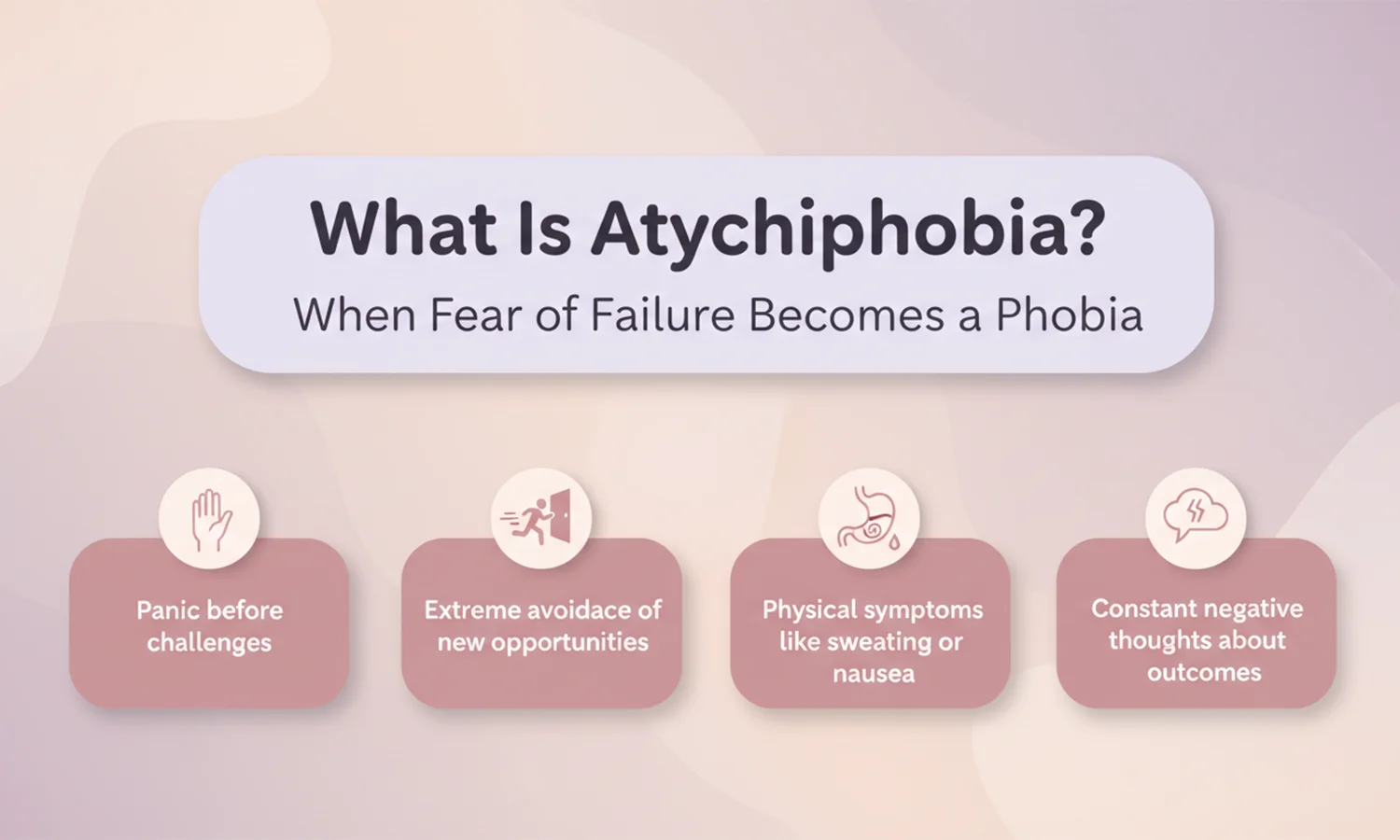
In some cases, the fear of failure becomes so intense that it turns into a clinical condition called Atychiphobia. This is a severe form of fear of failure phobia, where a person avoids tasks simply because they might not succeed.
Unlike normal nervousness, Atychiphobia causes:
- Panic before challenges
- Extreme avoidance of new opportunities
- Physical symptoms like sweating or nausea
- Constant negative thoughts about outcomes
People with this condition may spend months or years avoiding goals. In such cases, professional support can help in overcoming the fear of failure through therapy and guided exercises.
Signs That You Are Afraid of Failing in Life
Many people are afraid of failing without even realizing it. The fear often shows up in daily habits rather than dramatic panic.
Here are some common signs:
- Chronic procrastination before important tasks.
- Refusing to try new things.
- Overthinking simple decisions.
- Negative self-talk like “I’m not good enough”.
- Only choosing tasks where success feels guaranteed.
If these patterns feel familiar, you may be dealing with a strong fear of failure that is holding you back.
7 Strategies to Beat the Fear of Failure in Life Without Self-Pressure
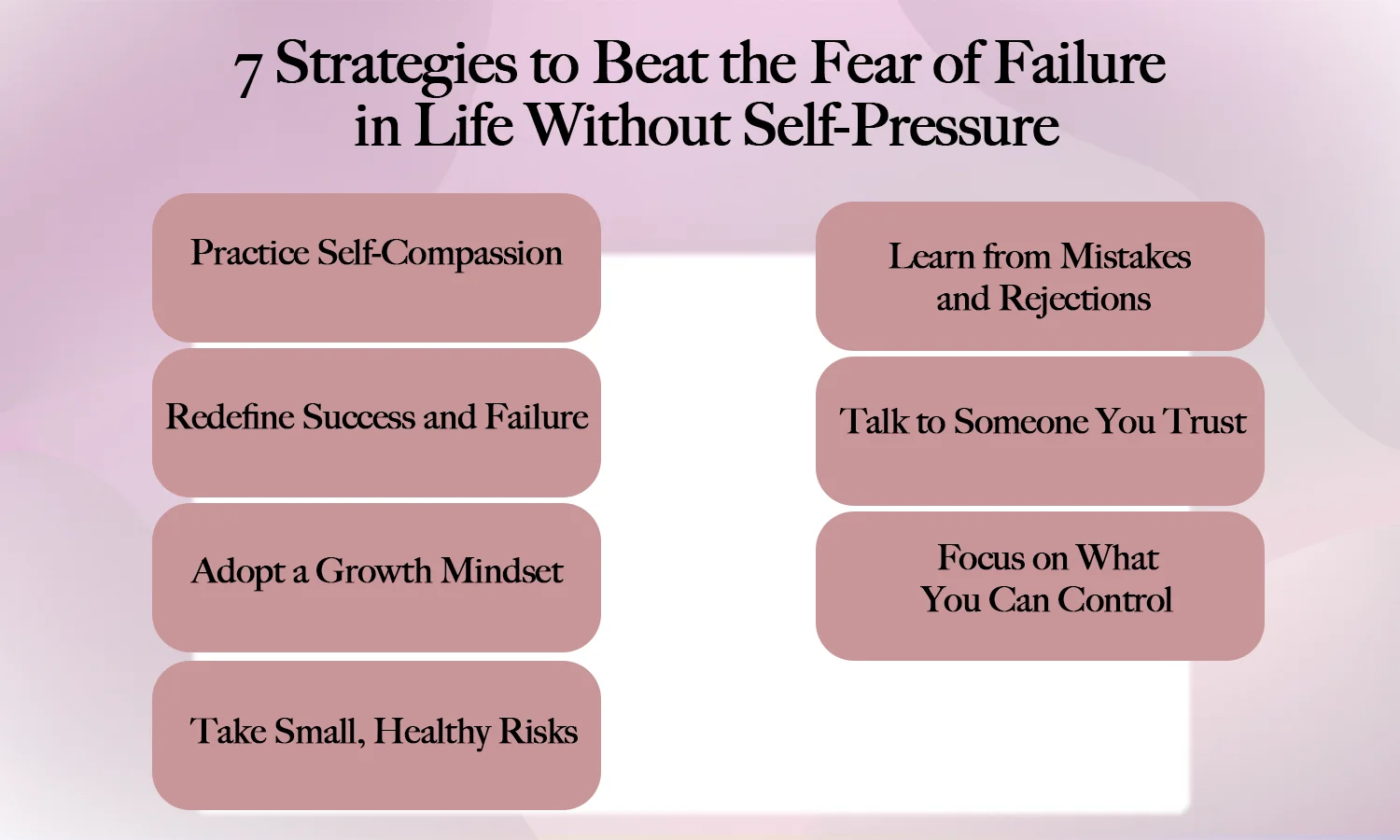
Overcoming the fear of failure does not require harsh discipline or constant self-criticism. Gentle, steady changes in mindset can make a big difference.
1. Practice Self-Compassion
Treat yourself with the same kindness you would offer a friend. Everyone makes mistakes, and setbacks are part of being human.
2. Redefine Success and Failure
Instead of chasing perfect outcomes, measure success by effort, learning, and growth. This helps you conquer fear of failure by removing all-or-nothing thinking.
3. Adopt a Growth Mindset
Believe that skills can improve with practice. When you see mistakes as lessons, the fear of failure begins to lose its power.
4. Take Small, Healthy Risks
Break big goals into small steps. Each small success builds confidence and reduces anxiety.
5. Learn from Mistakes and Rejections
Ask yourself:
- What did I learn?
- What can I do differently next time?
This approach helps you to overcome the fear of failure by turning setbacks into useful feedback.
6. Talk to Someone You Trust
Sharing your worries with a friend, mentor, or therapist can give you clarity and support.
7. Focus on What You Can Control
Put your energy into effort, preparation, and attitude instead of worrying about the final result. This reduces pressure and helps you move forward.
Ready to Take the Next Step?
Living with a constant fear of failure can feel exhausting, but it does not have to control your life. By practicing self-compassion, taking small risks, and focusing on growth instead of perfection, you can build confidence step by step.
The goal is not to eliminate mistakes but to change how you respond to them. When you learn to see failure as part of the journey, success becomes less stressful and more meaningful.
Key Takeaways
- The fear of failure often comes from perfectionism, past criticism, or low self-esteem.
- In severe cases, it can develop into Atychiphobia.
- Signs include procrastination, avoidance, and negative self-talk.
- Gentle mindset shifts can reduce anxiety around failure.
- Small, consistent actions help build confidence over time.
FAQs
To reduce overthinking, focus on actions instead of outcomes. The fear of failure grows when you imagine worst-case scenarios. Break tasks into small steps and complete one step at a time.
Start by challenging negative thoughts and replacing them with realistic ones. Regular practice, journaling, and small risks help reduce the fear of failure over time.
Low self-esteem often comes from repeated criticism, comparison, or past failures. When the fear of failure becomes part of your self-image, it can lower confidence and stop you from trying new things.