The fear of losing someone you love can quietly take over your thoughts. It may start as concern and slowly turn into constant worry. You may find yourself imagining future loss even when nothing is wrong in the present. While love often brings care and attachment, fear can shift that bond into anxiety.
This fear does not always show up evidently. Sometimes it stays in the background, influencing how you behave, how you think, and how present you are with the people you care about. Understanding this fear is the first step toward responding to it more healthily.
What Does the Fear of Losing Someone Really Mean?
The fear of losing someone is not always about the other person. More often, it reflects what that relationship represents in your life.
At its core, this fear usually points to one or more of the following:
- A strong emotional attachment
- A sense of safety tied to the relationship
- Fear of emotional pain or abandonment
- Fear of facing life alone
Many people experiencing the fear of losing a loved one are not reacting to what is happening now. They are reacting to imagined futures or past experiences that left a deep emotional imprint.
Why Do I Have a Constant Fear of Losing Someone I Love?
A constant fear does not appear without a reason. It usually develops from personal history, emotional patterns, or earlier experiences with loss or instability.
Below are common reasons why this fear becomes persistent.
Anxious Attachment Patterns
Early relationships shape our perception of closeness. When care or affection felt inconsistent earlier in life, the adult mind may stay alert for signs of loss. This often leads to a fear of losing someone you love, even in stable relationships.
Past Loss or Sudden Separation
If you have experienced an unexpected loss before, your mind may stay in protection mode. It tries to prepare for pain before it happens again. This can result in anxiety, fear of losing someone, even when there is no immediate risk.
Fear of Identity Loss
In deep relationships, identities can merge. Losing a person can feel like losing direction, purpose, or a sense of self. This often fuels the feeling of being afraid of losing someone rather than missing them.
Fear of Uncertainty and Control
Loss reminds us that life is uncertain. The mind tries to regain control by worrying, monitoring, or constantly checking in. This behaviour may feel protective, but it often increases distress.
Ways To Overcome The Fear Of Losing Someone
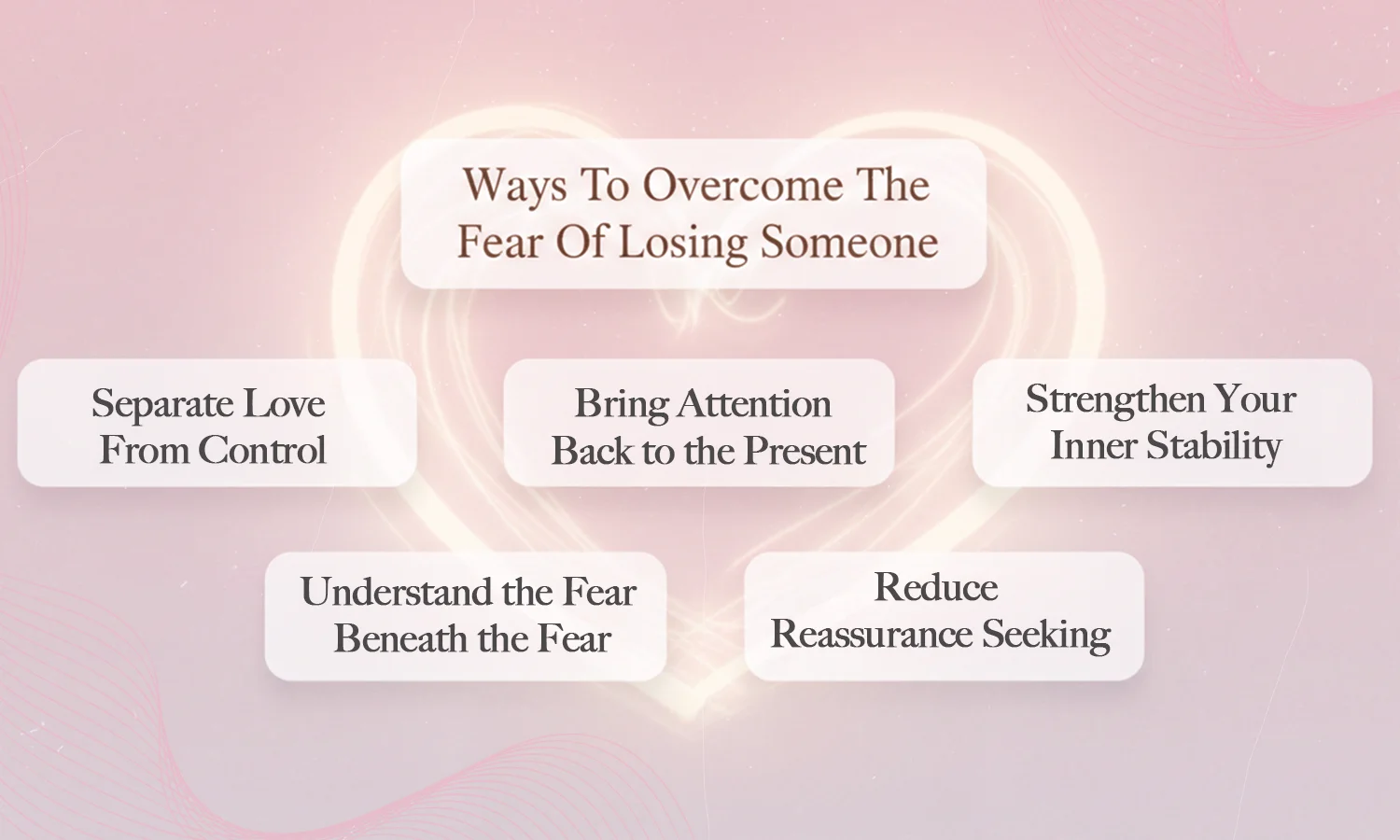
Managing this fear does not mean suppressing it. It means learning how to relate to it differently.
1. Separate Love From Control
Love allows freedom. Fear tries to hold tightly.
Ask yourself:
- Am I connecting, or am I monitoring?
- Am I enjoying the relationship, or constantly guarding it?
The fear of losing someone Phobia, often shows up when love turns into an emotional grip. Awareness alone can soften this pattern.
2. Bring Attention Back to the Present
Fear lives in imagined futures. Relationships live in the present.
Simple grounding practices help:
- Notice what is happening right now.
- Focus on shared moments rather than imagined endings.
- Allow yourself to be present without predicting loss.
This shift reduces the intensity of the fear of losing someone without denying that loss is possible.
3. Strengthen Your Inner Stability
When your emotional world depends entirely on one person, fear becomes heavier.
Building inner stability includes:
- Maintaining interests outside the relationship
- Keeping meaningful connections with others
- Spending time alone without distraction
A stronger inner base makes loss feel survivable rather than devastating.
4. Understand the Fear Beneath the Fear
Often, the fear is not about losing the person. It is about:
- Fear of grief
- Fear of being alone
- Fear of emotional pain
Understanding what is underneath helps you respond with clarity rather than panic.
5. Reduce Reassurance Seeking
Repeatedly checking for reassurance may calm anxiety briefly, but strengthens it long-term.
Try:
- Sitting with discomfort for a few minutes
- Naming the fear without acting on it
- Allowing the feeling to pass naturally
This builds emotional tolerance and reduces dependence on external validation.
When Should You Seek Help for Fear of Losing Someone You Love?
Fear becomes a concern when it begins to limit your life or damage relationships.
You may consider support if:
- The fear disrupts sleep or work.
- You feel unable to function independently.
- You experience frequent panic or physical symptoms.
- Relationships feel strained because of constant worry.
Seeking help is not a sign of weakness. It is a step toward understanding patterns that no longer serve you.
Conclusion
The fear of losing someone is deeply human. It grows from love, attachment, and the desire to protect what matters. Yet when fear becomes constant, it prevents you from fully experiencing the relationship itself.
At Coaching with Geeta, this kind of inner exploration is approached through awareness, emotional observation, and understanding personal patterns.
FAQs
Focus on bringing your attention back to the present and building inner stability so that you can navigate life’s transitions with clarity rather than panic.
While the fear of losing someone phobia is a deeply human experience rooted in attachment, it becomes a concern when the anxiety, fear of losing someone, begins to disrupt your daily sleep, work, or independent functioning.
Yes, because a constant fear of losing someone can shift a healthy bond into a pattern of control, monitoring, and excessive reassurance-seeking that strains the relationship.