Anxiety has become a common experience in modern life. Work pressure, constant notifications, and everyday responsibilities can keep the brain in a continuous state of alertness. Over time, this can make it difficult to relax and fully enjoy daily life.
Developing habits that calm an anxious mind can help your nervous system shift from a stressed state to a calmer and more balanced one. Small, consistent practices can gradually retrain the brain to respond to challenges with greater ease and emotional stability.
Are You Always Feeling Anxious? Here’s What Your Brain Might Be Trying to Tell You
When people feel anxious frequently, it is often the brain’s natural alarm system reacting to perceived threats. The amygdala, a small region of the brain responsible for detecting danger, becomes highly active when stress levels rise. While this response is meant to protect us, it can sometimes remain switched on even when no real danger is present.
This is why many people feel overwhelmed by a nervous mind even in ordinary situations. Modern stressors such as deadlines, digital overload, and social comparison can keep the brain in a constant state of alertness.
Understanding anxiety is an important step in rewiring the anxious brain. Instead of seeing anxiety as an enemy, it can be helpful to view it as a signal that the body needs rest, emotional balance, or healthier daily routines.
The good news is that simple lifestyle changes and habits that calm an anxious mind can gradually reduce these stress responses and help restore emotional stability.
Here Are The 5 Habits That Calm an Anxious Mind Instantly
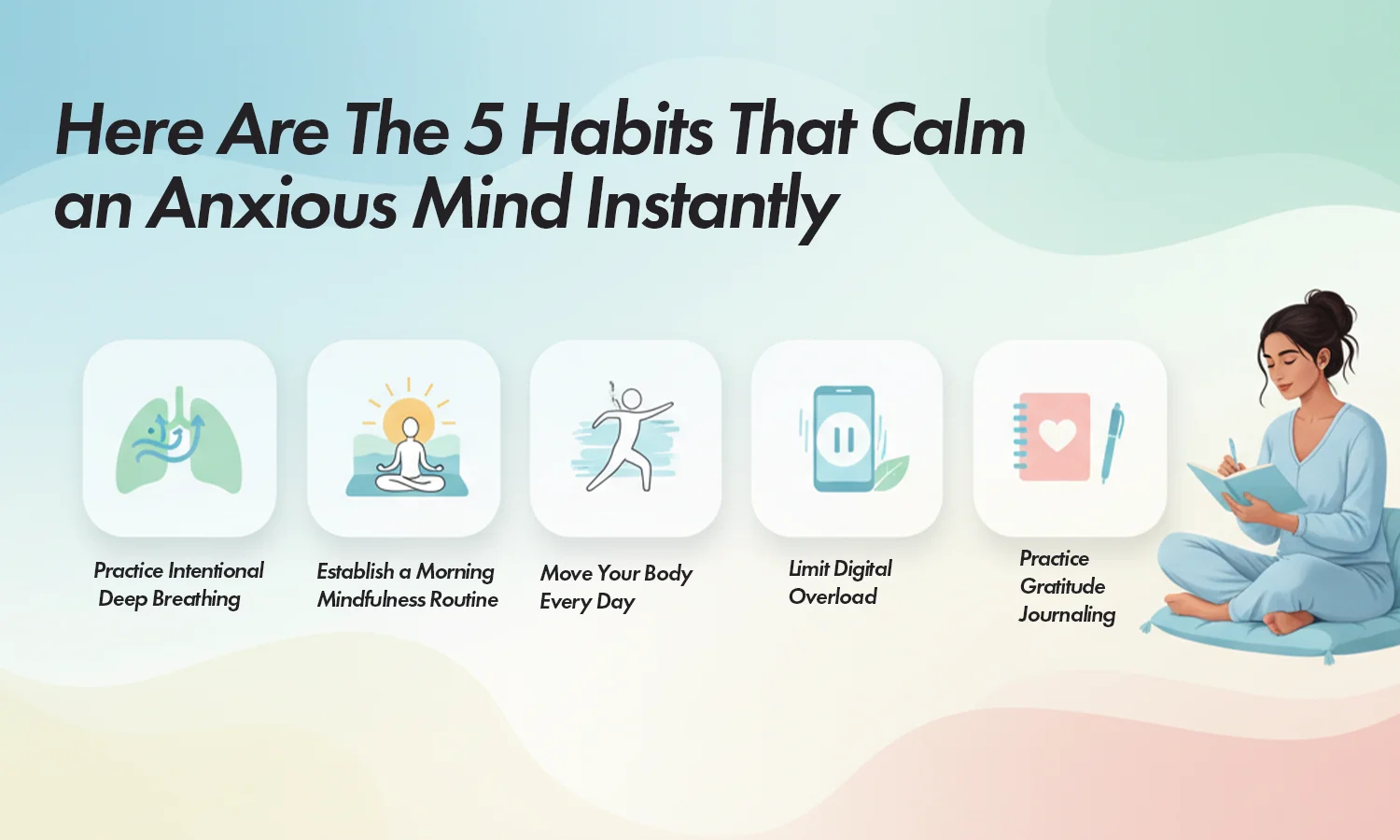
1. Practice Intentional Deep Breathing
One of the most effective ways to calm an anxious mind is through slow and controlled breathing. Techniques like the 4-7-8 breathing method encourage the body to relax.
In this method, you inhale for four seconds, hold your breath for seven seconds, and slowly exhale for eight seconds. This extended exhale activates the body’s relaxation response and can quickly reduce stress levels.
Practicing Deep breathing exercises for anxiety regularly can help regulate heart rate and create a sense of calm during stressful moments.
2. Establish a Morning Mindfulness Routine
How you start your day can influence your mental state for the rest of the day. Instead of immediately checking your phone or emails, try spending a few minutes in quiet reflection.
A short meditation or a short meditation for anxiety can help center your thoughts and set a positive intention for the day. This practice encourages clarity and supports healthier emotional responses to daily challenges.
These mindful moments also support calming thoughts for anxiety, allowing the mind to slow down before facing the demands of the day.
3. Move Your Body Every Day
Physical movement is one of the most effective relaxation techniques for anxiety. Activities such as walking, stretching, or yoga release endorphins, which naturally improve mood and reduce stress.
Regular movement helps release built-up tension and provides a healthy outlet for anxious energy. Over time, this can significantly support the effectiveness of habits that calm an anxious mind.
4. Limit Digital Overload
Constant exposure to news, social media, and notifications can keep the brain in a constant state of stimulation. When the mind never gets a break, it becomes harder to relax.
Setting boundaries around technology can help free yourself from anxiety caused by digital overload. Consider having screen-free periods during the day or avoiding phones before bedtime.
Reducing digital distractions also allows space for hobbies for anxious minds, such as reading, journaling, painting, or spending time outdoors.
5. Practice Gratitude Journaling
Writing down a few things you are grateful for each day may seem simple, but it can have a powerful effect on mental health. Gratitude helps shift attention away from worries and toward positive experiences.
This daily practice encourages emotional balance and gradually strengthens habits that calm an anxious mind by training the brain to focus on supportive and positive thoughts.
Small Habits Can Make a Big Difference for an Anxious Mind
Many people believe they need drastic lifestyle changes to overcome anxiety. In reality, small and consistent habits often create the most meaningful transformation.
Tiny actions like taking mindful breaks, spending time in nature, or practicing breathing exercises can slowly reshape how the brain reacts to stress. Over time, these practices contribute to stronger emotional resilience and improved mental clarity.
When practiced regularly, these small steps support meditation practices for anxiety and other healthy routines that strengthen emotional well-being. Gradually, they help individuals feel more grounded, balanced, and capable of managing daily challenges.
Also Read:Fear of Rejection: Top 5 Tips to Overcome It Fast
Conclusion
Anxiety does not always require complicated solutions. Often, simple daily routines can make a powerful difference in how the mind responds to stress.
Practicing habits that calm an anxious mind, such as mindful breathing, movement, gratitude, and limiting digital distractions, can gradually bring a sense of calm and emotional stability.
For readers who wish to explore deeper insights into understanding their thoughts, emotions, and personal growth, the book The Game of Change by Geeta Ramakrishnan offers meaningful reflections on self-awareness and emotional balance. The ideas shared in the book encourage readers to observe their mental patterns and develop healthier ways of responding to stress and anxiety in everyday life.
FAQs
Practicing breathing exercises, mindfulness, and simple daily routines can help regulate stress levels and support habits that calm an anxious mind.
Identifying triggers, practicing relaxation techniques, and focusing on realistic thoughts can help reduce unnecessary worry.
Excessive screen time, especially exposure to negative news or constant notifications, can increase stress and make it harder for the brain to relax.
Yes, meditation can help regulate emotions, reduce stress, and improve focus. Regular mindfulness practices are widely used as natural tools to manage anxiety.