How Fear Affects the Mind and Body
Before you know it, your year has come to an end. You look back at the highs and lows, cherish the highlights and move on to the next year, set a bunch of resolutions that you may or not follow and get ready for the new year.
When fear is triggered, the body activates the fight-or-flight response. Your heart rate increases, breathing becomes faster, and muscles tighten.
On the mental side, fear narrows your focus. The brain shifts attention to the perceived danger and reduces logical thinking. This is why anxiety can make even small problems feel overwhelming.
Learning how to deal with fear and anxiety is important because it helps your body return to a calm, balanced state.
Simple Breathing Techniques to Calm Fear Instantly
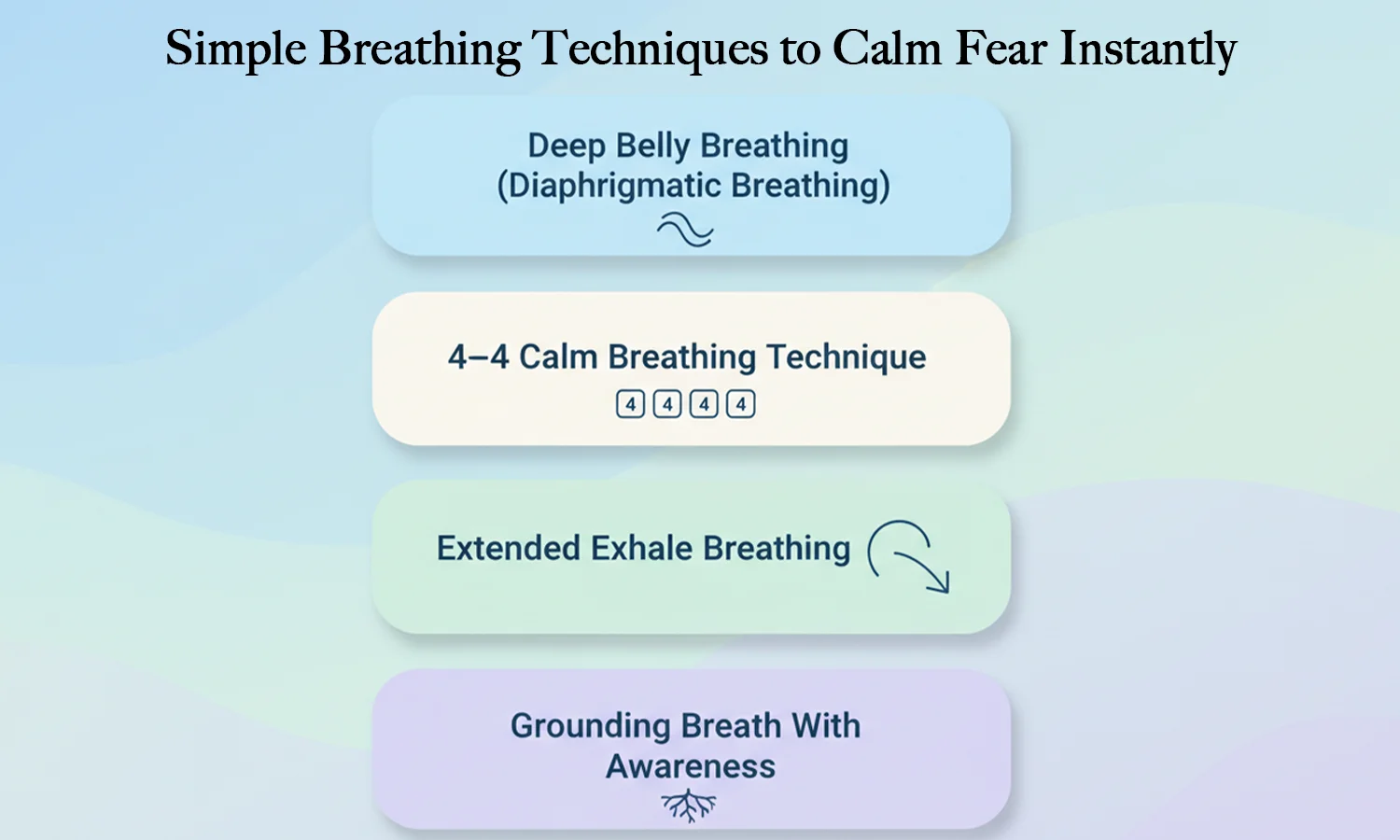
One of the fastest ways to learn how to deal with fear is through breathing exercises. Controlled breathing signals the brain that you are safe and helps slow your heart rate.
Deep Belly Breathing (Diaphragmatic Breathing)
Deep belly breathing is a simple technique that activates the body’s relaxation response. Sit or lie down comfortably. Place one hand on your chest and the other on your stomach. Breathe in slowly through your nose and feel your stomach rise. Then exhale gently through your mouth.
4–4 Calm Breathing Technique
The 4–4 method is easy to remember and can be done anywhere. Inhale through your nose for a count of four. Then exhale for a count of four. Continue this rhythm for several cycles. Equal breathing balances your nervous system and helps you focus on the present moment instead of fearful thoughts.
Extended Exhale Breathing
This method focuses on longer exhalations. Inhale quietly for four seconds, then exhale slowly for six to eight seconds. A longer exhale tells your body to relax. It slows the heart rate and helps you regain control when fear rises suddenly.
Grounding Breath With Awareness
Grounding breathing combines deep breathing with awareness of your surroundings. Sit comfortably and focus on the feeling of your feet touching the floor. Notice your breath moving in and out. If your thoughts wander, gently return your attention to your breath, which reduces anxiety.
Replacing Fear-Based Reactions With Conscious Choices

Another important part of learning how to deal with fear is changing your reaction patterns. Fear often causes automatic responses, like avoiding a task or overreacting to a situation.
Pause:
When fear appears, take one slow breath and create a small mental break.
Process:
Acknowledge the feeling by saying, “I am feeling fear right now.” Naming the emotion helps calm the brain.
Proceed:
Choose a small action that aligns with your goals. This could be making a phone call, starting a task, or asking for help.
This method gradually teaches the brain how to overcome fear by replacing automatic reactions with thoughtful decisions. It is also useful for specific worries, such as how to deal with fear of failure.
Daily Habits That Reduce Fear Naturally
Learning how to deal with fear is easier when your daily routine supports calmness and stability.
A regular sleep schedule helps regulate emotional responses. Gentle morning routines, like stretching or quiet reflection, prepare the mind for the day. Physical activity, such as walking or yoga, releases natural mood-boosting chemicals in the brain.
Balanced meals also help stabilize energy levels. Too much caffeine or irregular eating can increase anxiety symptoms. Small daily practices, such as gratitude journaling or gradual exposure to fears, build confidence over time. These habits slowly reduce fear and create a stronger sense of emotional stability.
When Fear Stops Controlling You, Change Begins!
Once you understand how to deal with fear, you begin to see it differently. Fear is not always a sign to stop. Sometimes it is a signal that something important is ahead.
You do not need to be completely fearless to take action. Even a small step forward builds confidence. Each time you act despite fear, your brain learns that you are capable of handling challenges.
Conclusion
Knowing how to deal with fear can change the way you approach challenges in life . If you feel stuck and need more personal guidance, structured support can make a big difference. At Coaching with Geeta, you can find practical tools, mindset techniques, and one-on-one coaching that help you understand your fears and move forward with confidence.
Key Takeaways
- Learning how to deal with fear starts with understanding how it affects your body and mind.
- Breathing techniques can calm fear within minutes.
- choices help replace automatic fear-based reactions.
- Healthy daily habits reduce long-term anxiety.
FAQs
Techniques like deep belly breathing or extended exhale breathing help regulate your heart rate. They help in learning how to deal with fear in stressful moments.
No, fear is a natural human response. It is part of the body’s survival system. Understanding how to deal with fear helps you turn it into a signal for growth rather than something to avoid.
You can manage fear naturally through breathing exercises, regular physical activity, good sleep, and mindful practices, helping you emotional balance and how to deal with fear without relying on medication.
Fear can appear suddenly because the brain reacts to perceived threats, not just real ones. Stress, lack of sleep, or negative thoughts can trigger this response. Learning how to deal with fear helps you calm these reactions more quickly.