Overview
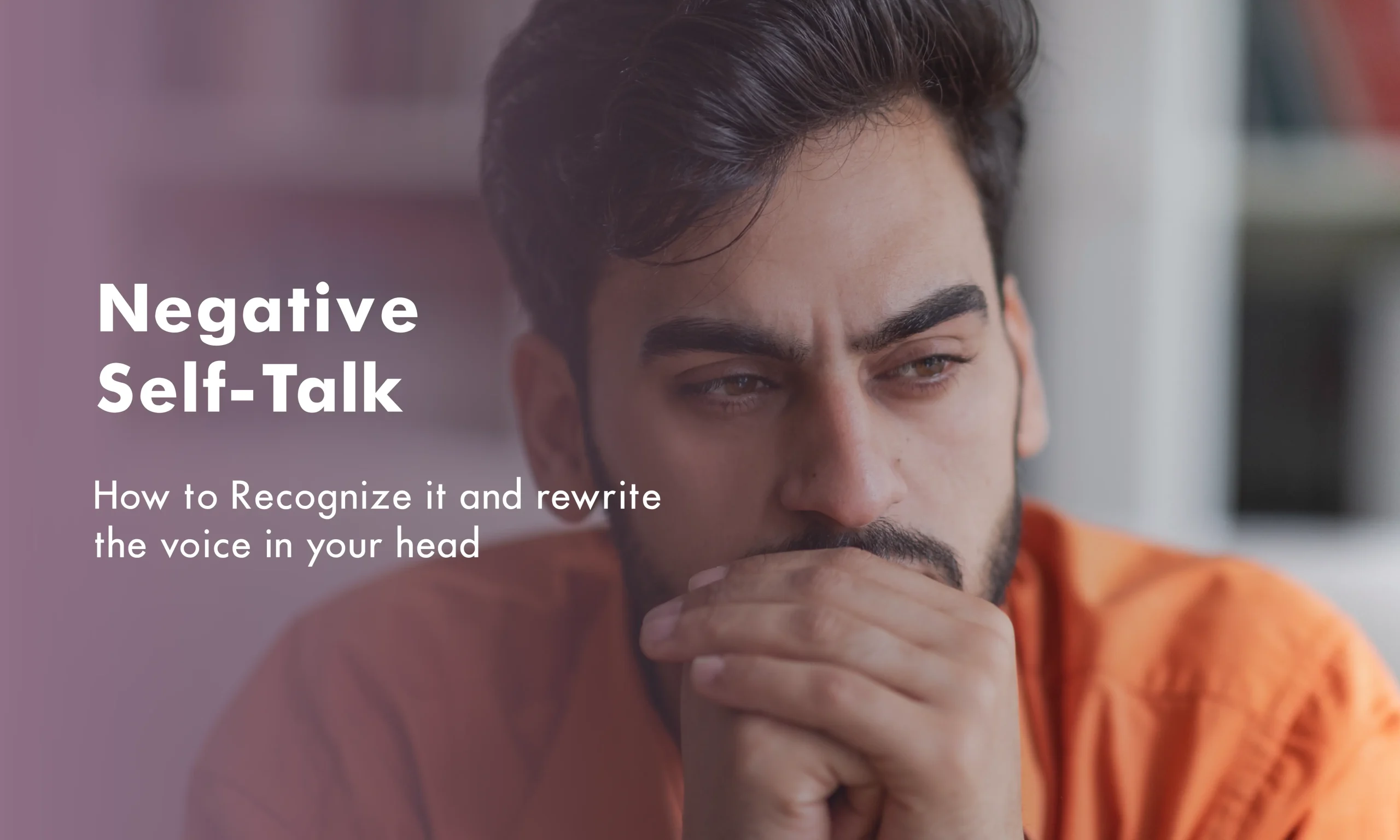
Negative self-talk is the harsh inner voice that criticises, doubts, and predicts failure. Left unchecked, it lowers confidence and fuels overthinking. Because the mind produces thousands of thoughts daily, learning to notice and gently reframe this inner critic is a proven way to build self-belief and lasting emotional resilience.
There is a voice inside most of us that comments on everything we do. Some days it is kind. Other days it is sharp and unforgiving, telling you that you are not good enough or that you will surely fail. That harsh inner commentary is negative self-talk, and it shapes how you feel far more than you might expect.
The encouraging news is that this voice is not the truth, and it is not fixed. Once you learn to recognise this inner critic, you can begin to soften it and speak to yourself with more fairness.
What Negative Self Talk Really Is
This inner voice is the running stream of critical, doubtful, or defeating thoughts you direct at yourself. It often sounds so familiar that you mistake it for fact.
This inner critic rarely reflects reality. It exaggerates flaws, dismisses wins, and expects the worst. Seeing it for what it is, a habit of thought rather than a verdict on your worth, is the first real step toward change.
Where Self Critical Thoughts Come From
Most self-critical thoughts are learned early, shaped by comparison, criticism, or high expectations. Over time they become automatic, running in the background without your permission. You may not even notice them until you pause and truly listen.
A common driver is the fear of making mistakes. When you believe errors are unacceptable, your mind starts policing every move, and self-critical thoughts grow louder. This same fear of making mistakes keeps many capable people stuck, because the pressure to be perfect leaves no room to simply be human. This pattern of self-critical thinking turns ordinary slip-ups into evidence of failure, when in truth mistakes are how everyone learns and grows.
How the Inner Critic Erodes Confidence
Repeated criticism from within takes a toll. Ongoing self-confidence issues often trace back to an inner voice that focuses only on shortcomings. When every effort is met with doubt, belief in yourself slowly wears away.
This is how a lack of self-confidence becomes self-reinforcing. The more you doubt yourself, the less you act and the less you act, the more the doubt seems justified. Breaking this cycle starts with noticing the voice behind those self-confidence issues and asking if it is fair. Addressing a lack of self-confidence is far easier once you see that the harshest judge you face lives inside your own head.
The Overthinking Connection
There is a close bond between an unkind inner voice and a restless mind. Overthinking and low self-esteem often travel together, because a critical inner narrator gives the mind endless material to churn over. Every small worry becomes a reason to doubt yourself further.
The same is true of overthinking and insecurity. When you feel unsure of your worth, the mind loops through worst-case scenarios in search of safety. Recognising how overthinking and low self-esteem or overthinking and insecurity reinforce each other helps you see that quieting the critic and calming the loop are really the same work.

How to Stop Negative Self Talk
Change is very possible with practice. Learning to change this habit starts with awareness. Notice the critical thought, name it, and remind yourself that a thought is not a fact. This small pause creates space between you and the voice.
Next, question the story and offer yourself a kinder, more balanced response, the kind you would give a good friend. Practising this pause in this way slowly builds a warmer inner voice. Replacing self-critical thinking with self-compassion is a skill anyone can develop, and it grows stronger every time you use it.
Rewrite Your Inner Voice with Coach Geeta
Softening a lifelong inner critic is deep work, and you do not have to do it alone. At Coach Geeta, founder and ontological coach Geeta Ramakrishnan, author of the Amazon bestselling book The Game of Change, helps people replace limiting beliefs with self-belief, resilience, and genuine confidence.
If negative self-talk has been holding you back at work and in life, this is your moment to change the story. Book a coaching conversation with Coach Geeta today and take the first step toward stronger confidence, clearer decisions, and a more fulfilling, purposeful path. You deserve an inner voice that encourages you, and that shift is well within your reach.
Key Takeaways
- Negative self-talk is a harsh inner voice that feels true but rarely reflects reality.
- It often stems from early experiences and a deep fear of making mistakes.
- Left unchecked, it drives self-confidence issues and a lasting lack of self-confidence.
- An unkind inner voice and overthinking reinforce each other in a tiring loop.
- Awareness, gentle questioning, and self-compassion are proven ways to change the pattern.
Frequently Asked Questions
What is negative self-talk and why is it harmful?
It is the critical inner voice that doubts and blames you, and this kind of negative self-talk is harmful because repeated often, it shapes your self-image and lowers confidence. Since it feels like fact rather than opinion, learning to recognise and question it is the first step toward a healthier mind.
How to stop negative self-talk quickly?
To learn how to stop negative self-talk, notice the critical thought, name it, and remind yourself it is only a thought. Then offer the kinder response you would give a friend. Practised daily, this simple habit gradually replaces harsh self-judgement with steadier self-compassion.
Is negative self-talk linked to overthinking?
Yes, they are closely connected. Overthinking and low self-esteem often occur together, because a critical inner voice gives the mind endless worries to replay. Quieting this inner critic usually calms the overthinking loop too, which is why the two are best addressed side by side.
Can coaching help with self-confidence issues?
Absolutely. Coaching helps you uncover the beliefs behind your self-confidence issues and build practical tools to shift them. A skilled coach offers structure, accountability, and encouragement. Many people find that guided support is what finally frees them from a harsh inner voice and restores genuine confidence.
Speak to Yourself with Kindness
The voice in your head has enormous influence, and you have more say over it than you realise. Learning to notice negative self-talk lets you challenge it rather than believe every word. Be patient as you practise a kinder inner tone, celebrate small wins, and remember that support can make this journey far lighter and faster.