
Decision fatigue is the mental tiredness that builds as you make choice after choice throughout the day. As willpower runs low, decisions feel harder and judgement slips. Rooted in psychology research on self-control, this everyday drain is common, predictable, and very manageable with the right habits and structure.
By the time evening arrives, even small choices can feel exhausting. What to cook, what to reply, what to wear tomorrow. Your mind, sharp in the morning, now wants someone else to decide. That heavy, worn-out feeling has a name, and it is decision fatigue.
Understanding decision fatigue helps you see that a tired mind is not a personal failing, but a natural response to constant choice.
What Is Decision Fatigue?
Decision fatigue describes the drop in decision quality that follows a long stretch of choosing. Each decision, however small, uses a little mental fuel. As the tank empties, you either act on impulse or avoid deciding altogether.
This is why capable, thoughtful people can feel scattered late in the day. For working women and busy professionals across India who manage careers, homes, and families, the sheer number of daily choices can quietly wear down focus. Naming this drain is the first step toward protecting your energy.
This tiredness is not about intelligence or willpower alone. It is about how much you have already spent before a choice even arrives.
The Psychology Behind It
The decision fatigue psychology is rooted in the concept of finite willpower. Baumeister’s studies on self-control suggested that resisting temptation, weighing options, and making choices all pull from the same reservoir. When that reservoir runs low, everything feels harder.
This branch of decision fatigue psychology also explains why routine helps so much. When you automate small choices, you save mental fuel for the decisions that truly matter. The less you spend on trivial options, the more clarity you keep for meaningful ones.
When Too Much Choice Becomes Paralysis
Sometimes a tired mind stops choosing entirely. This is analysis paralysis, the state where too many options freeze you in place. You research endlessly, weigh every angle, and still cannot commit. The fear of a wrong choice keeps you stuck.
The analysis paralysis psychology is closely tied to perfectionism and a dislike of uncertainty. When every option feels risky, the mind protects you by delaying. Researchers who study analysis paralysis psychology note that a fear of regret often keeps people frozen in place. Over time, this analysis paralysis can turn into a habit, feeding a broader lack of decision making that affects work and relationships. Recognising this lack of decision making as a fatigue response, rather than a flaw in character, makes it far easier to address.
Everyday Decision Fatigue Examples
Seeing real decision fatigue examples makes the pattern easier to spot in your own life. Common signs include reaching for junk food when willpower is low, snapping at loved ones over small things, and putting off important choices until tomorrow.
Other decision fatigue examples include impulse spending late at night, saying yes to things you later regret, and feeling unable to pick from a simple menu. These moments are not about weakness. They are signals that your mental energy needs rest and better structure.
How to Measure and Manage the Drain
You do not need a formal decision fatigue scale to notice the warning signs, though researchers use structured measures to study how mental tiredness builds. A simple personal decision fatigue scale can be as easy as rating your clarity from one to ten at different points in the day, which helps you plan important choices for your sharpest hours.
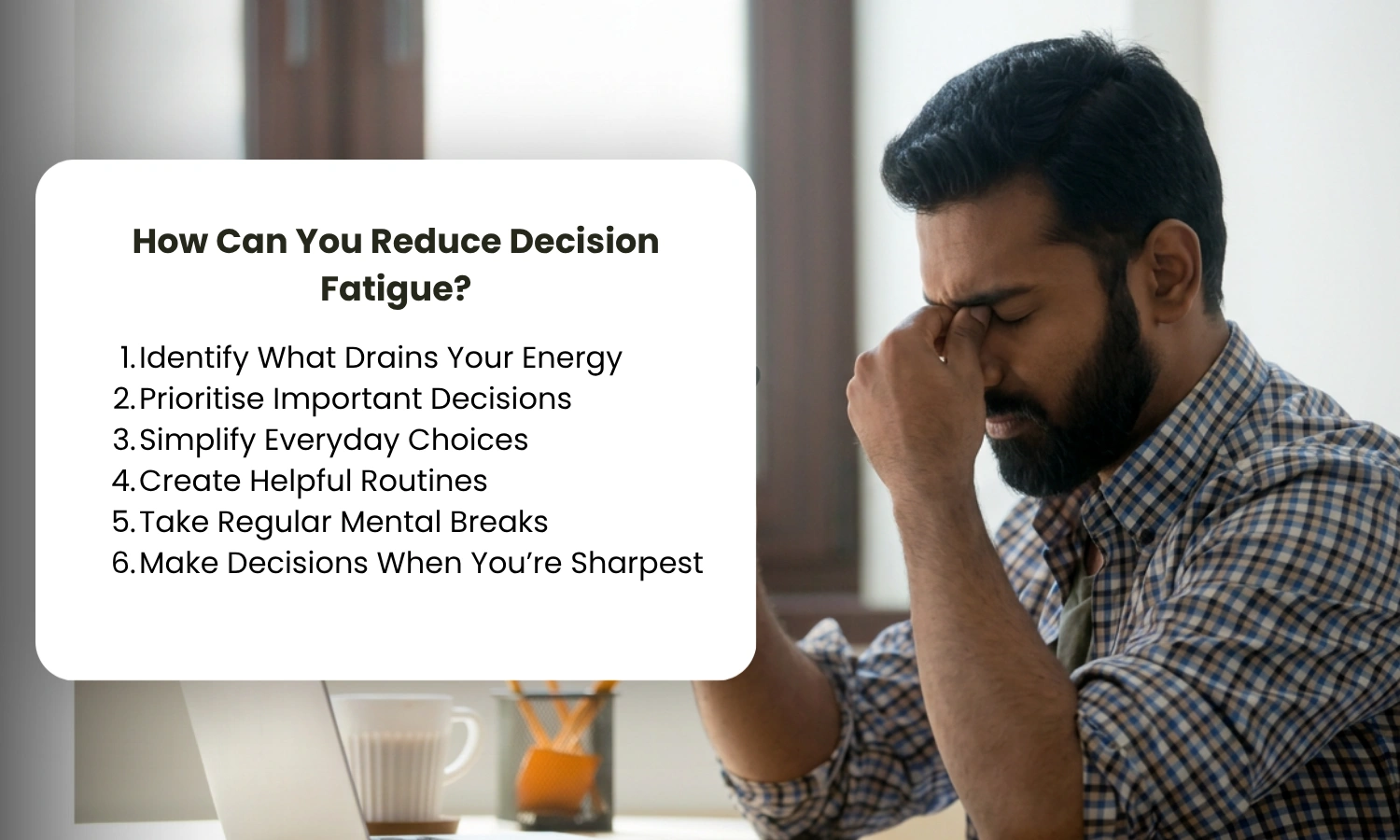
The encouraging truth is that decision fatigue can be managed by a few steady habits. It can be managed by simplifying routines, making key decisions early, batching similar tasks, and taking real breaks to recharge. Reducing trivial choices protects your focus for what genuinely matters.
Reclaim Your Clarity with Coach Geeta
Understanding decision fatigue is powerful, and building habits that protect your energy is where lasting change happens. At Coach Geeta, founder and ontological coach Geeta Ramakrishnan, author of the Amazon bestselling book The Game of Change, helps people cut through mental clutter and make confident, values-led decisions.
If constant choices have been draining your focus and stalling your progress, this is your moment to shift that. Book a coaching conversation with Coach Geeta today and take the first step toward sharper thinking, stronger leadership, and a calmer, more purposeful life. Your best decisions deserve a clear and rested mind, and that clarity is well within your reach.
Key Takeaways
- Decision fatigue is the mental tiredness that grows as you make more choices through the day.
- It stems from the psychology of finite willpower, studied by Roy Baumeister and others.
- Too much choice can tip into analysis paralysis and a wider lack of decision making.
- Common examples include impulse eating, late-night spending, and avoiding important choices.
- Simplifying routines and deciding early are proven ways to protect your mental energy.
Choose With a Clear Mind
A drained mind at day’s end is not a flaw, it is a signal worth listening to. Understanding decision fatigue lets you design days that protect your focus rather than scatter it. Be gentle with yourself, build small supportive habits, and remember that steady guidance can make clear, confident decisions feel natural again.
Frequently Asked Questions
What is decision fatigue in simple terms?
Decision fatigue is the tiredness your mind feels after making many choices. Each decision uses a little mental energy, so by evening your judgement weakens and choices feel harder. It is a normal, well-studied pattern, and simple daily habits can reduce its impact considerably.
What are common decision fatigue examples?
Everyday decision fatigue examples include reaching for junk food at night, snapping over small matters, impulse spending, and delaying important choices. These moments signal that your mental energy is low. Noticing them helps you rest and restructure your day so key decisions land in your sharpest hours.
How is decision fatigue different from analysis paralysis?
Decision fatigue is running low on mental energy after many choices, while analysis paralysis is freezing because too many options feel risky. They often overlap, since a tired mind struggles to commit. Both improve when you simplify choices and accept that no decision needs to be perfect.
Can decision fatigue be reduced?
Yes, decision fatigue can be managed by simplifying routines, making important choices early, and batching similar tasks. Regular breaks and good sleep also restore mental energy. With a little structure and support, most people find their clarity and confidence return quickly.