Emotional overwhelm happens when feelings become so intense that they cloud your thinking and drain your energy. It is often triggered by stress, change, or too much pressure at once. Recognising the signs early and using simple grounding techniques can help you steady your mind and feel in control again.
There are days when emotions arrive all at once and refuse to settle. Worry, sadness, pressure, and frustration pile up until your mind feels foggy and your body feels tense. In these moments, thinking clearly seems impossible. This experience is emotional overwhelm, and it is far more common than most people admit.
Understanding emotional overwhelm is the first step toward managing it with kindness rather than fear.
What Is Emotional Overwhelm?
So, what is emotional overwhelm, exactly? It is the state where your emotional load exceeds your capacity to process it in the moment. Feelings stop being signals you can read and become a flood that clouds judgement.
The emotional overwhelm meaning goes beyond simply feeling stressed. It is the sense that your inner world has become too much to hold. The word itself offers a clue, since the overwhelmed meaning points to being submerged or buried under a heavy weight. That meaning of overwhelmed captures the experience perfectly, because it feels as though emotion has risen above your ability to cope. Knowing what is emotional overwhelm in your own body helps you catch it earlier and respond with care.
How Emotional Overwhelm Feels
Knowing the emotional overload symptoms helps you catch this state early. Common signs include a racing mind, a tight chest, irritability, tearfulness, trouble concentrating, and a strong urge to withdraw. Physical tension and fatigue often appear too. These are closely linked to common anxiety symptoms, so recognising the overlap can help you respond faster.
When you feel overwhelmed with emotions, even simple tasks can seem impossible, and small problems can feel enormous. These emotional overload symptoms are your mind and body asking for rest and care. Being overwhelmed with emotions is not a weakness, it is a signal that you have been carrying more than anyone should carry alone.
Why Emotional Overwhelm Happens
This state usually builds from a mix of pressures rather than a single cause. Ongoing stress, major life transitions, caring for others, and suppressing feelings over time can all fill your emotional cup until it spills. In India, the National Mental Health Survey found that nearly 15 percent of adults need active support for one or more mental health concerns, which shows how widely this strain is felt.
For working women, homemakers, and anyone moving through change, the load can be relentless. Recognising that emotional overwhelm grows from accumulated pressure, not personal failure, brings both relief and clarity. It also helps to notice how negative self-talk shapes the way you carry stress, since the inner voice often makes overwhelm feel heavier than it is.
Grounding Techniques That Help
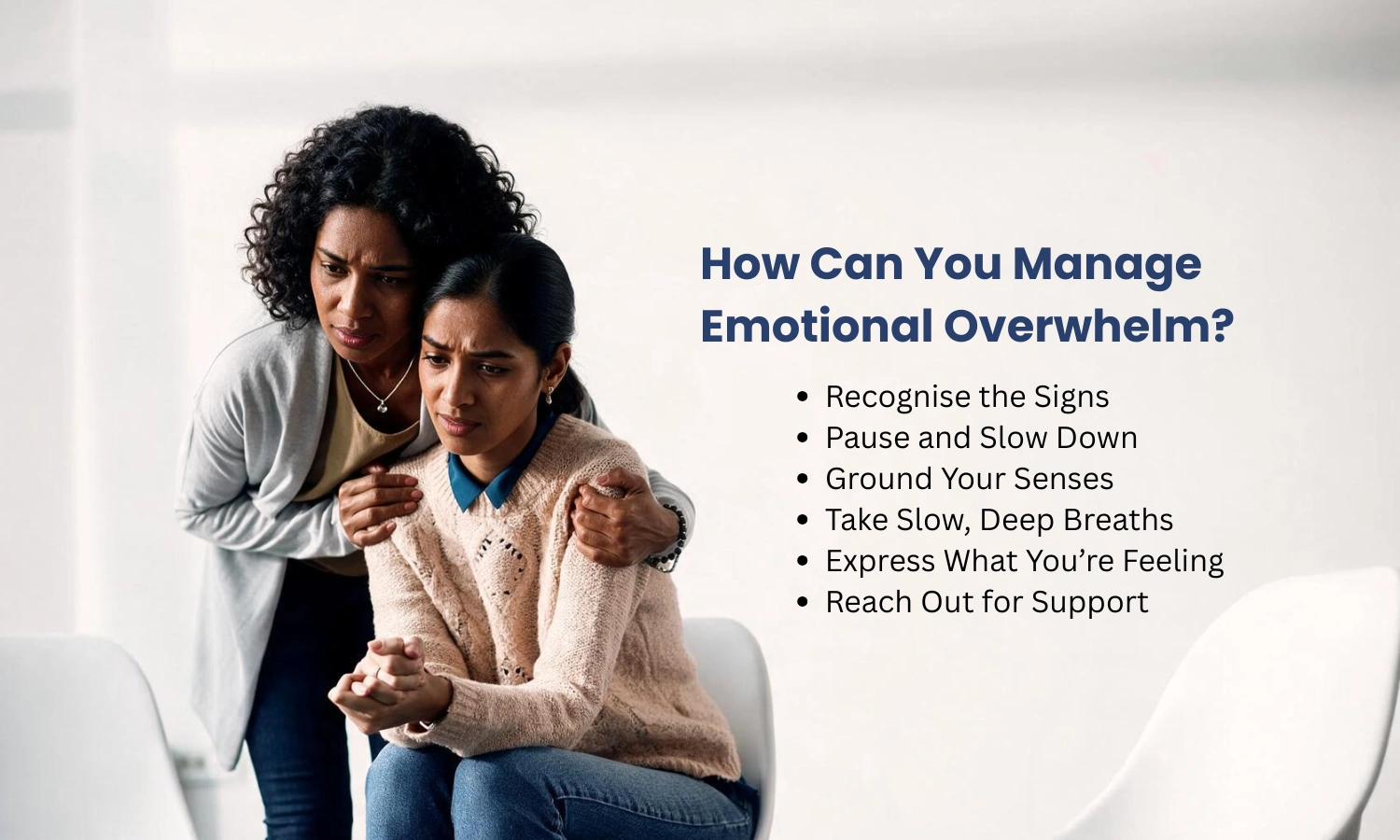
The fastest relief comes from calming the body first, because a settled body sends safety signals to the mind. Simple grounding techniques for emotional overwhelm include slow breathing, naming five things you can see and hear, and pressing your feet firmly into the floor to feel supported.
Other grounding techniques for emotional overwhelm include stepping outside for fresh air, drinking a glass of water slowly, and writing your feelings onto paper. These small actions interrupt the flood and bring you back to the present, where things usually feel more manageable.
When to Seek Support
Sometimes self-help is not enough, and reaching out is a sign of strength. If intense feelings persist and disturb your sleep, work, or relationships, structured support for emotional overwhelm can make a lasting difference. A coach offers tools, perspective, and steady guidance.
Seeking support for emotional overwhelm early prevents small struggles from becoming larger ones. You do not have to wait until you reach breaking point to ask for help.
Find Your Calm with Coach Geeta
Learning to steady your emotions is deep work, and you do not have to do it alone. At Coach Geeta, founder and ontological coach Geeta Ramakrishnan, author of the Amazon bestselling book The Game of Change, helps people move from emotional overload to genuine calm, clarity, and resilience.
If heavy feelings have been running your days and clouding your focus, this is your moment to reclaim your balance. Book a coaching conversation with Coach Geeta today and take the first step toward steadier emotions, clearer decisions, and a more confident, fulfilling life. You deserve a mind that feels like a calm place to be, and that steadiness is closer than you think.
Key Takeaways
- Emotional overwhelm is when feelings grow too intense to process clearly in the moment.
- It usually builds from accumulated stress, change, and pressure rather than a single event.
- Common emotional overload symptoms include a racing mind, tight chest, irritability, and withdrawal.
- Grounding techniques like slow breathing and sensory awareness bring fast, gentle relief.
- Lasting calm often comes from combining daily habits with steady, structured support.
You Are Allowed to Feel and to Heal
Being flooded by emotion does not mean you are failing, it means you are human and carrying a great deal. Understanding emotional overwhelm gives you gentle, practical ways to steady yourself. Be patient and kind as you practise, celebrate small moments of calm, and remember that reaching out for support is one of the bravest steps you can take.
Frequently Asked Questions
What is emotional overwhelm and how does it feel?
Emotional overwhelm is when your feelings become too intense to manage in the moment. It often feels like a foggy mind, a tight chest, and an urge to withdraw. It is a common response to pressure, and it eases with grounding techniques and steady self-care.
What are the main emotional overload symptoms?
The main emotional overload symptoms include a racing mind, tearfulness, irritability, trouble focusing, physical tension, and fatigue. You may also feel a strong urge to isolate. These signs mean your mind and body need rest, and noticing them early helps you respond with care.
What does emotional overwhelm actually mean?
The emotional overwhelm meaning is emotion rising faster than you can process it in the moment. People often look up the plain overwhelmed meaning to make sense of what they feel. That simple meaning of overwhelmed, being submerged by feeling, captures the experience well, and naming it is the first step to easing it.
How do I calm emotional overwhelm quickly?
To ease emotional overwhelm fast, calm the body first with slow breathing, then ground your senses by naming what you can see and hear. Stepping outside or writing your feelings down helps too. Practised regularly, these techniques teach your nervous system to settle more easily.
When should I seek support for emotional overwhelm?
Consider support for emotional overwhelm when intense feelings persist and disturb your sleep, work, or relationships. You do not need to wait for a crisis. Reaching out early, to a coach or professional, gives you tools and perspective that make lasting calm far easier to reach.