The types of fear we experience every day quietly shape our thoughts, actions, and decisions. From the fear of failure that stops you from trying something new to the fear of losing someone that affects your relationships, these emotions influence how you live.
While fear is a natural survival response, not all fears are about physical danger. Many are emotional, social, or psychological. Understanding the different types of fear helps you recognise what is really happening inside you and respond more calmly.
What Is Fear and Why Do We Experience It?
Fear is a natural emotional response to a perceived threat. It acts like an alarm system that prepares the body to react quickly. This reaction is known as the fight-or-flight response.
When the brain senses danger, it releases stress hormones that increase heart rate, sharpen focus, and prepare muscles for action. This response helped early humans survive real threats.
Today, however, many types of fear are triggered not by physical danger but by emotional or social situations. For example, the fear of missing out can influence decisions even when there is no real threat.
What Are the Different Types of Fear?
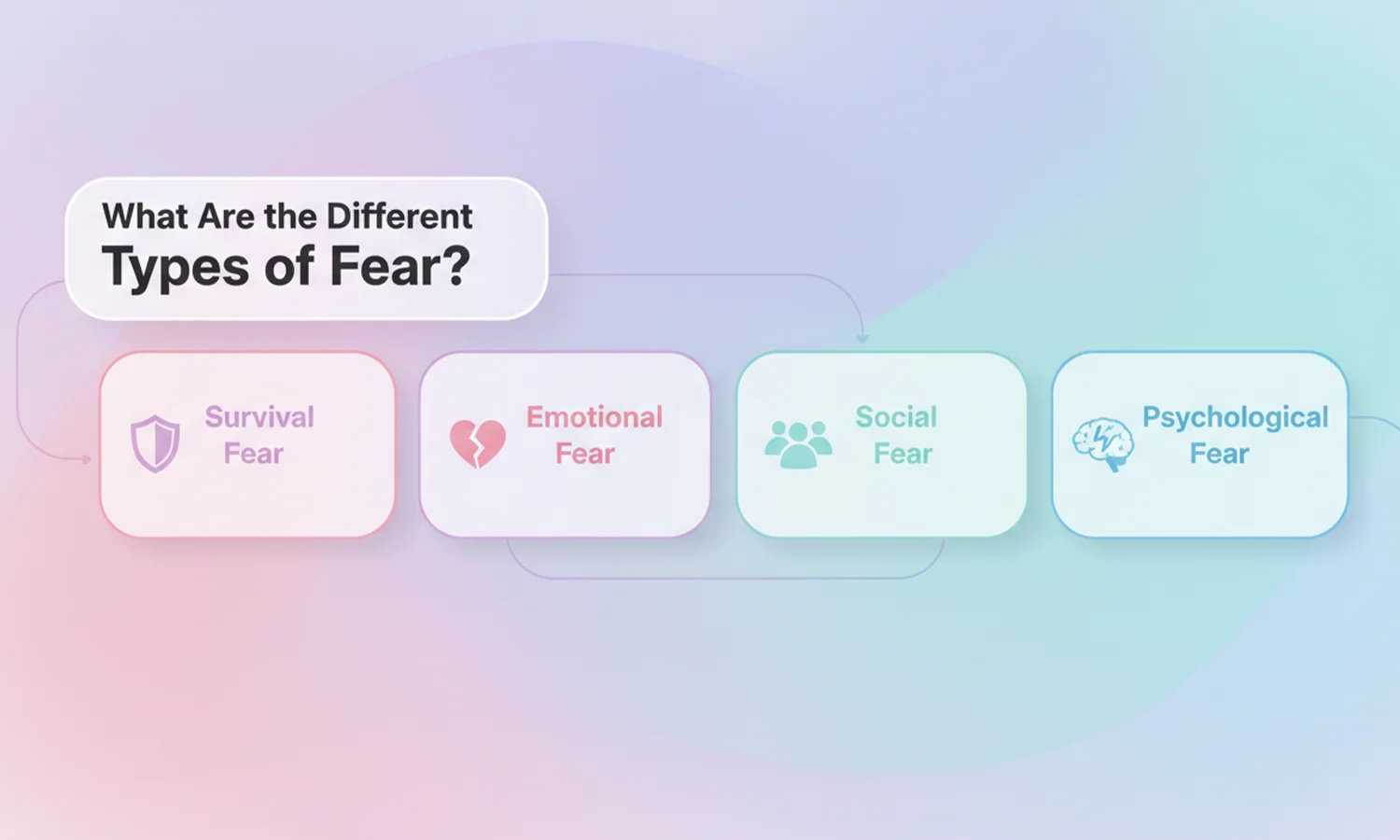
There are several different types of fear, but they are usually grouped into four main categories. These types of fear in psychology explain how fear affects behaviour in everyday life.
Survival Fear
Survival fear is the most basic of all types of fear. It is connected to physical safety and helps protect you from danger.
For example, if you see a fast-moving vehicle coming toward you, your body reacts instantly. You jump back without thinking. This type of fear is automatic and necessary for survival.
Emotional Fear
Emotional fear comes from the possibility of emotional pain. It is often connected to relationships and personal experiences.
Examples include the fear of losing someone you care about or the fear of rejection. These fears can make you hold back your feelings or avoid emotional closeness.
Social Fear
Social fear is related to how others see and judge you. One common example is the fear of people, which may make social situations feel overwhelming.
This type of fear often shows up as stage fright, anxiety in conversations, or worry about others’ opinions. It can lead to avoidance of social situations.
Psychological Fear
Psychological fear is linked to your sense of identity, control, and future. It often appears as the fear of failure, fear of uncertainty, or fear of making the wrong decision.
These types of fear may not have a clear external threat, but they strongly affect choices, goals, and self-confidence.
How Does the Brain Store and Repeat Fear Patterns?
The brain stores fear through a process called fear conditioning. When you experience something frightening, the brain connects that situation with a survival response.
The brain’s emotional alarm centre stores these fear memories. If a similar situation appears later, the brain triggers the same response even if the danger is no longer real.
This is why some types of fear feel automatic. The brain is trying to protect you based on past experiences. However, repeated avoidance strengthens the fear, making it harder to break the pattern.
Recognising Fear Without Letting It Control You
Understanding the types of fear you experience is the first step toward managing them. Instead of reacting automatically, you can learn to pause and observe your emotions.
Notice how fear appears in your body, such as tight shoulders, fast breathing, or racing thoughts. Then ask yourself:
- Is this a real danger or just discomfort?
- What type of fear am I feeling?
When you name the fear, you create space between the feeling and your reaction. This makes it easier to respond calmly instead of acting out of panic.
Understanding Fear Is the First Step to Freedom
All types of fear are signals, not commands. They are the brain’s way of trying to keep you safe. But when fear controls your decisions, it can limit growth and happiness.
When you understand the types of fear you experience, you gain the ability to choose your response. You begin to act from awareness rather than avoidance.
If fear is affecting your confidence, relationships, or life choices, guided support can help you move forward with clarity. Through Coaching with Geeta, you can learn practical tools to understand your fears, build emotional strength, and make decisions with confidence.
Key Takeaways
- The main types of fear include survival, emotional, social, and psychological fear.
- Fear is a natural response designed to protect you.
- Emotional and social fears often affect daily decisions.
- The brain stores fear patterns based on past experiences.
- Recognising fear helps you respond with awareness instead of avoidance.
FAQs
Not all types of fear need to be eliminated. Survival fears are important because they protect you from danger. The goal is to manage unnecessary fears, not remove all fear.
No. Some types of fear are helpful because they keep you safe and prepared. Problems arise only when fear becomes excessive or stops you from living your life.
The types of fear you experience can influence choices by making you avoid risks or overthink situations. This can lead to missed opportunities or delayed decisions.
Certain types of fear come from past experiences stored in the brain. Even when there is no real danger, the brain may still react based on old patterns, making the fear feel irrational.