Overview
Learning how to stop racing thoughts at night means calming both body and mind before sleep. Racing thoughts are usually driven by stress, anxiety and overthinking. With simple wind-down habits, grounding techniques, and steady practice, most people can quiet the mental noise and enjoy deeper, more restful sleep.
You switch off the light, rest your head, and suddenly your mind comes alive. Tomorrow’s tasks, today’s regrets, and every unfinished worry begin to circle. The more you long for sleep, the louder the thoughts become. If your nights often unfold this way, you are searching for how to stop racing thoughts at night, and you are far from alone.
This nightly pattern is common and very manageable. Once you understand why it happens, you can give your mind the calm it needs to rest.
Why Your Mind Races the Moment You Lie Down
During the day, activity and distraction keep busy thoughts at bay. At night the noise fades, and the mind finally has space to process everything you held back. This is why racing thoughts while sleeping feel so intense, even after an exhausting day.
There is often a strong emotional charge behind it. Racing thoughts anxiety tends to peak at night, because tiredness lowers your ability to regulate emotion and the body stays on alert. When racing thoughts anxiety takes over, the nervous system reads bedtime as a threat rather than a rest. Understanding this is the first step in learning how to stop racing thoughts at night with patience instead of frustration. Recognising the pattern behind racing thoughts while sleeping helps you respond with calm rather than panic.
Common Racing Thoughts Symptoms and Examples
It helps to know what this experience actually looks like. Typical racing thoughts symptoms include a mind that jumps quickly between topics, difficulty focusing on one idea, a pounding heart, and an inability to switch off. These racing thoughts symptoms often come with restlessness and a sense of mental overload.
Common racing thoughts examples include replaying an awkward conversation, worrying about money or health, and planning tomorrow in obsessive detail. Other racing thoughts examples involve imagining worst-case outcomes that are unlikely to ever happen. Seeing your own experience described can be reassuring, because it shows this is a known pattern with known solutions.
Racing Thoughts vs Intrusive Thoughts
People often confuse two different experiences, so a clear comparison helps. Understanding racing thoughts vs intrusive thoughts makes it easier to know what you are dealing with and how to respond.
Racing Thoughts | Intrusive Thoughts |
| Sudden, unwanted single thought |
Often tied to stress and anxiety | Often random and out of character |
Feel like a mind that will not slow | Feel disturbing or strange |
Grasping racing thoughts vs intrusive thoughts matters because the calming approach differs slightly for each. So why intrusive thoughts happen at all is worth understanding too. Among the main intrusive thoughts reasons are stress, fatigue, and a busy nervous system. Knowing these intrusive thoughts reasons, and understanding why intrusive thoughts happen, removes much of the fear around them.
How to Stop Racing Thoughts at Night
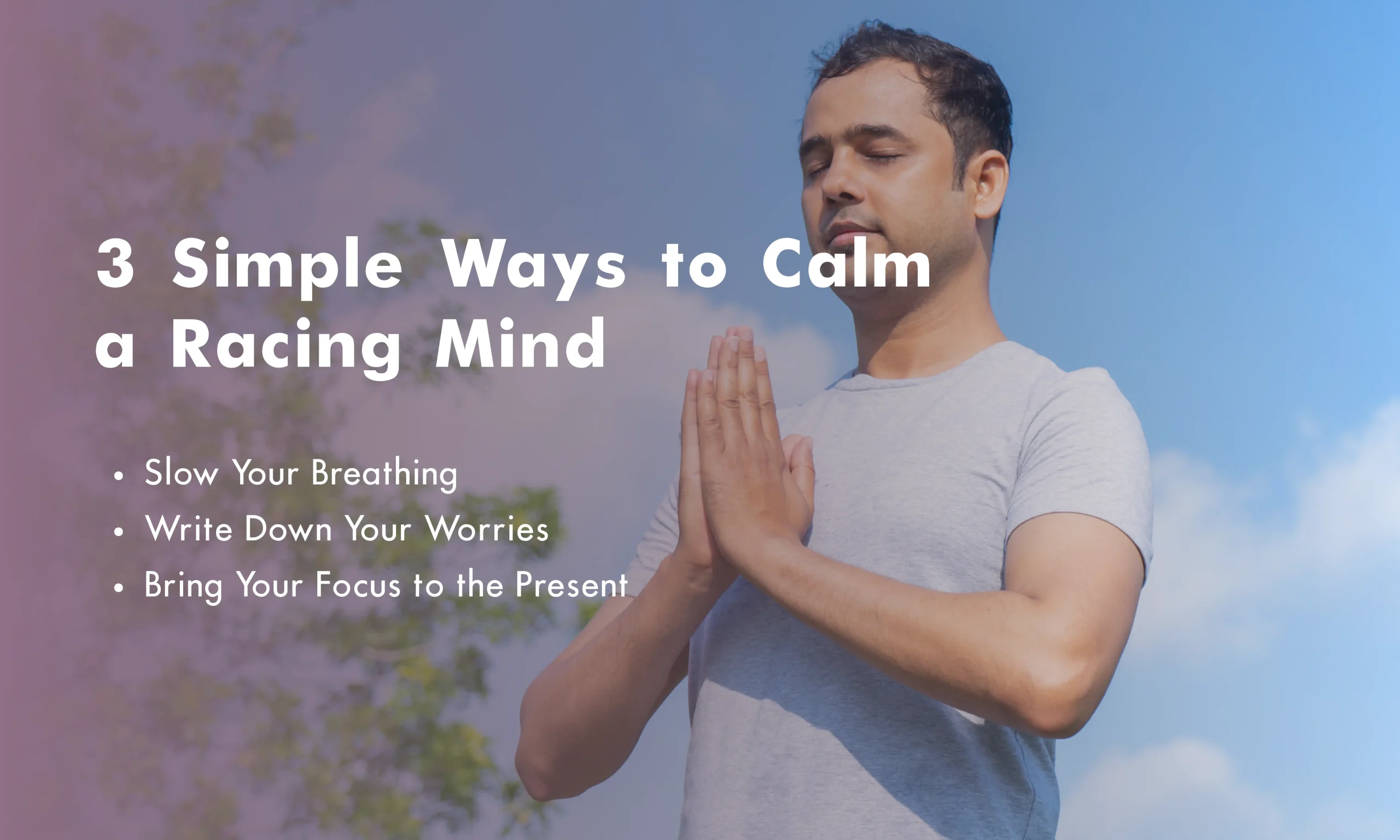
Real rest comes from calming the body first, because a settled body signals safety to the mind. Learning how to stop racing thoughts at night begins with slow, deep breathing that lowers your heart rate and eases tension.
Next, move your worries onto paper. Keeping a notebook by the bed lets you offload thoughts so your mind no longer has to hold them. Grounding also works well, so gently name a few things you can feel and hear to bring attention back to the present. Practising how to stop racing thoughts at night in this way trains your nervous system to associate bedtime with calm. These same tools teach you how to stop racing thoughts in any stressful moment, not only at night. With repetition, knowing how to stop racing thoughts becomes a natural and reliable skill.
Find Deeper Calm with Coach Geeta
Simple habits help a great deal, and lasting change often grows faster with guidance. At Coach Geeta, founder and ontological coach Geeta Ramakrishnan, author of the Amazon bestselling book The Game of Change, helps people quiet mental overwhelm and build genuine, lasting calm through practical tools and a steadier mindset.
If restless nights have stolen your energy and focus for too long, this is your moment to reclaim them. Book a coaching conversation with Coach Geeta today and take the first step toward peaceful sleep, sharper days, and a more confident, purposeful life. You deserve nights that restore you, and that calm is closer than it feels right now.
Key Takeaways
- Learning how to stop racing thoughts at night starts with calming the body before the mind.
- Racing thoughts peak at night because distraction fades and tiredness lower emotional control.
- Racing thoughts and intrusive thoughts are different, and each respond to a slightly different approach.
- Intrusive thoughts are extremely common and usually driven by stress and fatigue, not by anything wrong with you.
- Breathing, journaling, and grounding are proven tools that train your mind to rest.
Rest Is Within Your Reach
A racing mind at night can feel lonely and exhausting, yet it does not have to define your sleep. Learning how to stop racing thoughts at night gives you gentle, practical control over the noise. Be patient with yourself, build your wind-down routine one night at a time, and remember that calmer, deeper rest is truly possible for you.
Frequently Asked Questions
How to stop racing thoughts at night when you cannot sleep?
Start by calming the body with slow, deep breaths, then write your worries in a notebook so your mind can let them go. Grounding your senses helps too. Practising how to stop racing thoughts at night consistently teaches your nervous system that bedtime is safe, which makes sleep come more easily.
Why do I get racing thoughts anxiety only at night?
At night, distractions disappear and tiredness lowers your emotional control, so racing thoughts anxiety feels stronger. The mind finally processes what it held back all day. A calming wind-down routine, done regularly, retrains your body to associate bedtime with rest rather than worry.
What is the difference between racing thoughts vs intrusive thoughts?
Understanding racing thoughts vs intrusive thoughts is simple once you see it. Racing thoughts are a fast stream of connected worries, while intrusive thoughts are sudden, unwanted single thoughts. Both are common and manageable, though each responds best to a slightly different calming approach.
Are racing thoughts a sign of a serious problem?
Usually not. Occasional racing thoughts are a normal response to stress and tiredness. They deserve closer attention when they are constant and disturb daily life. Learning how to stop racing thoughts with proven tools, and seeking support when needed, helps most people find lasting relief.