• Skip to main content

The Game of Change

Geeta Ramakrishnan

  • About
  • Work With Me
  • Media
  • Book
  • Resources
    • Free
    • Premium
  • Blog
  • Connect

Geeta

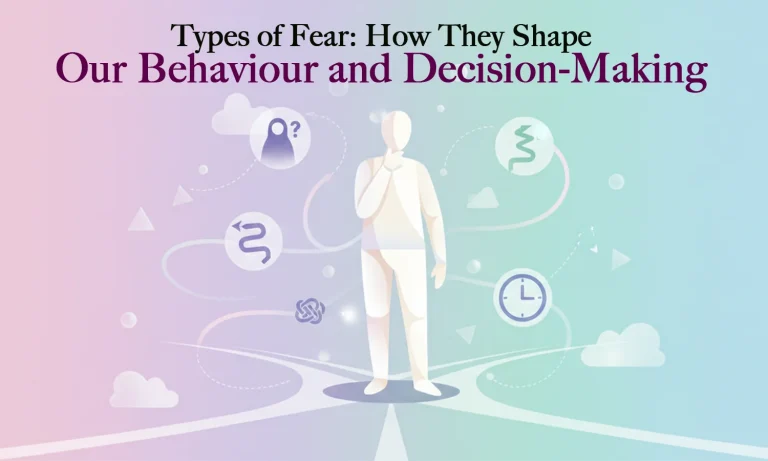
Types of Fear: How They Shape Our Behaviour and Decision-Making

March 12, 2026 By Geeta

types of fear

The types of fear we experience every day quietly shape our thoughts, actions, and decisions. From the fear of failure that stops you from trying something new to the fear of losing someone that affects your relationships, these emotions influence how you live.

While fear is a natural survival response, not all fears are about physical danger. Many are emotional, social, or psychological. Understanding the different types of fear helps you recognise what is really happening inside you and respond more calmly.

What Is Fear and Why Do We Experience It?

Fear is a natural emotional response to a perceived threat. It acts like an alarm system that prepares the body to react quickly. This reaction is known as the fight-or-flight response.

When the brain senses danger, it releases stress hormones that increase heart rate, sharpen focus, and prepare muscles for action. This response helped early humans survive real threats.

Today, however, many types of fear are triggered not by physical danger but by emotional or social situations. For example, the fear of missing out can influence decisions even when there is no real threat.

What Are the Different Types of Fear?
types of fear

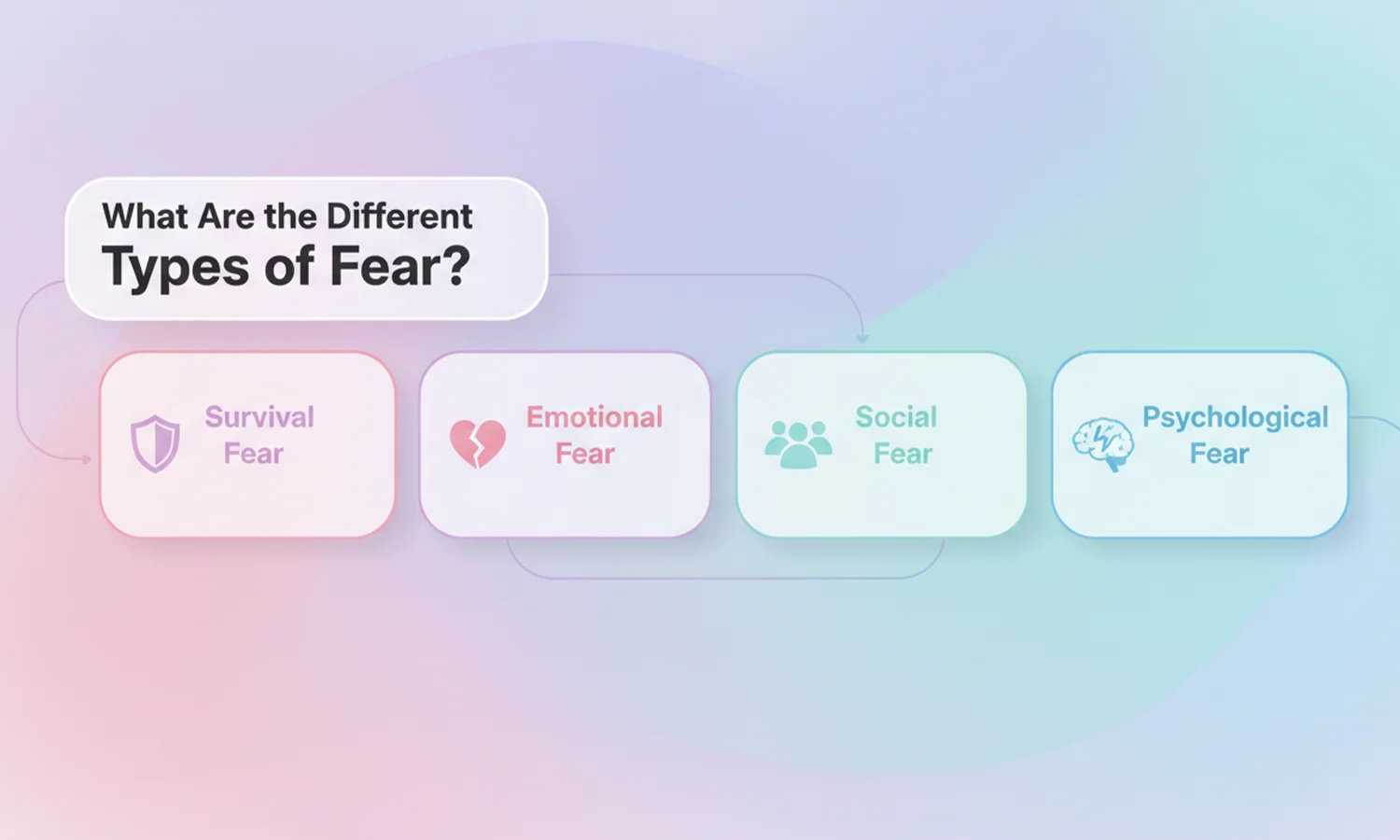
There are several different types of fear, but they are usually grouped into four main categories. These types of fear in psychology explain how fear affects behaviour in everyday life.

Survival Fear

Survival fear is the most basic of all types of fear. It is connected to physical safety and helps protect you from danger.

For example, if you see a fast-moving vehicle coming toward you, your body reacts instantly. You jump back without thinking. This type of fear is automatic and necessary for survival.

Emotional Fear

Emotional fear comes from the possibility of emotional pain. It is often connected to relationships and personal experiences.

Examples include the fear of losing someone you care about or the fear of rejection. These fears can make you hold back your feelings or avoid emotional closeness.

Social Fear

Social fear is related to how others see and judge you. One common example is the fear of people, which may make social situations feel overwhelming.

This type of fear often shows up as stage fright, anxiety in conversations, or worry about others’ opinions. It can lead to avoidance of social situations.

Psychological Fear

Psychological fear is linked to your sense of identity, control, and future. It often appears as the fear of failure, fear of uncertainty, or fear of making the wrong decision.

These types of fear may not have a clear external threat, but they strongly affect choices, goals, and self-confidence.

How Does the Brain Store and Repeat Fear Patterns?

The brain stores fear through a process called fear conditioning. When you experience something frightening, the brain connects that situation with a survival response.

The brain’s emotional alarm centre stores these fear memories. If a similar situation appears later, the brain triggers the same response even if the danger is no longer real.

This is why some types of fear feel automatic. The brain is trying to protect you based on past experiences. However, repeated avoidance strengthens the fear, making it harder to break the pattern.

Recognising Fear Without Letting It Control You

Understanding the types of fear you experience is the first step toward managing them. Instead of reacting automatically, you can learn to pause and observe your emotions.

Notice how fear appears in your body, such as tight shoulders, fast breathing, or racing thoughts. Then ask yourself:

  • Is this a real danger or just discomfort?
  • What type of fear am I feeling?

When you name the fear, you create space between the feeling and your reaction. This makes it easier to respond calmly instead of acting out of panic.

Understanding Fear Is the First Step to Freedom

All types of fear are signals, not commands. They are the brain’s way of trying to keep you safe. But when fear controls your decisions, it can limit growth and happiness.

When you understand the types of fear you experience, you gain the ability to choose your response. You begin to act from awareness rather than avoidance.

If fear is affecting your confidence, relationships, or life choices, guided support can help you move forward with clarity. Through Coaching with Geeta, you can learn practical tools to understand your fears, build emotional strength, and make decisions with confidence.

Key Takeaways

  • The main types of fear include survival, emotional, social, and psychological fear.
  • Fear is a natural response designed to protect you.
  • Emotional and social fears often affect daily decisions.
  • The brain stores fear patterns based on past experiences.
  • Recognising fear helps you respond with awareness instead of avoidance.

FAQs

Not all types of fear need to be eliminated. Survival fears are important because they protect you from danger. The goal is to manage unnecessary fears, not remove all fear.

No. Some types of fear are helpful because they keep you safe and prepared. Problems arise only when fear becomes excessive or stops you from living your life.

The types of fear you experience can influence choices by making you avoid risks or overthink situations. This can lead to missed opportunities or delayed decisions.

Certain types of fear come from past experiences stored in the brain. Even when there is no real danger, the brain may still react based on old patterns, making the fear feel irrational.
Filed Under: Emotions

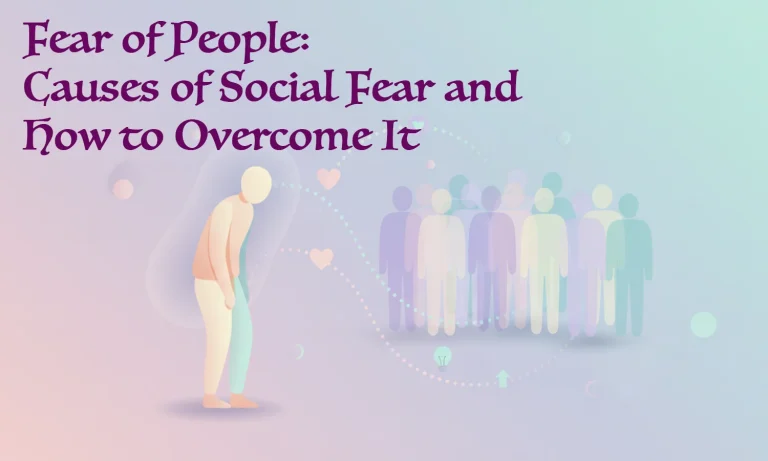
Fear of People: Causes of Social Fear and How to Overcome It

March 11, 2026 By Geeta

fear of people

The fear of people that they can make even simple interactions feel overwhelming. You may avoid conversations, feel tense in groups, or worry constantly about how others see you. This fear is more common than you might think. It often develops from past experiences, low self-confidence, or difficulty trusting others.

While the fear of people can feel strong, it is not permanent. With the right understanding and small steps, you can start feeling safer and more comfortable around others.

What Is Fear of People (Anthropophobia) or Social Fear?

The fear of people is sometimes called anthropophobia. It describes intense discomfort or anxiety around others, regardless of the situation. In everyday language, it is often referred to as social fear or social anxiety.

In some cases, it may become strong enough to interfere with daily life. This is not just shyness. It is a deep emotional response that can affect work, relationships, and confidence.

Among the many types of fear, social fear is very common because humans naturally depend on connection and acceptance.

Why Social Situations Trigger Fear and Anxiety?

The fear of people often comes from the brain’s survival system. In the past, being accepted by a group meant safety. Rejection could mean danger. Even today, the brain sometimes treats social rejection like a physical threat.

This is why situations such as speaking in a meeting, meeting new people, or making small talk can trigger anxiety. The mind starts imagining negative outcomes, and the body responds with tension, sweating, or a racing heart.

These reactions are normal, but when they become constant, they may turn into social anxiety patterns.

Fear of Judgment and the Need for Approval

At the heart of the fear of people is often a fear of judgment. Many worry about being seen as awkward, boring, or not good enough.This creates pressure in social situations.

Some also carry a fear of losing others, which makes them overly cautious. They may try too hard to please or avoid conflict. This behaviour often comes from difficulty trusting others.

Over time, these patterns create a cycle. The more social situations are avoided, the stronger the fear becomes.

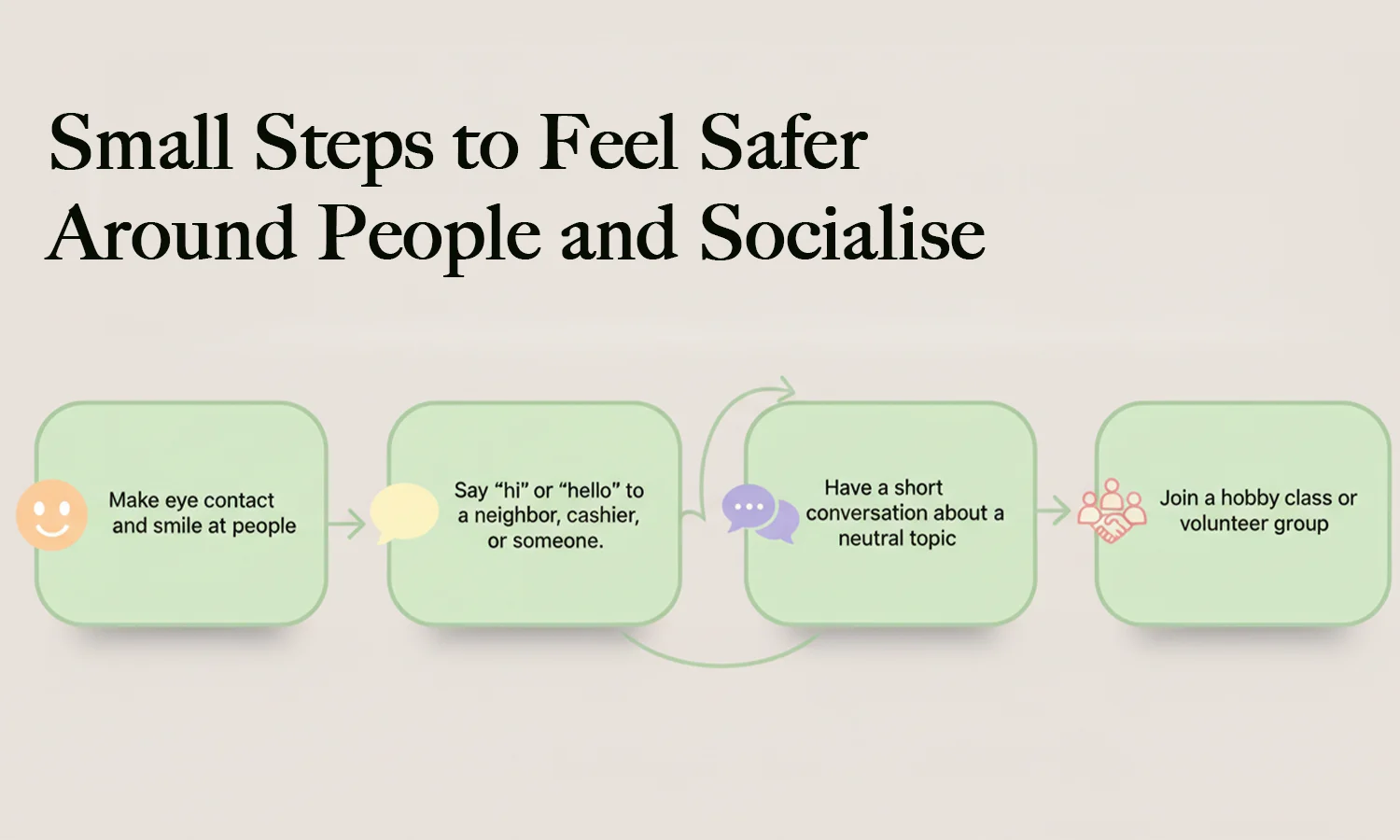
Small Steps to Feel Safer Around People and Socialise

fear of people

Learning how to overcome the fear of people starts with small, manageable steps. Instead of forcing yourself into stressful situations, begin with simple interactions.

Start by making eye contact and smiling at someone. Then move to short greetings, like saying “hello” to a neighbour or cashier. As comfort grows, try small conversations about neutral topics.

Choose environments where interaction feels natural, such as hobby classes or volunteer groups. These settings reduce pressure.

Each small step helps the brain learn that others are not a threat. Over time, the fear of people becomes less intense.

Showing Up Authentically Without Fear of Judgment from People

Authenticity is the opposite of social fear. When you stop trying to be perfect, interactions feel more natural. The fear of people often comes from the belief that you must impress everyone.

Instead, focus on being genuine. Share small opinions or express honest feelings in safe situations. This builds confidence.

Another helpful shift is to focus on others rather than yourself. Listen carefully and ask simple questions. This reduces pressure and makes conversations easier.

When you start valuing your own thoughts and feelings, the fear of people loses its control.

Conclusion

The fear of people often develops from past experiences, fear of judgment, or difficulty trusting others. While it may feel overwhelming, it can be reduced with small, consistent steps. Social confidence grows through gentle progress and self-acceptance.

If you are ready to move beyond the fear of people and build more confidence in your interactions, the right guidance can help. Through Coaching with Geeta, you can access practical tools and personalised support to feel calmer and more confident around others. 

Key Takeaways

  • The fear of people is often linked to fear of judgment and rejection.
  • It may develop from past experiences or difficulty trusting others.
  • Social fear is one of the most common types of fear.
  • Small, gradual steps help build social confidence.
  • Authentic self-expression reduces social anxiety over time.

FAQs

To overcome the fear of people, start with small interactions. Make eye contact, smile, or say a simple greeting. Gradual exposure helps your brain feel safer around others, and confidence grows over time.

The fear of people often comes from past negative experiences, fear of judgment, or low self-confidence. It may also be linked to difficulty trusting others.

When you carry strong social anxiety, your mind stays in a constant state of alertness. This mental effort can be exhausting, which is why you may feel tired after interactions.

The fear of people is closely related to social anxiety. Social anxiety often focuses on fear of judgment in specific situations, while this fear may involve discomfort around others in general.

Filed Under: Emotions

Why the Fear of Falling in Love Pushes You Away From Connection

March 10, 2026 By Geeta

fear of falling in love

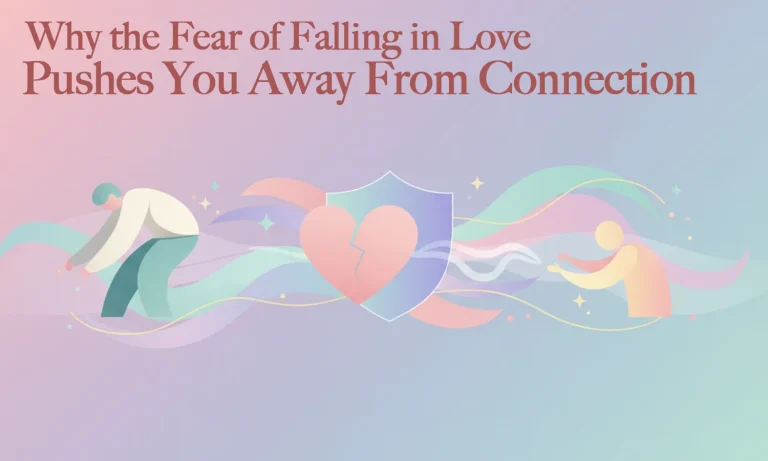
The fear of falling in love is more common than most people admit. Many want connection but pull away when things get serious. This conflict often comes from past hurt, trust issues, or emotional wounds that were never healed. Love offers support, but it also requires vulnerability, which can feel risky. Understanding this response is the first step toward building safer, more fulfilling relationships.

Why Love Feels Risky Even When You Want It?

Love can feel risky because it requires openness and emotional exposure. The fear of falling in love often comes from the brain’s natural survival response. When you care about someone, you also create the possibility of loss, rejection, or heartbreak.

For people who carry a fear of love, this emotional risk feels overwhelming. Past experiences may have taught them that closeness leads to pain. As a result, the mind builds invisible emotional walls to prevent future hurt.

This is a natural response. Emotional vulnerability affects identity, trust, and self-worth, which is why it feels so intense.

Emotional Vulnerability vs Emotional Danger

fear of falling in love

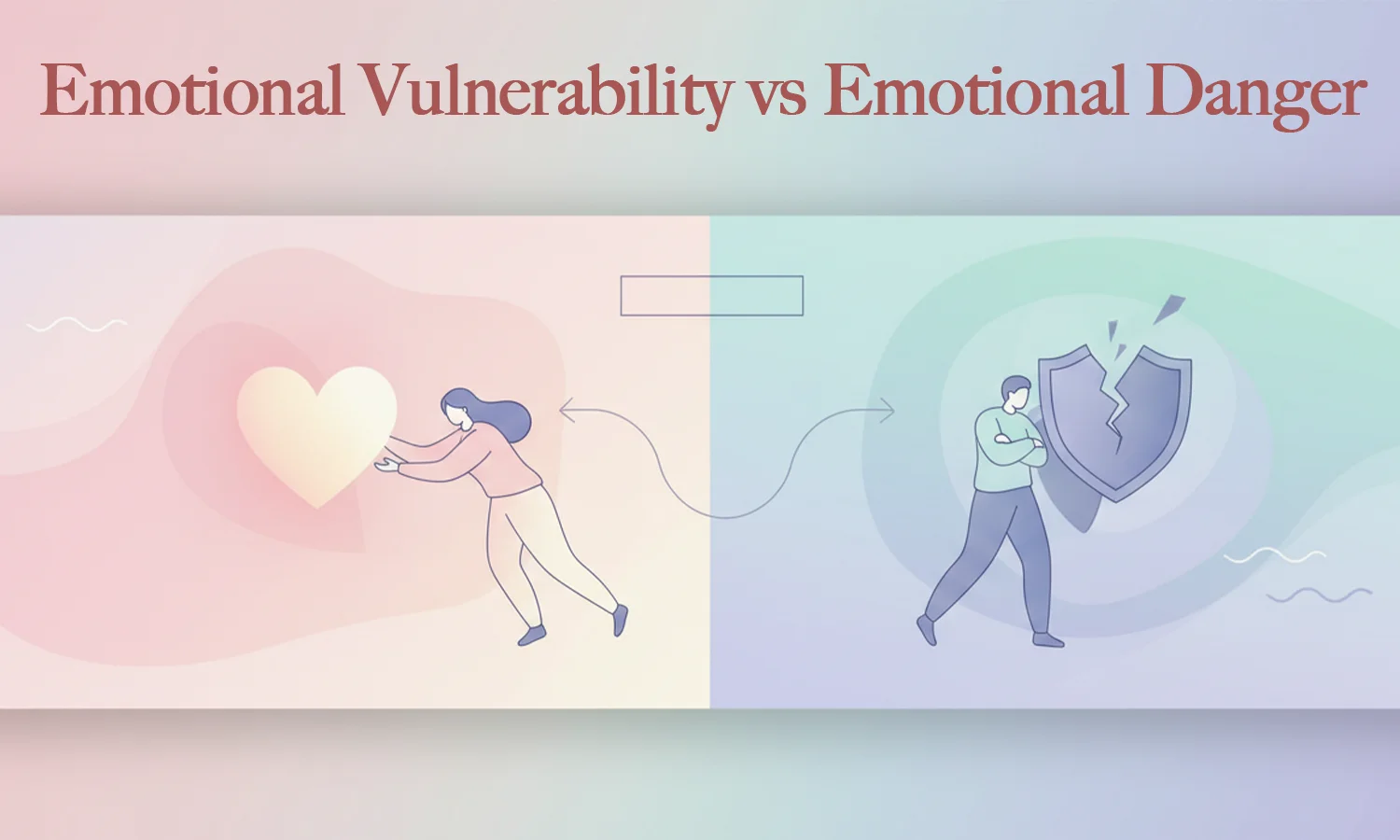
Not all vulnerability is unsafe. There is a big difference between healthy openness and emotional danger. The fear of falling in love often grows when people cannot distinguish between these two experiences.

Emotional vulnerability means choosing to share your thoughts and feelings. It builds trust and a deeper connection. Even when responses are imperfect, you still grow.

Emotional danger, however, happens when a relationship involves manipulation, constant criticism, or disrespect. In such cases, vulnerability becomes exposure rather than connection.

People who have been hurt may develop a fear of trusting others. They may avoid closeness even with caring partners.

How Past Hurt Creates Emotional Armour?

Past heartbreak or neglect can create emotional armour. This is a protective layer built to prevent future pain. The fear of falling in love often grows from this response.

Repeated emotional hurt makes the brain more alert to threats. It begins to treat closeness as dangerous, even when the situation is safe. Over time, emotional distance feels more comfortable than connection.

Some people also fear losing someone so deeply that they avoid love altogether. While this protects them from pain, it also blocks real intimacy.

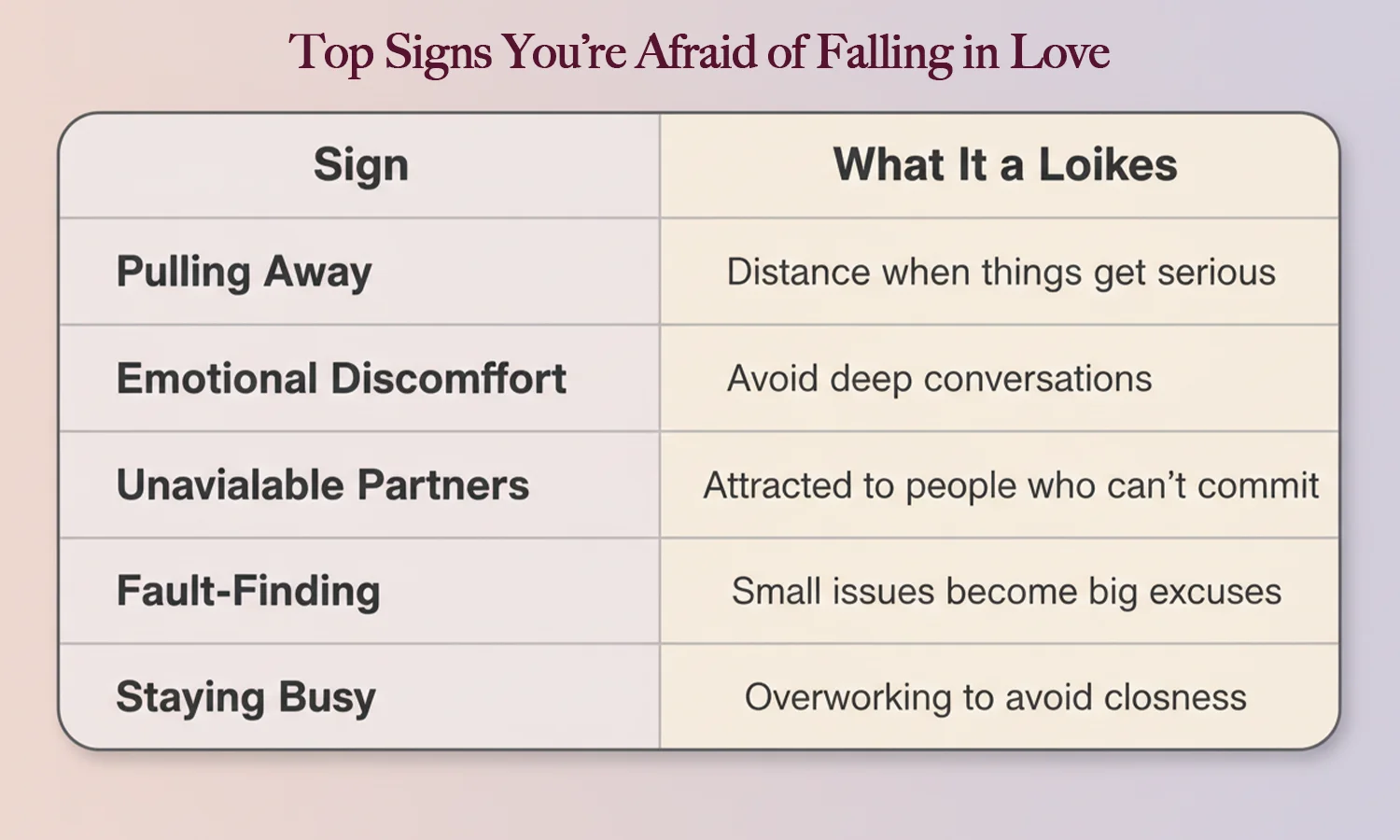
Top Signs You’re Afraid of Falling in Love

fear of falling in love

This fear often appears through subtle behaviours. Some common signs include:

  • Pulling away when relationships become serious
  • Feeling uncomfortable after emotional conversations
  • Choosing emotionally unavailable partners
  • Finding small faults to justify the distance
  • Staying extremely busy to avoid closeness

These habits usually form as protection from emotional pain.

Allowing Love Without Losing Yourself

Letting go of the fear of falling in love does not mean losing independence. Healthy relationships allow both people to stay true to themselves.

Maintain your routines, friendships, and goals. This keeps your identity strong. At the same time, practice small moments of openness, like expressing needs or sharing honest feelings.

Over time, these small steps show your mind that connection does not have to mean losing yourself. Instead, it can become a source of strength, stability, and growth.

Conclusion

The fear of falling in love is often a protective response shaped by past experiences. While it may guard you from pain, it can also keep you away from meaningful connections. By understanding your patterns and taking small steps toward openness, relationships can begin to feel safer.

If you are ready to move beyond this fear, the right guidance can help. Through Coaching with Geeta, you can access practical tools and personalized sessions that support emotional healing and stronger relationships.

Key Takeaways

  • The fear of falling in love often comes from past emotional hurt.
  • The brain may treat vulnerability as a threat to protect you.
  • Emotional vulnerability is different from emotional danger.
  • Small steps toward openness help rebuild trust.
  • Healthy love supports your identity instead of taking it away.

FAQs

You may feel this way because of past heartbreak, rejection, or trust issues. When the mind links love with pain, it builds emotional barriers for protection.

 Yes, this response is common after emotional pain. The mind may avoid closeness to prevent another hurt, but this can change over time.

This pattern can create distance, mixed signals, or avoidance. Addressing it early helps build healthier and more stable connections.

 Yes, love can feel safe again when trust is built slowly with emotionally healthy partners. As you work through the fear of falling in love, closeness can begin to feel supportive instead of threatening.

Filed Under: Emotions

Fear of Rejection: Top 5 Tips to Overcome It Fast

March 9, 2026 By Geeta

fear of rejection

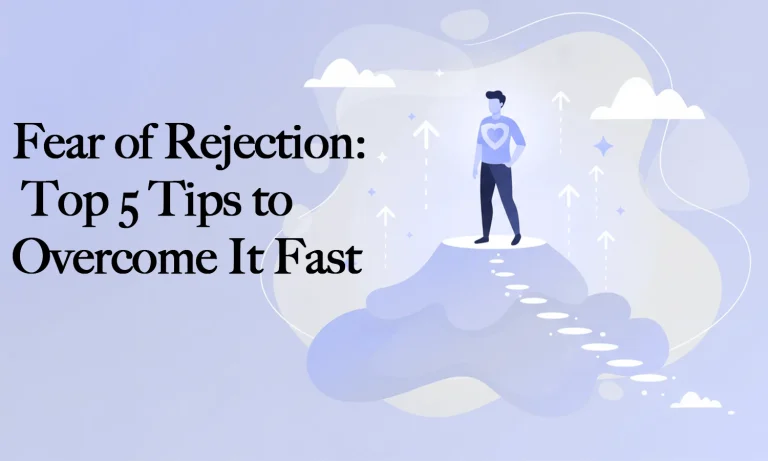
The fear of rejection can affect many areas of life—from relationships to career choices. It can make you hesitate to express your thoughts, avoid opportunities, or stay silent even when something matters to you. This feeling is strong because it is linked to the natural human need for acceptance and belonging.

Understanding this response is the first step toward overcoming it. When you learn how it works, you can begin to make small shifts in your thinking and behaviour.

What Is Fear of Rejection and Why Does It Hurt So Much?

This experience is the worry about being ignored, abandoned, or not accepted by others. Some people refer to it as rejection sensitivity or social fear, especially when it becomes a persistent pattern.

Rejection hurts deeply because humans are wired for connection. In early human societies, being rejected by a group could threaten survival. Because of this, the brain still reacts strongly when someone says “no.”

That is why rejection in love, friendships, or work situations can feel deeply personal, even when it is simply a matter of a mismatch.

The Hidden Link Between Rejection and Self-Worth

The fear of rejection is often closely tied to self-worth. When your confidence depends heavily on others’ opinions, rejection feels like a personal failure rather than a simple mismatch.

People who struggle with low self-esteem may interpret even small setbacks as proof that they are not good enough. This creates a cycle:

  • Fear of rejection leads to avoidance.
  • Avoidance reduces opportunities for success.
  • Lack of success reinforces the fear.

Breaking this cycle starts with separating your identity from other people’s reactions.

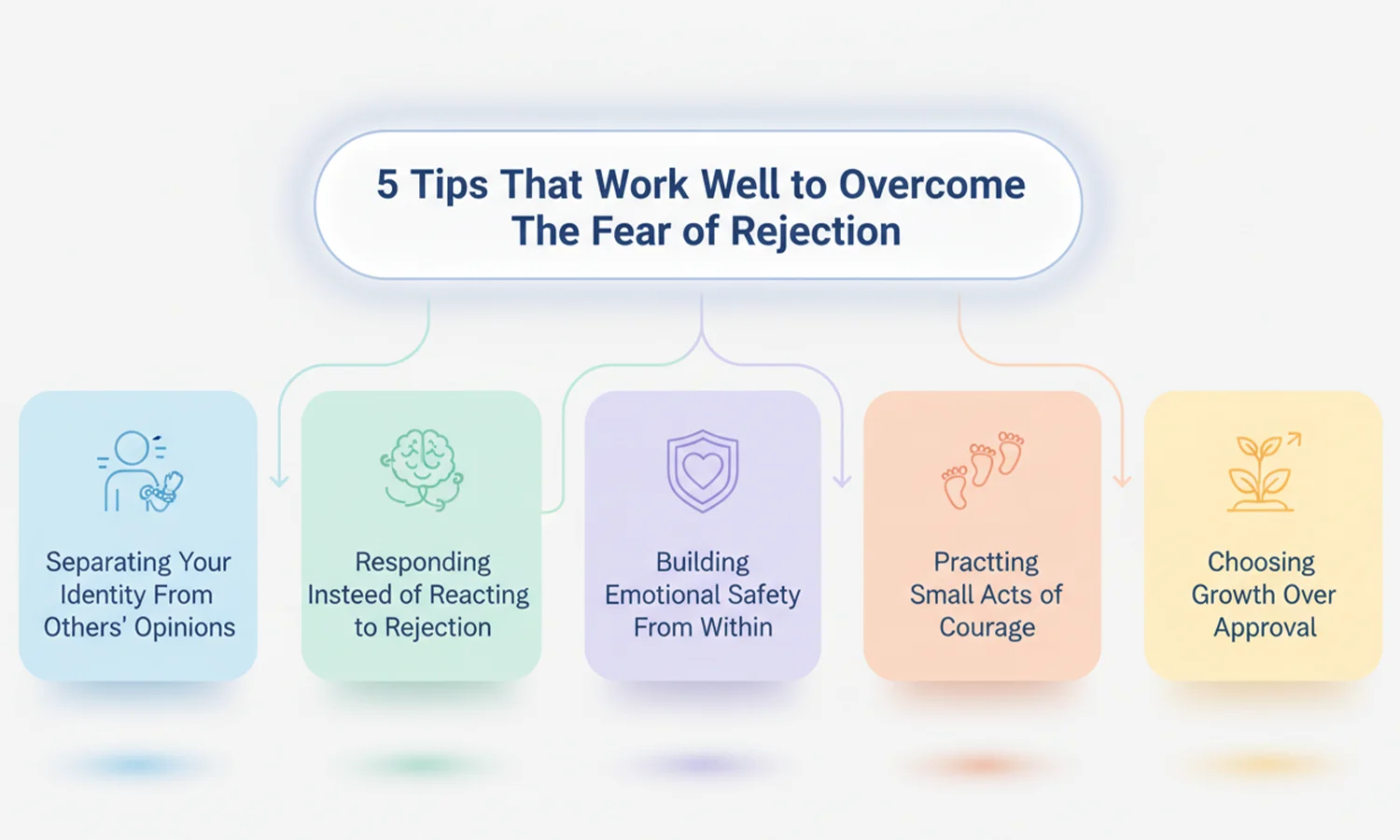
5 Tips That Work Well to Overcome the Fear of Rejection

fear of rejection

Tip 1: Separating Your Identity From Others’ Opinions

One of the fastest ways to reduce this fear is to stop tying your worth to other people’s approval. A rejection usually reflects a mismatch in needs, timing, or preferences—not your value as a person.

Instead of thinking, “I am not good enough,” reframe the situation as, “This was not the right fit.” This small mental shift protects your self-esteem.

Tip 2: Responding Instead of Reacting to Rejection

Rejection often triggers an emotional reaction. Instead of reacting immediately, pause and give yourself time to process the situation.

Take a few deep breaths and remind yourself that this feeling will pass. When you respond calmly instead of reacting impulsively, you maintain your dignity and confidence.

Tip 3: Building Emotional Safety From Within

If your sense of safety depends on others’ approval, the fear of rejection will always feel strong. Building emotional security within yourself is essential.

Focus on your personal values, strengths, and achievements. When you feel confident about who you are, rejection loses its power over you.

Tip 4: Practising Small Acts of Courage

Confidence grows through action. Instead of avoiding rejection, start with small, low-risk situations.

For example:

  • Ask a simple question in a meeting.
  • Start a short conversation with someone new.
  • Share your opinion in a group discussion.

These small actions help reduce anxiety and build resilience over time.

Tip 5: Choosing Growth Over Approval

When approval becomes your main goal, rejection feels like failure. But when growth becomes your focus, rejection becomes a learning experience.

Ask yourself:

  • What did I learn from this experience?
  • What can I improve next time?

This shift helps you move forward with more confidence.

Choosing Self-Worth Over the Fear of Rejection

Overcoming the fear of rejection begins with choosing self-worth over approval. When you stop relying on others to define your value, rejection loses its emotional intensity.

Focus on building a strong internal foundation—one based on your values, strengths, and personal growth. The more secure you feel within yourself, the less power rejection holds over your decisions.

If this fear is holding you back from relationships, opportunities, or self-expression, guided support can make a meaningful difference. Through coaching with Geeta, you can learn practical techniques to build self-worth, handle rejection calmly, and move forward with confidence.

Key Takeaways

  • The fear of rejection is linked to our need for belonging and acceptance.
  • It often develops when self-worth depends on others’ opinions.
  • Small acts of courage help reduce the fear over time.
  • Emotional safety must come from within, not external approval.
  • Growth-focused thinking makes rejection easier to handle.

FAQs

The fear of rejection is called rejection sensitivity or social fear when it becomes intense and persistent.

Yes, it can develop from early experiences such as criticism, neglect, or inconsistent emotional support.

You may fear rejection because your self-worth is tied to others’ opinions, or because of past experiences that made rejection feel painful or unsafe.

Start by separating your self-worth from others’ opinions, practising small acts of courage, and focusing on personal growth instead of approval.

Filed Under: Emotions

Fastest and Most effective ways to change the fear of attachment

March 6, 2026 By Geeta

fear of attachment

What is the fear of attachment called?

The fear of attachment is commonly described in psychology as avoidant attachment or fearful-avoidant attachment. In attachment theory, these patterns develop when emotional closeness is felt to be unsafe or unpredictable. As a result, the mind learns to protect itself by creating distance from intimacy.

It may be referred to as avoidant attachment, fear of intimacy, or even a fear of attachment phobia when it becomes intense and starts affecting daily life. In some cases, it is also linked to the fear of falling in love, where emotional closeness triggers anxiety rather than comfort.

This pattern can also overlap with a broader fear of people or emotional vulnerability. It is one of the common types of fear that develops from past experiences, especially when trust or safety was once broken.

Why Getting Close Feels Unsafe for Some People

For many individuals, the fear of attachment is not a conscious decision. It is often a learned response formed during early relationships. If closeness once led to rejection, criticism, or emotional pain, the brain starts associating intimacy with danger.

This can create a push-pull pattern in relationships. You may crave connection but suddenly feel uncomfortable or overwhelmed when someone gets too close. This internal conflict is a classic sign of fear of attachment in relationships, for example, like the fear of falling in love.

You might feel tense, restless, or emotionally numb when intimacy increases. These reactions are rooted in past emotional experiences and general fear responses stored in the nervous system.

Fear of Attachment vs Independence: Understanding the Difference

It is easy to confuse independence with the fear of attachment because both can look similar on the surface. In both cases, a person may prefer spending time alone, making their own decisions, and relying on themselves. The real difference lies in the intention behind these behaviours.

The fear of attachment, however, comes from self-protection. Closeness may feel unsafe, so distance becomes a way to avoid emotional pain.

This difference is most visible in relationships:

Responsive Table
FeatureHealthy IndependenceFear of Attachment
CommitmentOpen to deep connectionFeels trapped as closeness increases
IntimacyComfortable sharing emotionsShuts down after vulnerable moments
SupportAccepts help when neededAvoids depending on others

Understanding this difference is the first step toward building healthier, more secure relationships.

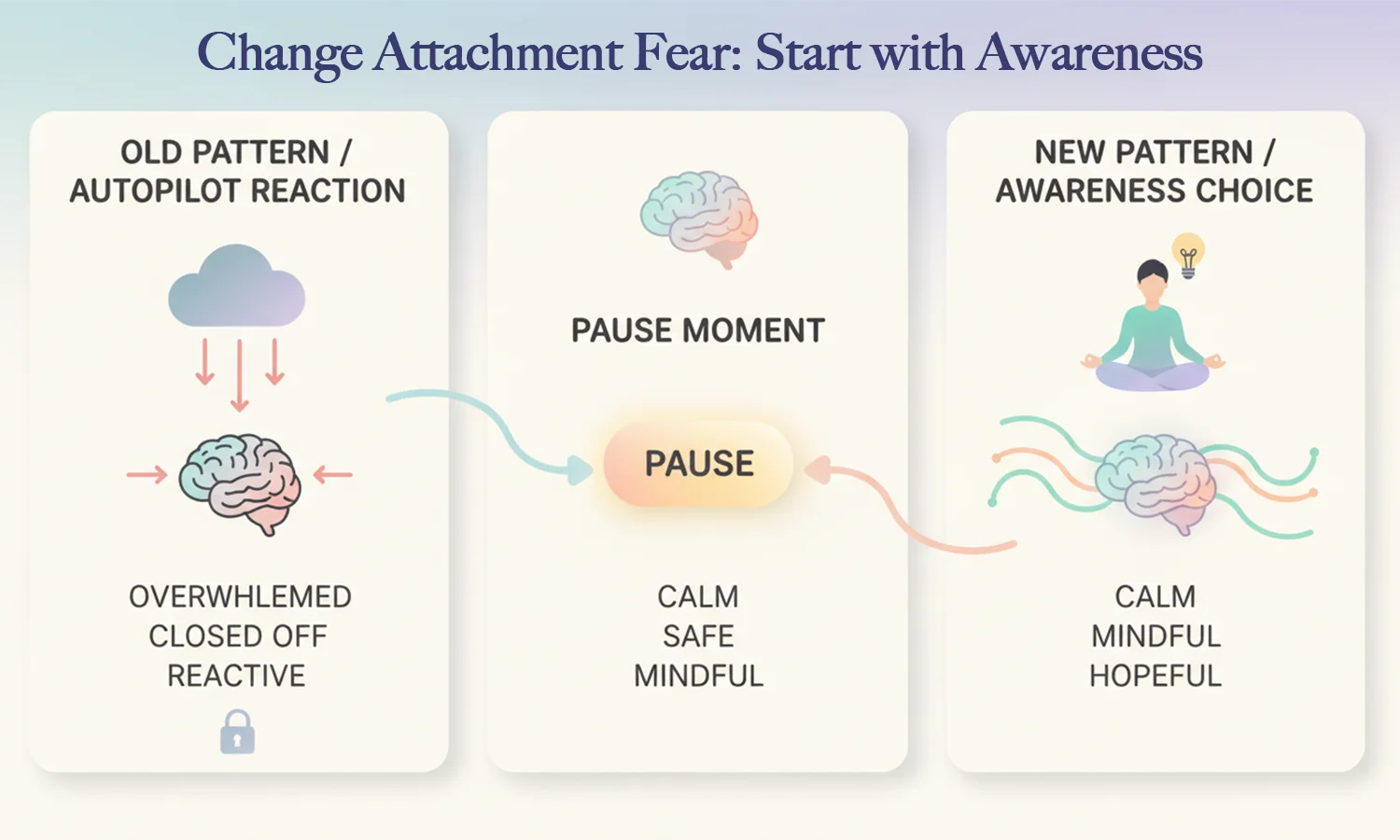
The Fastest Way to Change Attachment Fear: Awareness First

fear of attachment

The fastest shift in the fear of attachment begins with awareness. Most attachment patterns operate on autopilot. The brain reacts before you consciously understand what is happening.

When you notice the urge to withdraw, you can pause and say, “This is my attachment fear showing up.” This small moment of awareness gives you the power to choose a different response.

Instead of running away or shutting down, you can stay present for a few extra seconds. Over time, these small choices create new emotional patterns. This is how people begin overcoming fear of failure, emotional closeness, and other deep-rooted anxieties.

Creating Healthy Attachment While Staying True to Yourself

Healthy attachment does not mean losing your independence. It means moving from isolation to interdependence, where two people support each other while still maintaining their individuality.

Start with clear boundaries. Instead of disappearing when you feel overwhelmed, communicate your needs. For example, you can say, “I care about this relationship, but I need some quiet time to recharge.” This keeps the connection intact while protecting your space.

Another important step is maintaining your own identity. Continue your hobbies, friendships, and personal goals.

Conclusion

The fear of attachment is not a weakness or a permanent part of who you are. It is often a protective pattern that is formed to keep you safe. Coaching with Geeta, you can access practical tools, emotional healing techniques, and personalized sessions designed to help you feel safe in closeness without losing yourself. 

FAQs

It is where emotional closeness triggers anxiety instead of comfort. It often develops from past experiences of rejection, loss, or emotional inconsistency. Over time, the mind learns to protect itself by avoiding deep emotional bonds.

Not exactly. Commitment issues often involve uncertainty about long-term decisions, while the fear of attachment is more about emotional closeness. Someone may want a relationship but still feel anxious about vulnerability, which creates distance.

Start with self-awareness and emotional regulation. Notice your triggers, communicate your needs calmly, and build a stable routine that gives you a sense of security. 

Practice honest communication, maintain personal boundaries, and seek support if needed. With time and consistent effort, your nervous system can learn that closeness does not have to mean danger.

Filed Under: Emotions

How to Overcome the Fear of Losing Someone You Love

March 5, 2026 By Geeta

Fear of Losing Someone

The fear of losing someone you love can quietly take over your thoughts. It may start as concern and slowly turn into constant worry. You may find yourself imagining future loss even when nothing is wrong in the present. While love often brings care and attachment, fear can shift that bond into anxiety.

This fear does not always show up evidently. Sometimes it stays in the background, influencing how you behave, how you think, and how present you are with the people you care about. Understanding this fear is the first step toward responding to it more healthily.

What Does the Fear of Losing Someone Really Mean?

The fear of losing someone is not always about the other person. More often, it reflects what that relationship represents in your life.

At its core, this fear usually points to one or more of the following:

  • A strong emotional attachment
  • A sense of safety tied to the relationship
  • Fear of emotional pain or abandonment
  • Fear of facing life alone

Many people experiencing the fear of losing a loved one are not reacting to what is happening now. They are reacting to imagined futures or past experiences that left a deep emotional imprint.

Why Do I Have a Constant Fear of Losing Someone I Love?

A constant fear does not appear without a reason. It usually develops from personal history, emotional patterns, or earlier experiences with loss or instability.

Below are common reasons why this fear becomes persistent.

Anxious Attachment Patterns

Early relationships shape our perception of closeness. When care or affection felt inconsistent earlier in life, the adult mind may stay alert for signs of loss. This often leads to a fear of losing someone you love, even in stable relationships.

Past Loss or Sudden Separation

If you have experienced an unexpected loss before, your mind may stay in protection mode. It tries to prepare for pain before it happens again. This can result in anxiety, fear of losing someone, even when there is no immediate risk.

Fear of Identity Loss

In deep relationships, identities can merge. Losing a person can feel like losing direction, purpose, or a sense of self. This often fuels the feeling of being afraid of losing someone rather than missing them.

Fear of Uncertainty and Control

Loss reminds us that life is uncertain. The mind tries to regain control by worrying, monitoring, or constantly checking in. This behaviour may feel protective, but it often increases distress.

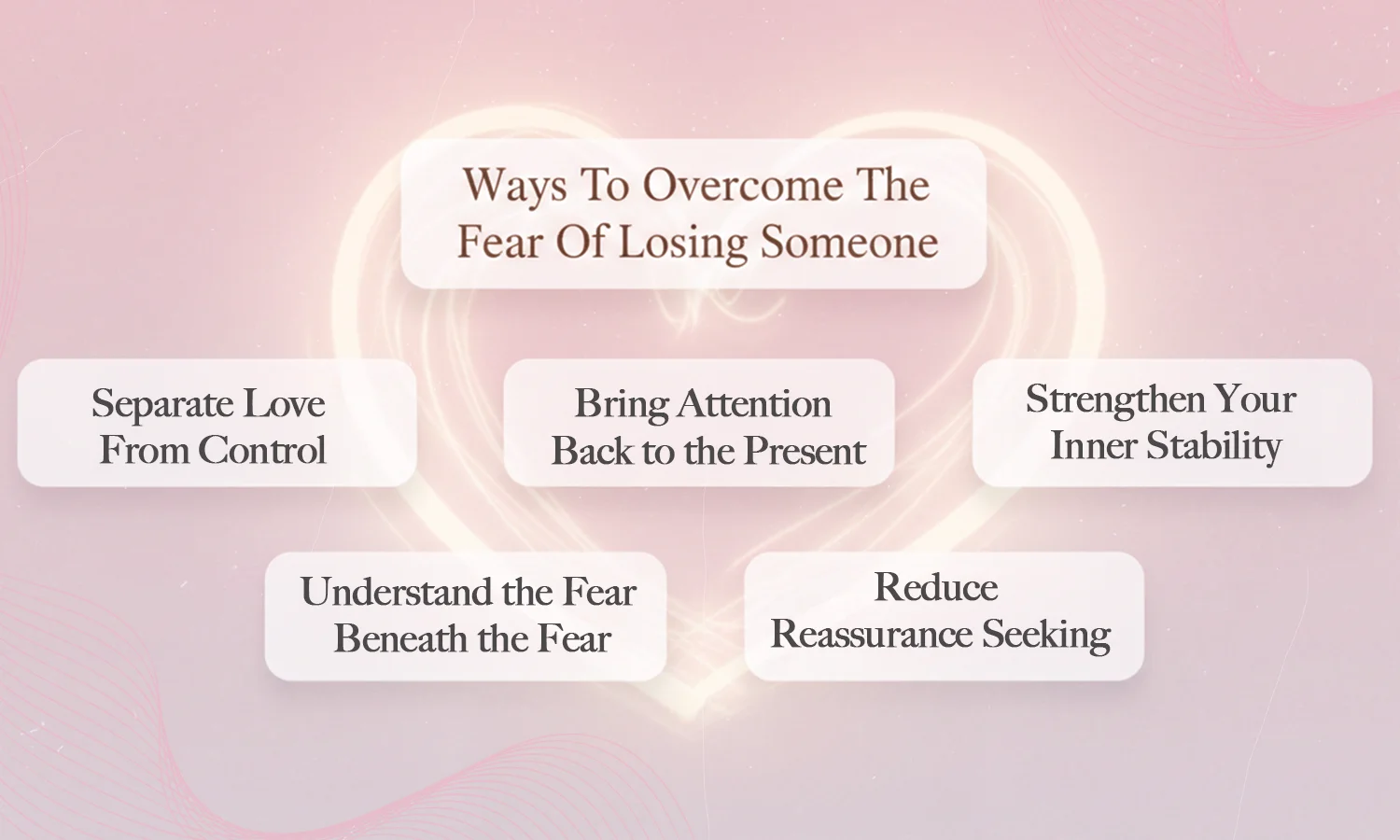
Ways To Overcome The Fear Of Losing Someone

Fear of Losing Someone

Managing this fear does not mean suppressing it. It means learning how to relate to it differently.

1. Separate Love From Control

Love allows freedom. Fear tries to hold tightly.

Ask yourself:

  • Am I connecting, or am I monitoring?
  • Am I enjoying the relationship, or constantly guarding it?

The fear of losing someone Phobia, often shows up when love turns into an emotional grip. Awareness alone can soften this pattern.

2. Bring Attention Back to the Present

Fear lives in imagined futures. Relationships live in the present.

Simple grounding practices help:

  • Notice what is happening right now.
  • Focus on shared moments rather than imagined endings.
  • Allow yourself to be present without predicting loss.

This shift reduces the intensity of the fear of losing someone without denying that loss is possible.

3. Strengthen Your Inner Stability

When your emotional world depends entirely on one person, fear becomes heavier.

Building inner stability includes:

  • Maintaining interests outside the relationship
  • Keeping meaningful connections with others
  • Spending time alone without distraction

A stronger inner base makes loss feel survivable rather than devastating.

4. Understand the Fear Beneath the Fear

Often, the fear is not about losing the person. It is about:

  • Fear of grief
  • Fear of being alone
  • Fear of emotional pain

Understanding what is underneath helps you respond with clarity rather than panic.

5. Reduce Reassurance Seeking

Repeatedly checking for reassurance may calm anxiety briefly, but strengthens it long-term.
Try:

  • Sitting with discomfort for a few minutes
  • Naming the fear without acting on it
  • Allowing the feeling to pass naturally

This builds emotional tolerance and reduces dependence on external validation.

When Should You Seek Help for Fear of Losing Someone You Love?

Fear becomes a concern when it begins to limit your life or damage relationships.

You may consider support if:

  • The fear disrupts sleep or work.
  • You feel unable to function independently.
  • You experience frequent panic or physical symptoms.
  • Relationships feel strained because of constant worry.

Seeking help is not a sign of weakness. It is a step toward understanding patterns that no longer serve you.

Conclusion

The fear of losing someone is deeply human. It grows from love, attachment, and the desire to protect what matters. Yet when fear becomes constant, it prevents you from fully experiencing the relationship itself.

At Coaching with Geeta, this kind of inner exploration is approached through awareness, emotional observation, and understanding personal patterns.

FAQs

Focus on bringing your attention back to the present and building inner stability so that you can navigate life’s transitions with clarity rather than panic.

While the fear of losing someone phobia is a deeply human experience rooted in attachment, it becomes a concern when the anxiety, fear of losing someone, begins to disrupt your daily sleep, work, or independent functioning.

Yes, because a constant fear of losing someone can shift a healthy bond into a pattern of control, monitoring, and excessive reassurance-seeking that strains the relationship.

Filed Under: Emotions

What Causes the Fear of Change and How to Address It?

March 4, 2026 By Geeta

Fear of Change

Key Takeaways

  • The fear of change is a natural response to uncertainty.
  • Severe cases may develop into Metathesiophobia.
  • The brain prefers routine and predictability for safety.
  • Past experiences and fear of the unknown increase anxiety.
  • Small, steady steps can help build confidence during transitions.

Understanding Fear of Change: The Basics

The fear of change is a natural human response. Most people prefer routines because they feel safe and predictable. When something new appears, the brain may interpret it as a possible threat. This reaction often makes people feel afraid of the unknown, even if the change could lead to something positive.

The fear of change usually comes from uncertainty, loss of control, or past negative experiences. Many people become scared to change because they worry about making mistakes or losing stability. This reaction is not unusual. It is part of how the brain protects itself from danger. However, when this fear becomes too strong, it may lead to avoidance, stress, or individual resistance to change in daily life.

What Is Metathesiophobia? When Fear of Change Becomes Serious

At times, the fear of change becomes intense and persistent . This condition is called Metathesiophobia, which is the clinical term for a severe fear of change.

While most people feel nervous before  major transition, Metathesiophobia goes beyond normal anxiety. It may cause a person to avoid opportunities, delay decisions, or panic at the thought of doing something new. This is sometimes linked to change and resistance to change, where a person feels trapped in familiar situations even if they are unhappy.

Signs of severe fear of change may include:

  • Extreme indecision
  • Avoiding even small changes
  • Physical symptoms such as sweating or nausea
  • Strong emotional reactions to routine disruptions

If this fear lasts for a long time and interferes with daily life, professional support may help.

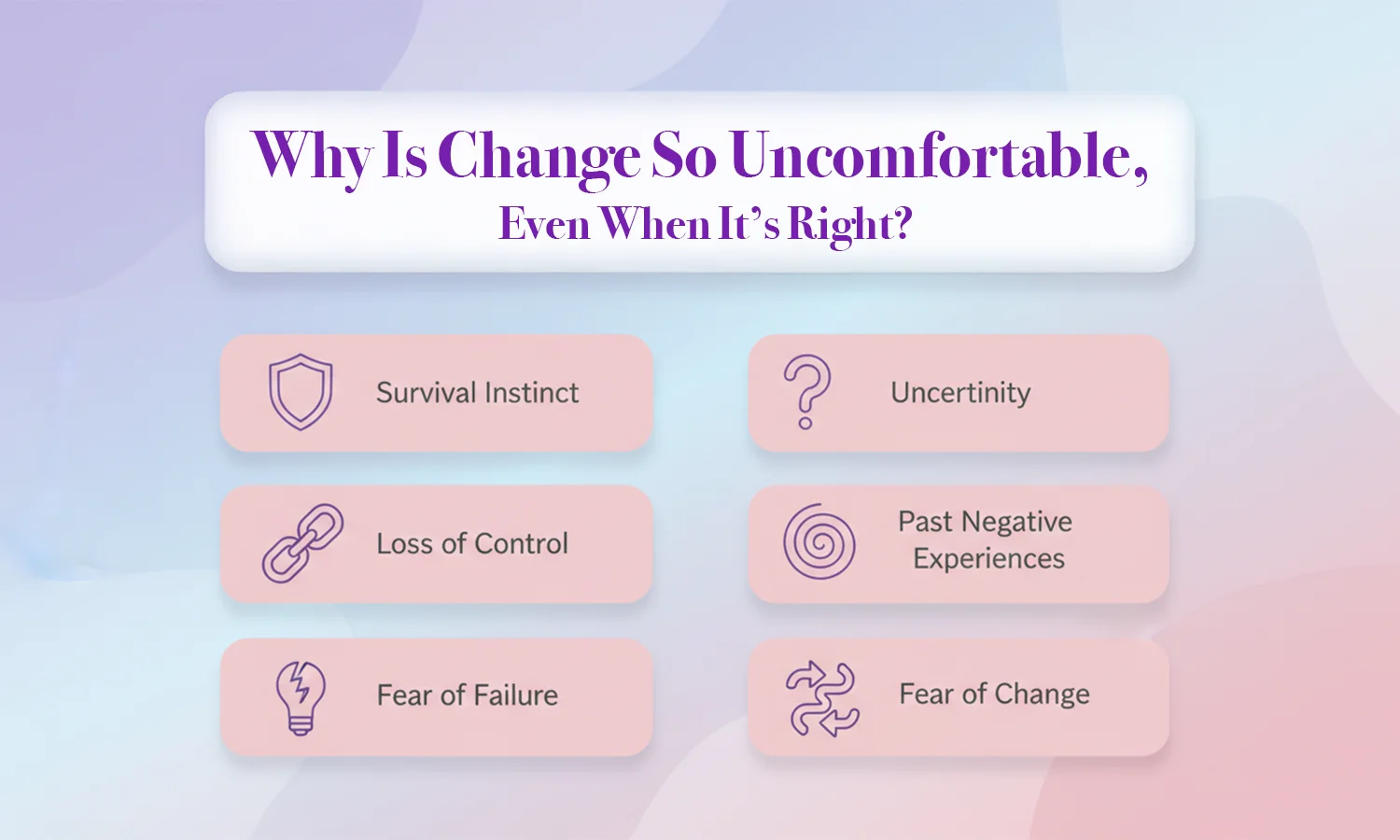
What Causes the Fear of Change and Why Are We Scared of It Even When It’s Positive?

 Fear of Change

The fear of change has deep psychological and biological roots. The human brain is wired to prefer safety and predictability. When something unfamiliar appears, the brain may react as if it is a threat. This is why many people feel fear of the unknown even when the change is positive.

Some common causes include:

Survival Instinct

The brain naturally prefers familiar situations because they feel safer.

Uncertainty

Not knowing what will happen next creates anxiety and stress.

Loss of Control

 When changes are forced by outside events, people may feel powerless.

Past Negative Experiences

 If a previous change led to disappointment or embarrassment, the brain may try to avoid similar situations.

Fear of Failure

New roles or environments may create doubt about personal ability, which strengthens the fear of change.

These factors often work together, making even positive transitions feel uncomfortable.

Simple Ways to Overcome Fear of Change and Build Confidence

Reducing the fear of change does not require dramatic action. Small, steady steps can help you build confidence and adjust to new situations.

Start by breaking large changes into smaller steps. This makes the process less overwhelming and easier to manage. Gathering information about the upcoming change can also reduce uncertainty and make the situation feel more predictable.

Another helpful approach is to focus on what you can control. You may not control the situation itself, but you can control your preparation, attitude, and effort. Practicing mindfulness or deep breathing can calm your thoughts and reduce anxiety about the future.

Talking to supportive friends or mentors can also helps . Sharing your concerns often brings clarity and reassurance. Over time, these small actions reduce the fear of change and help you approach new situations with more confidence.

Conclusion

The fear of change is something most people experience at different stages of life. It is a natural response to uncertainty, but it does not have to control your decisions. By understanding the causes and taking small, practical steps, you can slowly build confidence and adapt to new situations. Change may feel uncomfortable at first, but it often leads to growth, learning, and new opportunities.

FAQs

If you feel a strong fear of change, start by taking small steps instead of making sudden decisions. Break the transition into manageable actions, gather information, and focus on what you can control. Over time, this reduces anxiety and builds confidence.

Yes, the fear of change can stop people from applying for new jobs, moving to better opportunities, or improving relationships. Avoiding change may feel safe in the short term, but it can limit growth and satisfaction in the long run.

There is no single answer, but many people struggle with the fear of change because it is connected to uncertainty and loss of control. Since life constantly evolves, learning to handle change is an important skill for long-term confidence and well-being.

Filed Under: Emotions

Fear of Being Alone? 7 Effective Ways to Overcome

March 3, 2026 By Geeta

Fear of Being Alone

The fear of being alone might feel scary sometimes. However, there are some effective ways to tackle this behavioral problem. In her book, “The Game of Change,” Geeta Ramakrishnan explains how to overcome loneliness issues and enjoy your solitude. Read along to know more!

What Is Fear of Being Alone, and Why Does It Feel So Scary?

The fear of being alone usually arises from a deep-seated disconnect with our own identity. We frequently use the “busy” badge of honor to outrun our own thoughts. When the noise of the world fades, we are left with a reflection we might not recognize or like. This fear of loneliness feels scary because it strips away our external validation. 

The problem arises because, without a partner, friend, or colleague to mirror our worth, we feel invisible. As humans, we treat solitude like a vacuum that might swallow us whole, rather than a space to breathe.

It’s not the silence itself that haunts us. It’s the worry that we aren’t “enough” to keep ourselves company. We become frightened of being alone because we haven’t yet made peace with the person in the mirror!

Victim Mindset vs Hero Mindset: How Loneliness Feels Different

It’s true that our perspective dictates our reality. A Victim Mindset views isolation as a punishment or a sign of failure. When you are in this state, you feel abandoned by the world, trapped in a scared of being alone phobia, where every empty hour is a reminder of what you lack. You ask, “Why is this happening to me?”

On the other hand, a Hero Mindset reframes this experience. The Hero views solitude as a chosen retreat for growth. Instead of a heavyweight, it becomes a light, expansive opportunity to recalibrate.

While the Victim is paralyzed by the fear of being alone, the Hero uses that same time to build an internal fortress.

Loneliness feels like a prison to the Victim, but to the Hero, it feels like a private workshop for self-improvement and reclaiming personal power!

7 Effective Ways to Overcome Fear of Being Alone

Fear of Being Alone

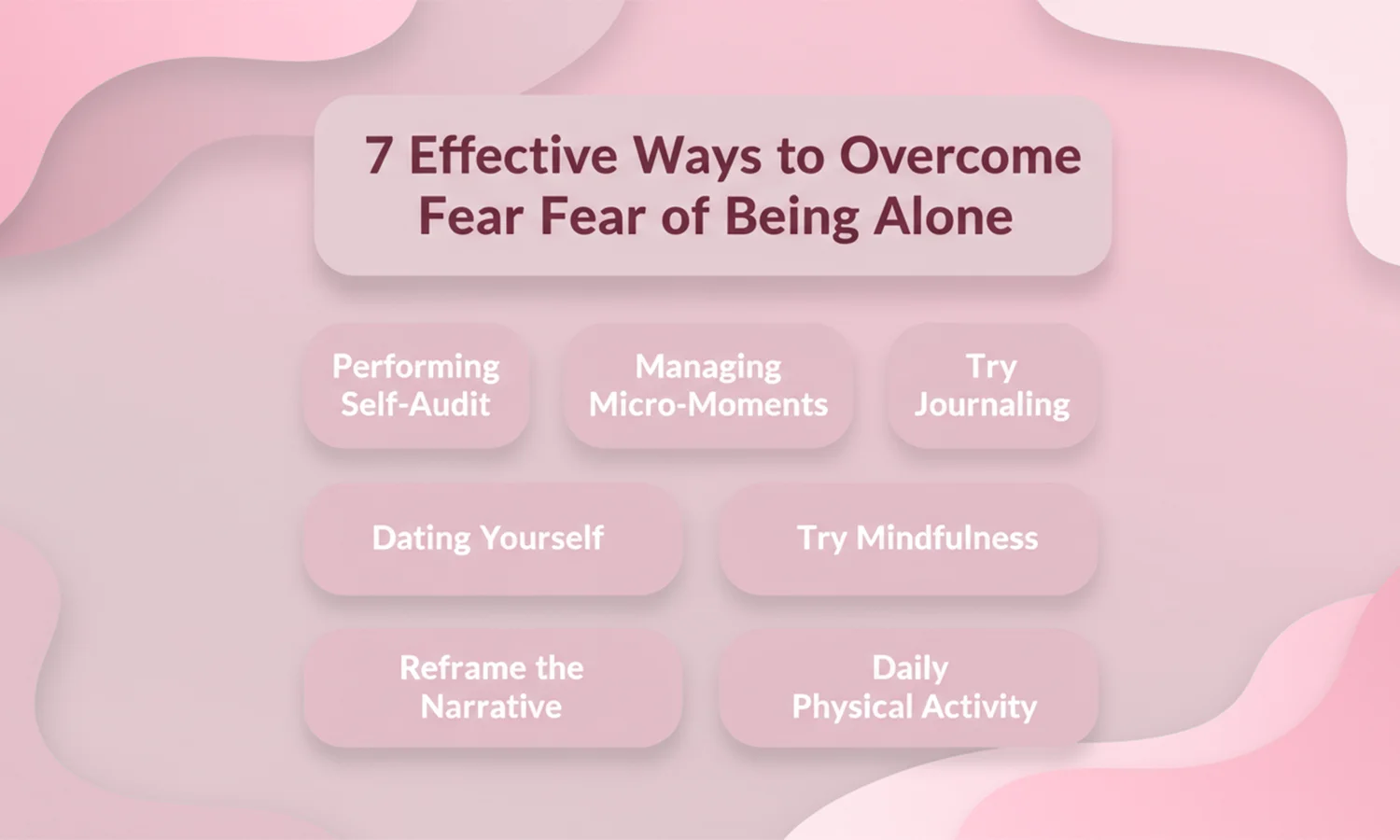
Overcoming the fear of being alone often needs a shift in strategy. So, here are 7 ways to bridge the gap:

  • Performing Self-Audit: Identify the triggers that make you feel the fear of being alone.
  • Managing Micro-Moments: Begin with five minutes of intentional solitude daily.
  • Try Journaling: Externalize your thoughts to stop them from looping in your head.
  • Dating Yourself: Take yourself out for coffee/tea or a favourite snack to normalize your own company!
  • Try Mindfulness: Practice being present without the distraction of a screen.
  • Reframe the Narrative: View “alone” as “all-one” or self-sufficient.
  • Daily Physical Activity: Move your body to release the stagnant energy of an alone phobia.

By implementing the above tips and techniques, you stop running and start observing, turning a perceived threat into a manageable and even enjoyable part of your lifestyle!

How Small Actions Rebuild Confidence and Emotional Safety

Confidence is not a lightning bolt; it is a slow build. Small, consistent wins create a sense of internal security. When you successfully navigate a quiet evening without spiraling into the fear of being alone, you prove to your subconscious that you are safe.

Every time you choose a productive habit over a frantic phone call to fill the void, you add a brick to your foundation of emotional safety. These tiny victories act as evidence that you can handle your own emotions.

And gradually, the desperate need for external anchors will start fading. You will begin to trust your own resilience, realizing that your happiness doesn’t need to be a collaborative effort. Confidence grows when you stop seeking a rescue party and realize you are already standing on solid ground! Thus, you stop being afraid to be alone!

Conclusion:

By following the guidelines in this blog, you can stop being afraid to be alone and start embracing your solitude. Through actionable insights, Geeta Ramakrishnan ensures that you understand transitioning from the “victim” to “hero” mindset so that you can start enjoying your own company!

FAQs

This often stems from a lack of self-connection, where the silence of solitude forces you to face internal insecurities you usually mask with external noise.

Yes, a deep fear of loneliness can drive you to settle for toxic connections or “filler” relationships just to avoid the discomfort of your own company.

Absolutely, as mastering the fear of being alone allows you to move from a state of dependency to a hero mindset of self-sufficiency.

Filed Under: Emotions

  • Page 1
  • Page 2
  • Page 3
  • Interim pages omitted …
  • Page 24
  • Go to Next Page »
  • Facebook
  • Twitter
  • Instagram
  • LinkedIn
  • YouTube
  • Connect

The information on this website is not intended to be a substitute for professional health or personal advice.
Always seek the advice of a qualified professional for medical conditions.


Copyright © 2026 · Geeta Ramakrishnan