• Skip to main content

The Game of Change

Geeta Ramakrishnan

  • About
  • Work With Me
  • Media
  • Book
  • Resources
    • Free
    • Premium
  • Blog
  • Connect

Emotions

Steps to Conquer Your Fear of Hurting Someone

March 2, 2026 By Geeta

Fear of Hurting Someone

The fear of hurting someone is irrational and mostly rooted in a desire for total controlLet’s explore this fear and its consequences through the perspective of Geeta Ramakrishnan, who is the author of the book “The Game of Change.”

What Is the Fear of Hurting Someone, and Why Does It Happen?

The fear of hurting someone is, in fact, a “misguided form of empathy.” Because we fear causing a negative emotional impact on others, we hesitate to speak the truth or set boundaries. However, This kind of fear can become a restriction on our freedom.

There are many reasons behind this phobia of hurting someone’s feelings:

  • From a young age, we are taught that being good means making others happy. It indicates that we have done something wrong if someone else is hurt by our actions.
  • We feel that we are the ones responsible for the reactions of others. But this is untrue because other people are responsible for their own emotional processing.
  • Because of our fear of hurting someone, we choose compliance or silence to avoid messy conversations with others.
  • We wrongly assume that “hurting others” is a bigger sin compared to “hurting ourselves.”

How Fear of Hurting Others Slowly Hurts You

Being considerate of others’ feelings is, in fact, a virtue. However, an obsessive fear of hurting someone’s feelings is one of the many kinds of self-sabotaging behaviors. This causes an “erosion of identity.” As a result, we become a “chameleon,” where we keep shifting to please others’ expectations.

We feel stressed and anxious all the time because we constantly have to suppress our feelings and desires. The phobia of hurting someone’s feelings often results in us being caught in a trap of resentment. We also suffer from a feeling of stunted personal growth because of this fear.

The Real Shift: From People-Pleasing to Personal Responsibility

To shift from our people-pleasing behavior to personal responsibility, we must stick to the following rules:

Taking Emotional Ownership:

We might be responsible for our own actions and kindness towards others, but we are not responsible for the happiness or internal reactions of others. By realizing this, we can escape the fear of hurting someone.

Developing More Honest Connections:

Taking personal responsibility for being our true selves is important. By being brave enough to express our true feelings to others, we can build deeper and more honest relationships with those around us and avoid the fear of hurting someone phobia.

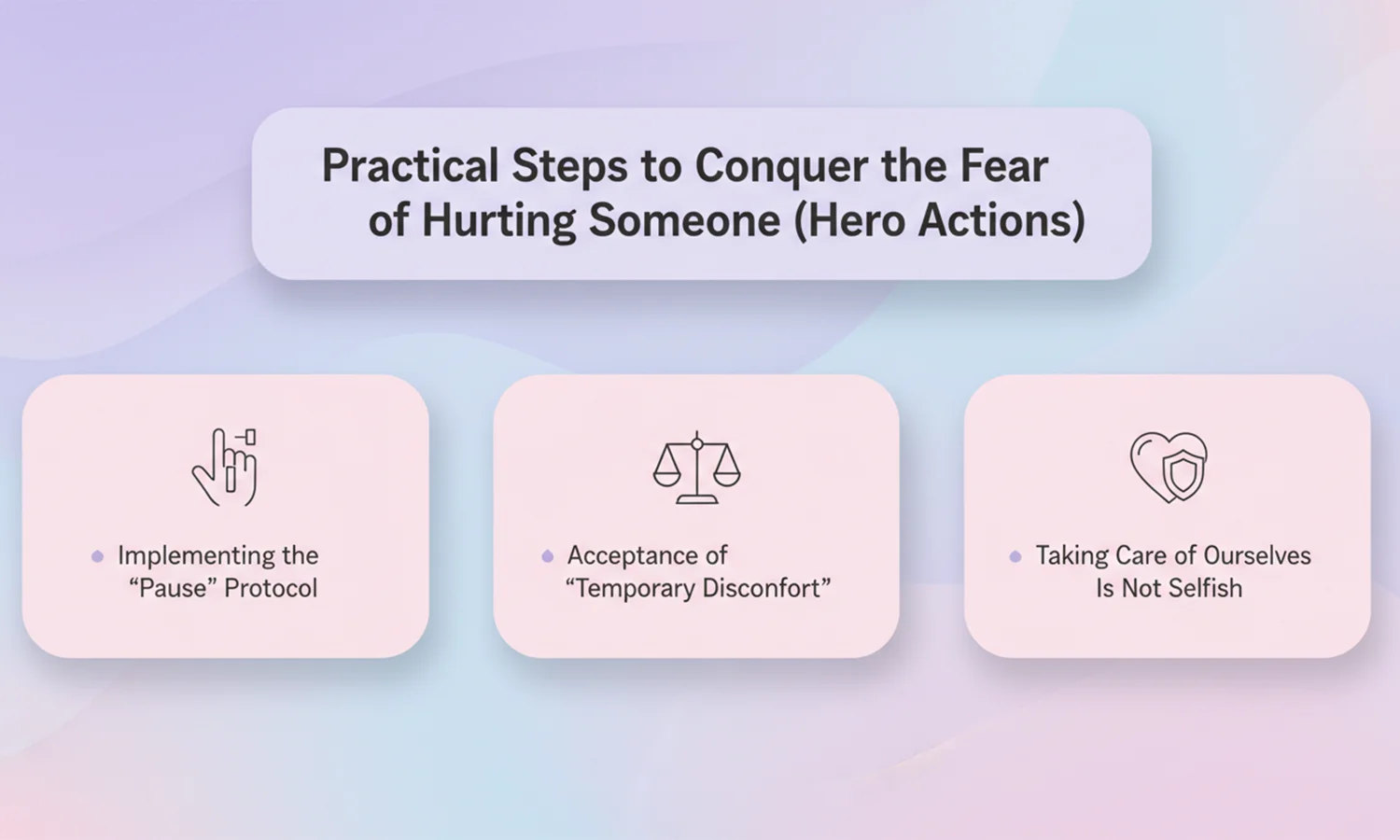
Practical Steps to Conquer the Fear of Hurting Someone (Hero Actions)
Fear of Hurting Someone

To conquer the fear of hurting others, it’s imperative that we transition from the passive “victim” thinking mode to the proactive “hero” mode. This can be achieved through the following steps:

1. Implementing the “Pause” Protocol

Before we say “yes” to a request out of guilt, we must implement a mandatory pause. The heroic action here is to detach our immediate emotional response (fear of rejection) from our logical capacity. 

It’s better to tell the other person, “I need to check my schedule and get back to you.” This will create the space necessary to evaluate if you are acting out of choice or compulsion.

2. Acceptance of “Temporary Discomfort”

The fear of hurting someone is usually just a fear of our own discomfort with their reaction. A key hero action is to sit with the awkwardness.

When you set a boundary, and the other person looks disappointed, it would be wise to resist the urge to “fix” it. Remind yourself that their disappointment is a natural emotion they are capable of handling.

3. Taking Care of Ourselves is Not Selfish

Your mindset should be “taking care of yourself isn’t selfish; it’s a prerequisite for being a high-functioning human.”

The hero action here is to schedule “Me-Time” as a non-negotiable appointment. When you honor this kind of commitment to yourself, you build the “muscle memory” of self-respect, making it easier to say NO to others. And, your fear of hurting someone will gradually fade away!

Conclusion:

The phobia of hurting someone’s feelings is found among many of us. However, we can tackle this fear by following the instructions in the book, “The Game of Change” authored by Geeta Ramakrishnan.

FAQs

It’s not exactly a “clinical” phobia, but more of an emotional anxiety rooted in social conditioning.

The fear of being rude keeps us trapped in dishonesty, but true honesty is actually the highest form of respect. Once we understand this, we can become honest without being rude.

Dystychiphobia is a psychological barrier to personal growth and happiness. It’s actually the fear of accidents or misfortune that prevents an individual from taking the steps to change their lives for the better. 
Filed Under: Emotions

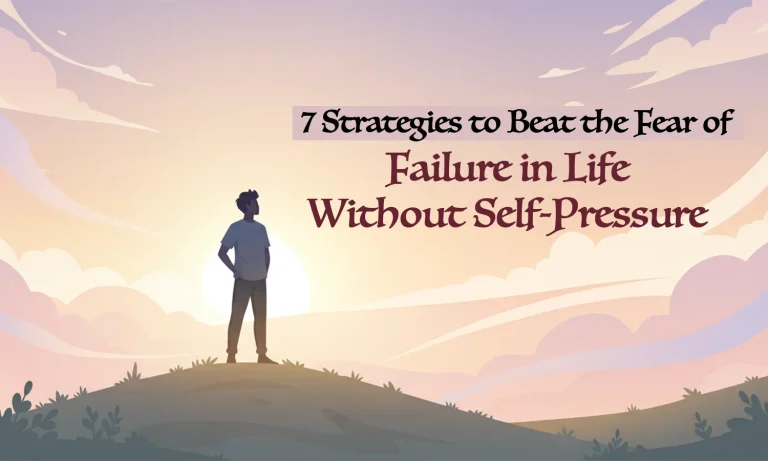
7 Strategies to Beat the Fear of Failure in Life Without Self-Pressure

February 27, 2026 By Geeta

Fear of Failure

What Is Fear of Failure and Why Does It Happen?

The fear of failure is a deep worry about making mistakes or not meeting expectations. Many people experience it at some point, especially in school, work, or relationships. But when this fear starts controlling your decisions, it can stop you from trying new things or taking healthy risks.

Psychologists describe being afraid of failure as a response to shame, criticism, or past negative experiences. It often develops in childhood environments where mistakes were punished or where success was expected at all times.

Common reasons for fear and failure anxiety include:

  • Perfectionist thinking
  • Fear of judgment from others
  • Low self-esteem
  • Past embarrassing experiences
  • A belief that mistakes define your worth

When left unchecked, this fear can grow into avoidance, procrastination, and self-doubt.

What Is Atychiphobia? When Fear of Failure Becomes a Phobia

 Fear of Failure

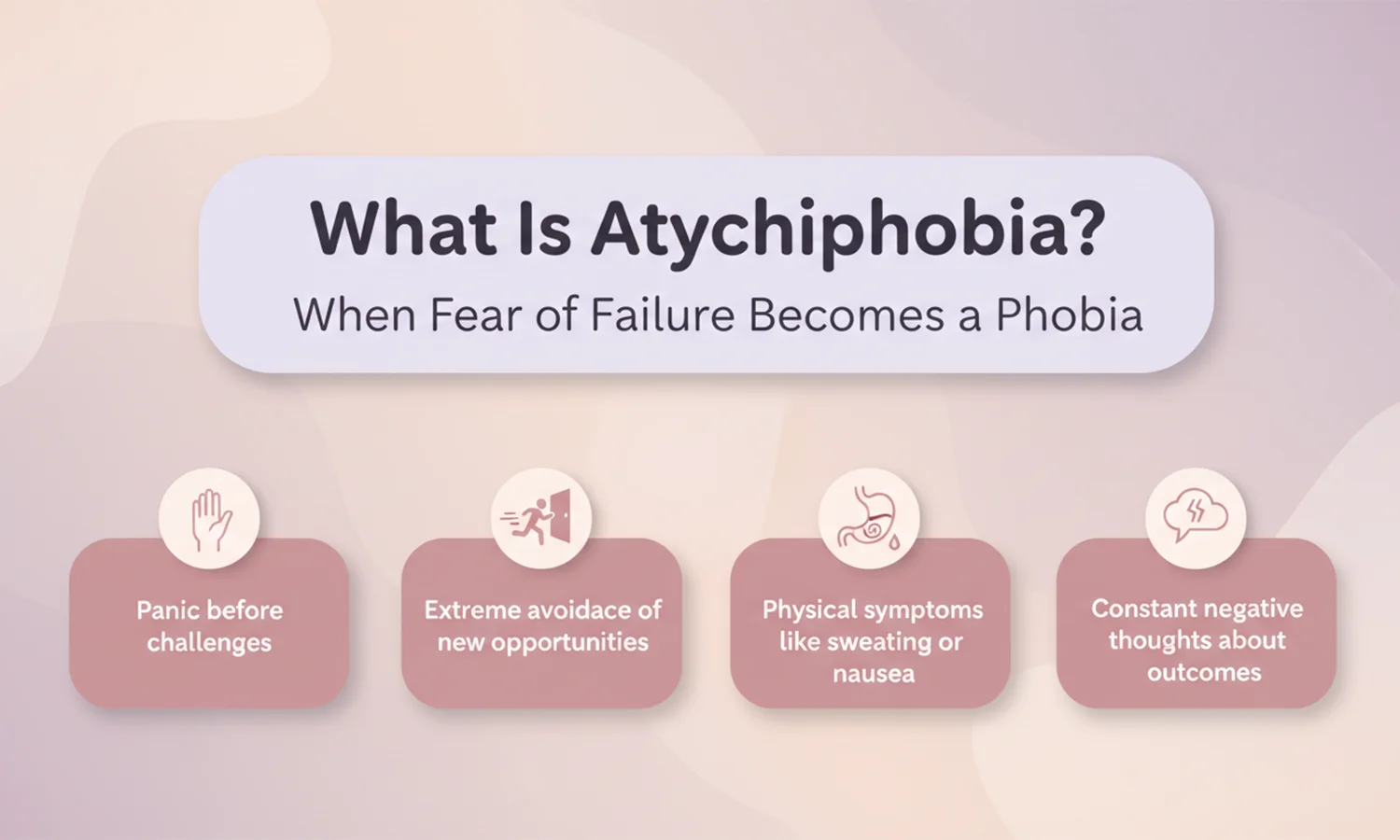
In some cases, the fear of failure becomes so intense that it turns into a clinical condition called Atychiphobia. This is a severe form of fear of failure phobia, where a person avoids tasks simply because they might not succeed.

Unlike normal nervousness, Atychiphobia causes:

  • Panic before challenges
  • Extreme avoidance of new opportunities
  • Physical symptoms like sweating or nausea
  • Constant negative thoughts about outcomes

People with this condition may spend months or years avoiding goals. In such cases, professional support can help in overcoming the fear of failure through therapy and guided exercises.

Signs That You Are Afraid of Failing in Life

Many people are afraid of failing without even realizing it. The fear often shows up in daily habits rather than dramatic panic.

Here are some common signs:

  • Chronic procrastination before important tasks.
  • Refusing to try new things.
  • Overthinking simple decisions.
  • Negative self-talk like “I’m not good enough”.
  • Only choosing tasks where success feels guaranteed.

If these patterns feel familiar, you may be dealing with a strong fear of failure that is holding you back.

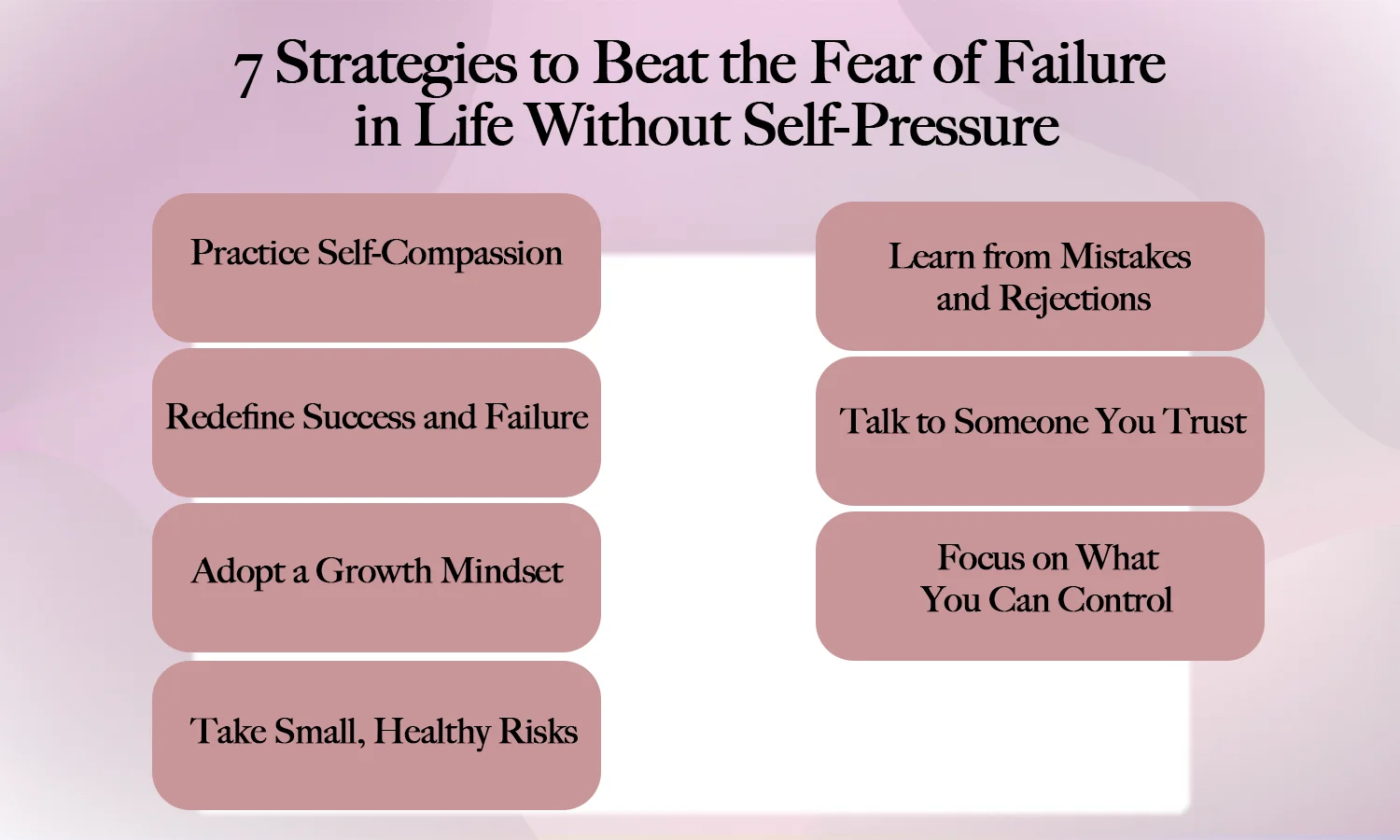
7 Strategies to Beat the Fear of Failure in Life Without Self-Pressure

 Fear of Failure

Overcoming the fear of failure does not require harsh discipline or constant self-criticism. Gentle, steady changes in mindset can make a big difference.

1. Practice Self-Compassion

Treat yourself with the same kindness you would offer a friend. Everyone makes mistakes, and setbacks are part of being human.

2. Redefine Success and Failure

Instead of chasing perfect outcomes, measure success by effort, learning, and growth. This helps you conquer fear of failure by removing all-or-nothing thinking.

3. Adopt a Growth Mindset

Believe that skills can improve with practice. When you see mistakes as lessons, the fear of failure begins to lose its power.

4. Take Small, Healthy Risks

Break big goals into small steps. Each small success builds confidence and reduces anxiety.

5. Learn from Mistakes and Rejections

Ask yourself:

  • What did I learn?
  • What can I do differently next time?

This approach helps you to overcome the fear of failure by turning setbacks into useful feedback.

6. Talk to Someone You Trust

Sharing your worries with a friend, mentor, or therapist can give you clarity and support.

7. Focus on What You Can Control

Put your energy into effort, preparation, and attitude instead of worrying about the final result. This reduces pressure and helps you move forward.

Ready to Take the Next Step?

Living with a constant fear of failure can feel exhausting, but it does not have to control your life. By practicing self-compassion, taking small risks, and focusing on growth instead of perfection, you can build confidence step by step.

The goal is not to eliminate mistakes but to change how you respond to them. When you learn to see failure as part of the journey, success becomes less stressful and more meaningful.

Key Takeaways

  • The fear of failure often comes from perfectionism, past criticism, or low self-esteem.
  • In severe cases, it can develop into Atychiphobia.
  • Signs include procrastination, avoidance, and negative self-talk.
  • Gentle mindset shifts can reduce anxiety around failure.
  • Small, consistent actions help build confidence over time.

FAQs

To reduce overthinking, focus on actions instead of outcomes. The fear of failure grows when you imagine worst-case scenarios. Break tasks into small steps and complete one step at a time.

Start by challenging negative thoughts and replacing them with realistic ones. Regular practice, journaling, and small risks help reduce the fear of failure over time.

Low self-esteem often comes from repeated criticism, comparison, or past failures. When the fear of failure becomes part of your self-image, it can lower confidence and stop you from trying new things.

Filed Under: Emotions

How to Deal With Fear: Simple Techniques to Calm Your Mind

February 26, 2026 By Geeta

how to deal with fear

How Fear Affects the Mind and Body

Before you know it, your year has come to an end. You look back at the highs and lows, cherish the highlights and move on to the next year, set a bunch of resolutions that you may or not follow and get ready for the new year.

When fear is triggered, the body activates the fight-or-flight response. Your heart rate increases, breathing becomes faster, and muscles tighten.

On the mental side, fear narrows your focus. The brain shifts attention to the perceived danger and reduces logical thinking. This is why anxiety can make even small problems feel overwhelming. 

Learning how to deal with fear and anxiety is important because it helps your body return to a calm, balanced state.

Simple Breathing Techniques to Calm Fear Instantly

how to deal with fear

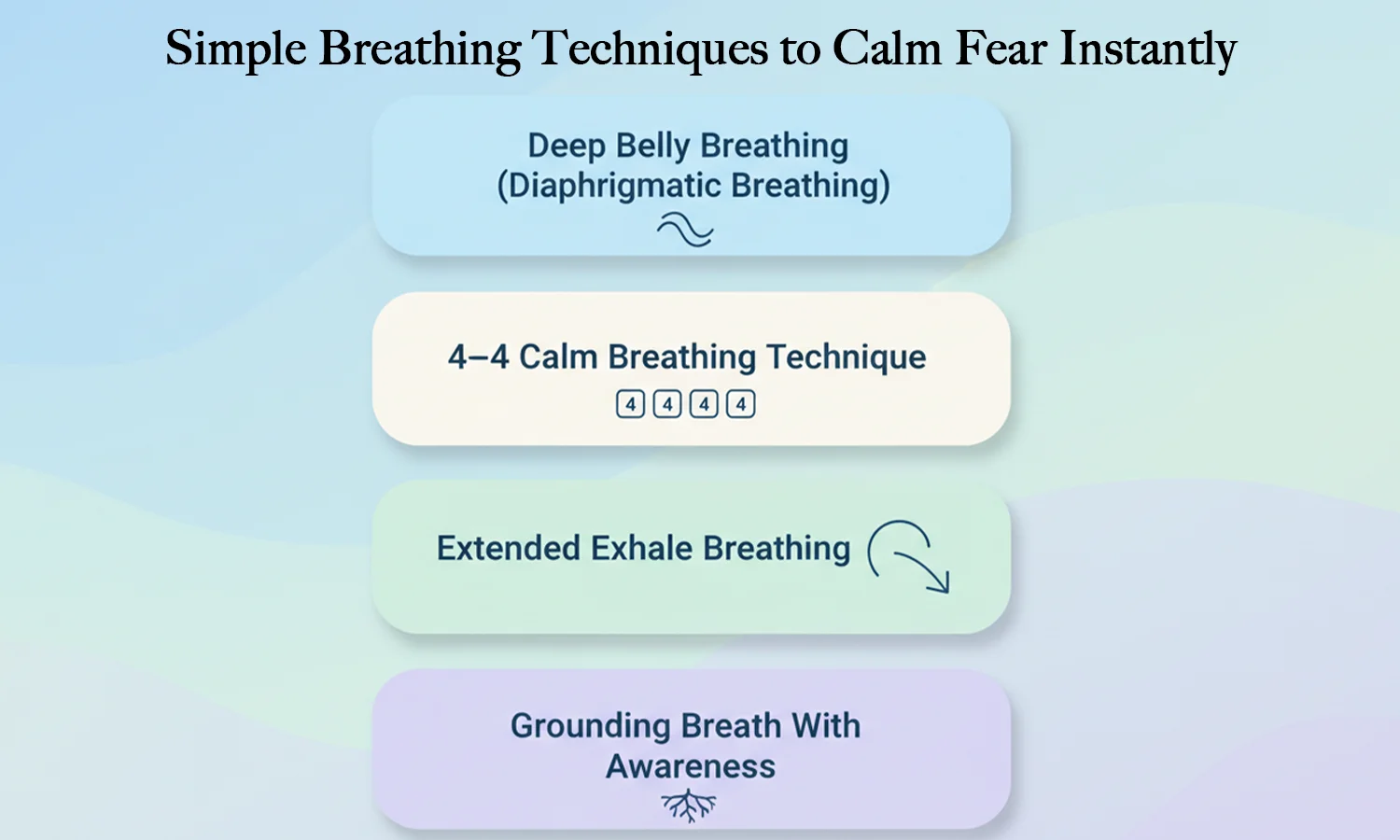
One of the fastest ways to learn how to deal with fear is through breathing exercises. Controlled breathing signals the brain that you are safe and helps slow your heart rate.

Deep Belly Breathing (Diaphragmatic Breathing)

Deep belly breathing is a simple technique that activates the body’s relaxation response. Sit or lie down comfortably. Place one hand on your chest and the other on your stomach. Breathe in slowly through your nose and feel your stomach rise. Then exhale gently through your mouth. 

4–4 Calm Breathing Technique

The 4–4 method is easy to remember and can be done anywhere. Inhale through your nose for a count of four. Then exhale for a count of four. Continue this rhythm for several cycles. Equal breathing balances your nervous system and helps you focus on the present moment instead of fearful thoughts.

Extended Exhale Breathing

This method focuses on longer exhalations. Inhale quietly for four seconds, then exhale slowly for six to eight seconds. A longer exhale tells your body to relax. It slows the heart rate and helps you regain control when fear rises suddenly.

Grounding Breath With Awareness

Grounding breathing combines deep breathing with awareness of your surroundings. Sit comfortably and focus on the feeling of your feet touching the floor. Notice your breath moving in and out. If your thoughts wander, gently return your attention to your breath, which reduces anxiety.

Replacing Fear-Based Reactions With Conscious Choices

how to deal with fear

Another important part of learning how to deal with fear is changing your reaction patterns. Fear often causes automatic responses, like avoiding a task or overreacting to a situation.

Pause:

When fear appears, take one slow breath and create a small mental break.

Process:

 Acknowledge the feeling by saying, “I am feeling fear right now.” Naming the emotion helps calm the brain.

Proceed:

Choose a small action that aligns with your goals. This could be making a phone call, starting a task, or asking for help.

This method gradually teaches the brain how to overcome fear by replacing automatic reactions with thoughtful decisions. It is also useful for specific worries, such as how to deal with fear of failure.

Daily Habits That Reduce Fear Naturally

Learning how to deal with fear is easier when your daily routine supports calmness and stability.

A regular sleep schedule helps regulate emotional responses. Gentle morning routines, like stretching or quiet reflection, prepare the mind for the day. Physical activity, such as walking or yoga, releases natural mood-boosting chemicals in the brain.

Balanced meals also help stabilize energy levels. Too much caffeine or irregular eating can increase anxiety symptoms.  Small daily practices, such as gratitude journaling or gradual exposure to fears, build confidence over time. These habits slowly reduce fear and create a stronger sense of emotional stability.

When Fear Stops Controlling You, Change Begins!

Once you understand how to deal with fear, you begin to see it differently. Fear is not always a sign to stop. Sometimes it is a signal that something important is ahead.

You do not need to be completely fearless to take action. Even a small step forward builds confidence. Each time you act despite fear, your brain learns that you are capable of handling challenges.

Conclusion

Knowing how to deal with fear can change the way you approach challenges in life . If you feel stuck and need more personal guidance, structured support can make a big difference. At Coaching with Geeta, you can find practical tools, mindset techniques, and one-on-one coaching that help you understand your fears and move forward with confidence. 

Key Takeaways

  • Learning how to deal with fear starts with understanding how it affects your body and mind.
  • Breathing techniques can calm fear within minutes.
  • choices help replace automatic fear-based reactions.
  • Healthy daily habits reduce long-term anxiety.

FAQs

Techniques like deep belly breathing or extended exhale breathing help regulate your heart rate. They help in learning how to deal with fear in stressful moments.

No, fear is a natural human response. It is part of the body’s survival system. Understanding how to deal with fear helps you turn it into a signal for growth rather than something to avoid.

You can manage fear naturally through breathing exercises, regular physical activity, good sleep, and mindful practices, helping you emotional balance and how to deal with fear without relying on medication.

Fear can appear suddenly because the brain reacts to perceived threats, not just real ones. Stress, lack of sleep, or negative thoughts can trigger this response. Learning how to deal with fear helps you calm these reactions more quickly.

Filed Under: Emotions

The Art of Saying No and How it Can Be Beneficial for You

November 15, 2021 By Geeta

We have always been taught two things first in our lives: To say Yes or No – without giving it such stress, the latter connotes something negative and the former is positive for sure. Whilst most of you nonetheless would agree, an interesting question now is if you ever thought or experience the psychological cost of rarely saying No? 

Our behaviours outdoor fairly reflect on how we were brought up by our parents, family members and respective caretakers in the house, and these things affect the way we negotiate or arrange things with other people growing up. For example, some would be comfortable declining a friend’s offer at a coffee shop randomly because this person being invited simply needs to sleep early. No negotiations. Just No. In the same invite scenario, another person being invited will just show up anyway just to avoid any emotional rejection it can cause the inviter. 

Becoming an adult is just a cycle of change, and it’s clearly up to you how you would like to keep it running in your circle including the art of saying no to things that don’t measure up to your goals and values in life. So, why waste the time? Unless you do not care or is just simply being careless. 

You see now, people have different mindsets and it will all depend on how the receiver and the taker will react upon it.

But what is the moral lesson here? Could it be boundaries?

Yes, you read it right. Applying self-boundaries limit and protect you from many unnecessary emotional strains, attachments towards other people, things and circumstances you may have involved yourself in through life. 

Having said that, it’s never too late to achieve more peace and healthy surroundings. Check out this article on how wellness programs, say from your respective company can benefit you.

No-No’s but with finesse

Always be kind in writing text or messages, so the person you’re turning down knows you still care? 

Here are some strategies, as well as examples of how to say No politely:

1) Respond with kindness and a compliment

Example: Your collaboration proposal is interesting and thanks to you for sharing it with me, but it’s not a good fit for my coaching site.

2) Give reasons

Example: I can’t take over your coaching session this afternoon—I’m busy onboarding a new blog on my page and have a deadline I need to hit.

3) Be brief

Bad example: Leslie, I can’t help with that.

Better example: Unfortunately, Leslie, I’m afraid I can’t help with that.

4) Offer an alternative

Example: I can’t make the yoga vice president available for the speech conference before your deadline, but I’m happy to give a 10-min talk over Zoom. I can share some vision and inspiring journeys of all our happy members.

Declining an offer or simply saying No, is an essential part of life. While you don’t always have to explain, it’s often worth taking the time to express yourself kindly.

Your choice. Your life. Run it wisely.

For more inspiring blogs, please visit my page for additional resources that can help you grow mentally and spiritually.

Filed Under: Emotions

Move on – Let Your Past Go and it May Never Define You

November 9, 2021 By Geeta

One thing we must always remember is that experience builds us to be better, hopefully not the other way around. As life is just like a roller coaster of ups and downs, no one stays on top or down under if you know what I mean. Good and bad days will always come, and it’s up to you how you will learn from it and step up to the challenge.

It is hard to go on with life when we cling so much to the past.

The past is something that is finished, and it is now just a memory that you will always have whether you like it or not.

That means you need to leave it all in the past, too. Those that made you who you are right now, but that is not who you will be in the future.

Live in the now

Being happy is a matter of choice and the key to having a great life is to forgive yourself and leaving yesterday in the past as a finished chapter in the book of you.

When you achieved this part, only then you will be ready to have great relationships and life will start to become easier.

I once coached my friend Sonia who couldn’t seem to forgive someone from her past. I simply told her; how can you love the newcomers if you are still holding on to an old story? Since most likely, everyone else has moved on, so, it is your time now to say, “It’s about time, I am ready to start a new chapter.”

You can read more helpful guide from this story: Healing from the Past and Living in Your Present

Failures are opportunities to learn and grow – embrace it. They are designed to teach and make us stronger, better, kinder, tougher and more wonderful than we are in the present.

This is one of the ways we grow. This is how we move forward.

Check out my page, to equip you more in the day to day challenges of our lives.

Filed Under: Emotions

How Does Self-Talk Help During Pregnancy?

October 25, 2021 By Geeta

In recent years we have seen a rise in more knowledge sharing on the need for positive affirmations. Manifesting positive thoughts can help you to challenge and overcome self-sabotaging and negative thoughts. When you repeat these positive thoughts, you start believing in them and make changes to achieve them. Simply put, manifesting brings similar results as that of daily exercises to your physical health. 

Why is manifestation important during your pregnancy you may ask? With so many physical and emotional changes that you are going through, positive affirmations help to ease anxiety and fear, because our thoughts and emotions affect our unborn babies and impact their development. Manifesting positive thoughts will make you and your baby thrive throughout this transition phase. Just like you need to exercise to keep your body strong and healthy, you need to train your mind to have the birth you desire.

This blog will help cover the importance of positive affirmations and self-talk during your pregnancy. 

Traditionally when I was pregnant my grandma told me to ‘listen to bhajans, don’t go out after sundown, be happy, eat well’. This was her way to tell me to maintain a happy and positive environment. 

Continuous growth 

Remaining physically active is well recognized as being an important part of your pregnancy, and you can exercise as advised by your gyne. As your baby is developing physically, there is also mental development happening simultaneously inside your womb. The child is learning its first lessons on survival instincts from its primary source – his/her parents. If you are happy, you give that happy energy to the baby developing in your tummy, and it is more likely that your baby is born a calm and happy baby. If you are anxious, have fear, you also give that negative energy to the baby and you are more likely to have a cranky baby. 

Keep your anxieties and worries at bay

As humans, we have developed a tendency to be attracted to negative thoughts more than positive ones, even though both are floating around us. We often miss paying equal attention to our smaller blessings and wins which we take for granted. So all I am saying is to let the negative thoughts, fears and anxiety be. Don’t swipe them under the carpet. Instead focus more of your attention on what you still have around you that is good, that works for you. For example, you are blessed to be pregnant, you have access to good nutrition, a family to be with you perhaps, to medical attention. Such self-talk will help you to remain more often in a positive zone, where you can offer a happy environment of growth to your baby. Positive affirmations like I am happy, I am strong and capable of handling my pregnancy, I am going to have a happy, healthy baby gives you the confidence even if it is your first pregnancy, and you pass this confidence to your child in the womb. 

Positive Information and Communications

Positive affirmations are a way of communication with the baby. Another way for you to communicate is for you and your husband to talk to the baby as often as possible. Avoid fights or being unhappy and anxious. And both of you read all you can about pregnancy, childbirth and child development articles, so you are as prepared with as much knowledge as possible. You can find personal examples of affirmations here.

Filed Under: Emotions

Managing Your Energy as a Parent

October 18, 2021 By Geeta

In one of my previous blogs, I covered how being a perfect parent is a myth. Yet this is a constant struggle for parents. Bringing up a child is a huge responsibility. It takes a lot of commitment from prospective parents not just physically and monetarily but also emotionally. Even then as working or stay-at-home mothers we often find ourselves in a dilemma in understanding if we spend enough time with our kids. Being on the go all the time can take its toll and we find ourselves running out of batteries earlier than sleep time. This results in regularly feeling drained, overwhelmed and off-balance when it comes to raising your kids. This blog is for you to understand how you can channel in the right energies with patience, and perspective to be the parent you want to be. Read on further to understand how best you can manage your energy as a parent.

Do not believe all that you see

The fatigue that comes with parenthood is exactly opposite to what we see on social media and on glamorizing TV series. Seldom do people talk about the real struggles that they encounter and how they go about a tiring day with kids. Comparing yourselves to others will only result in disappointment and drain your energy rather than boost it. 

Leave your stress outside of the home

Keeping your professional and personal life separate is often not easy. However, it is advisable to keep work stress outside of the home. An effective way to do this is to briefly have a conversation with a colleague or relative before you get home to diffuse the situation.

Ask for help 

Despite this juggling, you should accept the fact that you help and support. Especially during stressful times, enrol the grandparents or friends to babysit your kid. It can give you, as a parent, some free time for each other, to gather your sometimes chaotic and fast-paced life. This allows you to be fully available as parents, where you are more fun to be with rather than be stressed and in an angry mood. I dedicate my Thursdays to spend time with my 1-year-old grandson as his parents use that time to run some errands and simply unwind during a busy week.  

Be 100% available

At times that you are present with your children, give them your 100% attention. By attending office calls during family time, you are unconsciously sending the message that they are less important to you, while ironically you are working for your family. The best parts of your childhood are not those expensive gifts your parents gave you; it is the time you spent together, the times you laughed and played together. Wouldn’t you want to give the same to your children?

Nutrition, exercise and fresh air

It is worth investing in your mental and physical wellbeing to give your body the right nourishment, appropriate exercises and hydration to keep your energy levels in check. You must always emit the right energy that will help partake in your kid’s growth journey.  

Lead by example

If your life is more organized and disciplined, your children learn by example. Co-create the rules and boundaries together, enrolling the children in the process. Define the consequences of breaking the rules. It need not be severe. Missing the weekend out or washing the dishes perhaps. And follow through with it. Playing board games or doing a barbeque together is a great family bonding exercise.

While some of the above require you to make a slight lifestyle change, here are some of the quick fixes that can see an adrenaline rush in your energy levels. Some examples are a cuddle, singing or playing music, meditation, mindfulness, prayer, breathing or deep relaxation and spending time in silence.  Balancing your professional and personal life can be challenging, but it’s essential. You can go through this link for some tips and inspiration.

Filed Under: Emotions

Don’t Judge Your Kids – Parenting Wisdom

October 11, 2021 By Geeta

Kids’ brains are like sponges, absorbing everything around them. This is why dealing with their failures and achievements needs to be done diligently. They look up to their parents for support and appreciation in whatever they do which also impacts their level of confidence. 

As we stress ourselves out to become the best version of a parent possible, this impacts our children too. We set the highest possible standards for them because we want nothing but the best for them, but when they aren’t able to measure up to said standards, we end up judging them instead. 

However, parenting doesn’t come with a manual, and we all learn as we go. In the pursuit of being a perfect mother, here are some things we can keep in mind. 

Level of confidence

The impact of a high level of confidence is underrated in the life of your child. Not just in terms of achievements, but it also impacts how they perceive themselves. Diverting attention from their pitfalls and focussing on their wins instead helps them be self-assured. 

Keep cool, be positive and patient

Praise them for their achievements, no matter how small it seems. Try to change their outlook toward failure as not just a loss, but a stepping stone to success. Push them to just try their best, not to always focus on the win. 

Not scoring well in tests

Test scores, at the end of the day, are just a number. By teaching them to get up every time they are knocked down, you are preparing them, not just for exams, but for life instead. Try to be as supportive as possible. It’s perfectly natural for your kids to not be academically brilliant in every subject. If they ever score low in any exam or test, give them a hug, have a conversation with them about where they went wrong and try to be encouraging. 

Don’t shout during failures 

Every parent is scared for their child and only wants the best for them. However, if your first reaction is to yell at your child, this will negatively impact your child’s perception of failure in life. It also dampens their confidence and instils fear in them to try again. 

Comparing their behaviour to the ‘better’ sibling 

This is a common tactic used by parents to show their kids the ideal behaviour- by comparing them to either their friends or their siblings. However, this only results in the child feeling judged and inadequate. This doesn’t mean you should overlook their pranks and bad behaviour whenever it needs correction. Do guide them with kind words and be tactful about it. 

At the end of the day, keep in mind to go easy on yourself and on your kid as well. Little gestures for your child go a long way in their growth and development. As children, they look up to you whenever they need comfort or support. 

Visit my blog to read more articles on parenting, health and wellness! 

Filed Under: Emotions

  • « Go to Previous Page
  • Page 1
  • Page 2
  • Page 3
  • Page 4
  • Interim pages omitted …
  • Page 8
  • Go to Next Page »
  • Facebook
  • Twitter
  • Instagram
  • LinkedIn
  • YouTube
  • Connect

The information on this website is not intended to be a substitute for professional health or personal advice.
Always seek the advice of a qualified professional for medical conditions.


Copyright © 2026 · Geeta Ramakrishnan