• Skip to main content

The Game of Change

Geeta Ramakrishnan

  • About
  • Work With Me
  • Media
  • Book
  • Resources
    • Free
    • Premium
  • Blog
  • Connect

Geeta

Signs of Mental Exhaustion: Recognise Burnout Before It Breaks You

August 25, 2026 By Geeta

signs of mental exhaustion

Overview

The signs of mental exhaustion include constant tiredness, low motivation, irritability, and a mind that feels foggy and worn out. Often linked to chronic stress and burnout, this state builds slowly and affects both body and mind. Spotting it early makes recovery faster, gentler, and far more lasting.

Some tiredness does not lift after a good night’s sleep. You wake up already drained, struggle to care about things you once loved, and feel as though your mind is running on empty. This is more than ordinary fatigue. These are the signs of mental exhaustion, and they deserve real attention.

The World Health Organization now recognises burn-out in its international classification of diseases as an occupational phenomenon caused by chronic workplace stress. Learning the signs of mental exhaustion early helps you act before a difficult season turns into a deeper crisis.

What Are the Signs of Mental Exhaustion?

Mental exhaustion shows up in the mind, the body, and the emotions all at once. You may notice a foggy memory, trouble concentrating, low motivation, and a short temper. Sleep feels unrefreshing and small tasks start to feel enormous.

Emotionally, you might feel numb, detached, or quietly hopeless. Recognising these signs of mental exhaustion as real and valid is the first step toward recovery. They are not signs of weakness, but signals that you have been giving more than you have been receiving for too long.

Mental Exhaustion and Burnout

Mental exhaustion sits at the heart of burnout. The burnout meaning describes a state of emotional, physical, and mental depletion caused by prolonged stress. When this burnout meaning is ignored, the effects deepen over time.

Doctors sometimes describe this as burnout syndrome, a recognised pattern of exhaustion, cynicism, and reduced performance. The burnout syndrome framework helps explain why pushing harder rarely works. The signs of burnout overlap closely with mental exhaustion, and common burnout symptoms include chronic fatigue, detachment, and a loss of purpose. Spotting these signs of burnout and burnout symptoms early gives you the best chance to recover fully.

How Mental Exhaustion Feels Day to Day

Living with this depletion can feel like wading through fog. Persistent mental fatigue makes thinking slow and effort feel heavy. This mental fatigue is not laziness; it is your mind protecting itself after too much strain.

You may also notice clear mentally drained symptoms, such as forgetfulness, low tolerance for noise, and a sense of being emotionally flat. These mentally drained symptoms often come with feeling tired of everything, where even enjoyable things lose their spark. That sense of being tired of everything is a strong signal that rest and support are overdue.


Normal Tiredness

Mental Exhaustion
Eases after rest and sleep
Lingers even after sleeping

Affects the body mainly

Affects mind, body, and mood

Motivation returns quickly

Motivation stays low for weeks

Feels temporary

Feels constant and heavy
how can you recover from mental exhaustion

What Helps: Mental Exhaustion Treatment

Recovery is very possible with the right care. Effective mental exhaustion treatment starts with genuine rest, better boundaries, and reducing the demands that drained you. Sleep, movement, and time in nature all help restore energy.

Beyond self-care, structured mental exhaustion treatment may include coaching or professional support to rebuild resilience and reshape the habits that led to depletion. Recovery is not only about resting, but about changing what refills and what empties your cup.

Restore Your Energy with Coach Geeta

Recovering from deep depletion takes more than a weekend off, and steady guidance makes the journey far easier. At Coach Geeta, founder and ontological coach Geeta Ramakrishnan, author of the Amazon bestselling book The Game of Change, helps people rebuild energy, set healthier boundaries, and create a calmer, more sustainable life.

If exhaustion has quietly taken over your days, this is your moment to begin healing. Book a coaching conversation with Coach Geeta today and take the first step toward renewed energy, clearer focus, and a more balanced, purposeful life. You were never meant to run on empty, and a more rested, vibrant version of you is well within reach.

Key Takeaways

  • The signs of mental exhaustion include lingering tiredness, brain fog, low motivation, and irritability.
  • Mental exhaustion sits at the core of burnout, now recognised by the World Health Organization.
  • Unlike normal tiredness, it does not lift with rest and affects mind, body, and mood together.
  • Feeling tired of everything and emotionally flat are strong signals to slow down.
  • Recovery combines genuine rest, healthier boundaries, and steady support for lasting change.

Rest Is Not a Reward, It Is a Need

Deep exhaustion is not a sign that you are failing, it is a sign that you have been strong for too long without enough support. Recognising the signs of mental exhaustion lets you choose recovery before you reach breaking point. Be gentle with yourself, protect your energy, and remember that steady guidance can help you feel whole again.

Frequently Asked Questions

What are the early signs of mental exhaustion?

Early signs of mental exhaustion include waking up tired, struggling to focus, feeling irritable, and losing interest in things you enjoy. Sleep stops feeling refreshing. Noticing these signals early lets you rest and adjust before the depletion deepens into full burnout.

How is mental exhaustion different from normal tiredness?

Normal tiredness eases after rest, while the signs of mental exhaustion linger even after sleep. Mental exhaustion affects your mind, body, and mood together, and motivation stays low for weeks. This lasting, heavy quality is what sets it apart and signals a need for deeper care.

What does mental exhaustion treatment involve?

Effective mental exhaustion treatment begins with real rest, healthier boundaries, and reducing the pressures that drained you. Sleep, movement, and nature help restore energy. Coaching or professional support can rebuild resilience and reshape the habits behind the exhaustion, making recovery far more lasting.

Is feeling tired of everything a sign of burnout?

Feeling tired of everything, including things you once enjoyed, is a common sign of burnout and mental exhaustion. It suggests your emotional energy is depleted. This is not laziness. It is a clear signal that you need rest, support, and a gentler pace to recover.

Filed Under: Uncategorized

How to Overcome Fear of Failure and Move Forward with Confidence

August 21, 2026 By Geeta

overcome fear of failure

Learning how to overcome fear of failure means changing your relationship with mistakes so they no longer hold you back. This fear is common, deeply human, and very workable. With self-awareness, gentle reframing, and steady action, you can turn the fear of falling short into fuel for real growth.

Fear of failure can be quiet yet powerful. It shows up as procrastination, perfectionism, and the safe choice you make to avoid any risk of falling short. You want to grow, and something inside keeps pulling you back. If this feels familiar, you are already on the path to learning how to overcome fear of failure.

The encouraging truth is that this fear is not a permanent trait. It is a pattern of thought, and patterns can change. Understanding how to overcome fear of failure begins with seeing where the fear comes from.

Understanding the Fear of Failure

In psychology, an intense fear of failure is called Atychiphobia. It describes a persistent dread of falling short that can stop people from trying at all. When people search for what this fear of failure is called, they are often relieved to learn it is a recognised and treatable pattern. It sits within a broader family of fears, see this overview of common types of fear to understand how they connect.

The atychiphobia meaning points to more than ordinary nerves. This describes a fear strong enough to shape decisions and limit potential. In its stronger forms, a fear of failure phobia can trigger real anxiety before a challenge, and that same fear of failure phobia may lead to avoidance that quietly narrows your life over time.

Why We Fear Losing and Falling Short

At the root of this struggle is often a deep fear of being unsuccessful in the eyes of others. We worry about judgement, disappointment, and what a setback might say about our worth. This fear of being unsuccessful can feel especially heavy for high achievers and those carrying big responsibilities. It often overlaps with the fear of rejection, since both stem from a worry about how others perceive us.

Closely tied to it is the fear of losing, meaning the loss of status, approval, or a sense of control. This fear of losing often grows from a broader fear of uncertainty, since the mind dislikes outcomes it cannot predict. When you cannot guarantee success, that fear of uncertainty whispers that it is safer not to try at all.

steps to overcome fear of failure

How to Overcome Fear of Failure

Real change begins with a shift in meaning. Learning how to deal with fear of failure starts by treating mistakes as information rather than verdicts. Every setback carries a lesson, and reframing failure as feedback loosens its grip.

Next comes gentle action. Learning how to control fear means taking small, brave steps despite the discomfort, which teaches your mind that risk is survivable. Practising how to control fear in this way slowly rebuilds confidence. Alongside this, how to deal with fear of failure also involves self-compassion, since a kinder inner voice makes courage far easier to find. Together these habits are the heart of how to overcome fear of failure for good.

Turning Fear into Fuel

Fear does not have to be your enemy. When you understand it, the same energy that once held you back can push you forward. Each small act of courage widens your comfort zone and proves that you are more capable than the fear suggested.

Over time, learning how to overcome fear of failure transforms how you approach goals, work, and relationships. You begin to act from possibility rather than protection, and that shift changes everything.

Step Into Courage with Coach Geeta

Facing a lifelong fear is deep work, and guidance makes the path far lighter. At Coach Geeta, founder and ontological coach Geeta Ramakrishnan, author of the Amazon bestselling book The Game of Change, helps people replace limiting beliefs with courage, resilience, and self-belief.

If fear has been keeping you from the goals and career you truly want, this is your moment to change that story. Book a coaching conversation with Coach Geeta today and take the first step toward bolder decisions, stronger confidence, and a more purposeful, fulfilling life. Your potential is bigger than your fear, and the courage to claim it is well within your reach.

Key Takeaways

  • Learning how to overcome fear of failure starts with seeing mistakes as feedback, not verdicts.
  • The clinical term for intense fear of failure is Atychiphobia, a recognised and workable pattern.
  • The fear often grows from a fear of being unsuccessful and a deeper discomfort with uncertainty.
  • Small, brave actions retrain the mind to see risk as survivable and confidence as buildable.
  • Self-compassion and steady support turn fear into fuel for real, lasting growth.

Your Courage Is Waiting

Fear of failure is not a sign that you are weak, it is a sign that something matters to you. Learning how to overcome fear of failure lets you honour that meaning while refusing to be ruled by fear. Be patient with yourself, celebrate every brave step, and remember that steady support can make courage feel far more within reach.

Frequently Asked Questions

How to overcome fear of failure when it feels paralysing?

Start small. Learning how to overcome fear of failure means taking one brave step at a time and treating each setback as a lesson. Reframe mistakes as feedback and speak to yourself with kindness. With practice, and support when needed, courage gradually replaces the paralysis.

What is the fear of failure called in psychology?

The intense fear of failure is called atychiphobia. It describes a persistent dread of falling short that can lead to avoidance and anxiety. Understanding that it has a name, and is a recognised pattern, often brings relief and makes it easier to address with the right tools.

How do I control fear before an important challenge?

Learning how to control fear means calming the body first with slow breathing, then reframing the challenge as a chance to grow rather than a test of worth. Preparing well and taking small steps builds confidence. Over time, this makes how to overcome fear of failure feel natural.

Can coaching help with fear of failure?

Yes, coaching helps you uncover the beliefs behind your fear and build practical tools to move past them. A skilled coach offers structure, encouragement, and accountability. Many people find that guided support is what finally teaches them how to deal with fear of failure and act with confidence.

Filed Under: Uncategorized

Emotional Overwhelm: How to Recognise it and Regain your Calm

August 21, 2026 By Geeta

emotional overwhelm

Emotional overwhelm happens when feelings become so intense that they cloud your thinking and drain your energy. It is often triggered by stress, change, or too much pressure at once. Recognising the signs early and using simple grounding techniques can help you steady your mind and feel in control again.

There are days when emotions arrive all at once and refuse to settle. Worry, sadness, pressure, and frustration pile up until your mind feels foggy and your body feels tense. In these moments, thinking clearly seems impossible. This experience is emotional overwhelm, and it is far more common than most people admit.

Understanding emotional overwhelm is the first step toward managing it with kindness rather than fear.

What Is Emotional Overwhelm?

So, what is emotional overwhelm, exactly? It is the state where your emotional load exceeds your capacity to process it in the moment. Feelings stop being signals you can read and become a flood that clouds judgement.

The emotional overwhelm meaning goes beyond simply feeling stressed. It is the sense that your inner world has become too much to hold. The word itself offers a clue, since the overwhelmed meaning points to being submerged or buried under a heavy weight. That meaning of overwhelmed captures the experience perfectly, because it feels as though emotion has risen above your ability to cope. Knowing what is emotional overwhelm in your own body helps you catch it earlier and respond with care.

How Emotional Overwhelm Feels

Knowing the emotional overload symptoms helps you catch this state early. Common signs include a racing mind, a tight chest, irritability, tearfulness, trouble concentrating, and a strong urge to withdraw. Physical tension and fatigue often appear too. These are closely linked to common anxiety symptoms, so recognising the overlap can help you respond faster.

When you feel overwhelmed with emotions, even simple tasks can seem impossible, and small problems can feel enormous. These emotional overload symptoms are your mind and body asking for rest and care. Being overwhelmed with emotions is not a weakness, it is a signal that you have been carrying more than anyone should carry alone.

Why Emotional Overwhelm Happens

This state usually builds from a mix of pressures rather than a single cause. Ongoing stress, major life transitions, caring for others, and suppressing feelings over time can all fill your emotional cup until it spills. In India, the National Mental Health Survey found that nearly 15 percent of adults need active support for one or more mental health concerns, which shows how widely this strain is felt.

For working women, homemakers, and anyone moving through change, the load can be relentless. Recognising that emotional overwhelm grows from accumulated pressure, not personal failure, brings both relief and clarity. It also helps to notice how negative self-talk shapes the way you carry stress, since the inner voice often makes overwhelm feel heavier than it is.

tips to handle emotional overwhelm

Grounding Techniques That Help

The fastest relief comes from calming the body first, because a settled body sends safety signals to the mind. Simple grounding techniques for emotional overwhelm include slow breathing, naming five things you can see and hear, and pressing your feet firmly into the floor to feel supported.

Other grounding techniques for emotional overwhelm include stepping outside for fresh air, drinking a glass of water slowly, and writing your feelings onto paper. These small actions interrupt the flood and bring you back to the present, where things usually feel more manageable.

When to Seek Support

Sometimes self-help is not enough, and reaching out is a sign of strength. If intense feelings persist and disturb your sleep, work, or relationships, structured support for emotional overwhelm can make a lasting difference. A coach offers tools, perspective, and steady guidance.

Seeking support for emotional overwhelm early prevents small struggles from becoming larger ones. You do not have to wait until you reach breaking point to ask for help.

Find Your Calm with Coach Geeta

Learning to steady your emotions is deep work, and you do not have to do it alone. At Coach Geeta, founder and ontological coach Geeta Ramakrishnan, author of the Amazon bestselling book The Game of Change, helps people move from emotional overload to genuine calm, clarity, and resilience.

If heavy feelings have been running your days and clouding your focus, this is your moment to reclaim your balance. Book a coaching conversation with Coach Geeta today and take the first step toward steadier emotions, clearer decisions, and a more confident, fulfilling life. You deserve a mind that feels like a calm place to be, and that steadiness is closer than you think.

Key Takeaways

  • Emotional overwhelm is when feelings grow too intense to process clearly in the moment.
  • It usually builds from accumulated stress, change, and pressure rather than a single event.
  • Common emotional overload symptoms include a racing mind, tight chest, irritability, and withdrawal.
  • Grounding techniques like slow breathing and sensory awareness bring fast, gentle relief.
  • Lasting calm often comes from combining daily habits with steady, structured support.

You Are Allowed to Feel and to Heal

Being flooded by emotion does not mean you are failing, it means you are human and carrying a great deal. Understanding emotional overwhelm gives you gentle, practical ways to steady yourself. Be patient and kind as you practise, celebrate small moments of calm, and remember that reaching out for support is one of the bravest steps you can take.

Frequently Asked Questions

What is emotional overwhelm and how does it feel?

Emotional overwhelm is when your feelings become too intense to manage in the moment. It often feels like a foggy mind, a tight chest, and an urge to withdraw. It is a common response to pressure, and it eases with grounding techniques and steady self-care.

What are the main emotional overload symptoms?

The main emotional overload symptoms include a racing mind, tearfulness, irritability, trouble focusing, physical tension, and fatigue. You may also feel a strong urge to isolate. These signs mean your mind and body need rest, and noticing them early helps you respond with care.

What does emotional overwhelm actually mean?

The emotional overwhelm meaning is emotion rising faster than you can process it in the moment. People often look up the plain overwhelmed meaning to make sense of what they feel. That simple meaning of overwhelmed, being submerged by feeling, captures the experience well, and naming it is the first step to easing it.

How do I calm emotional overwhelm quickly?

To ease emotional overwhelm fast, calm the body first with slow breathing, then ground your senses by naming what you can see and hear. Stepping outside or writing your feelings down helps too. Practised regularly, these techniques teach your nervous system to settle more easily.

When should I seek support for emotional overwhelm?

Consider support for emotional overwhelm when intense feelings persist and disturb your sleep, work, or relationships. You do not need to wait for a crisis. Reaching out early, to a coach or professional, gives you tools and perspective that make lasting calm far easier to reach.

Filed Under: Uncategorized

How to Stop Racing Thoughts at Night and Calm your Mind

August 20, 2026 By Geeta

how to stop racing thoughts at night and calm your mind

Overview

Learning how to stop racing thoughts at night means calming both body and mind before sleep. Racing thoughts are usually driven by stress, anxiety and overthinking. With simple wind-down habits, grounding techniques, and steady practice, most people can quiet the mental noise and enjoy deeper, more restful sleep.

You switch off the light, rest your head, and suddenly your mind comes alive. Tomorrow’s tasks, today’s regrets, and every unfinished worry begin to circle. The more you long for sleep, the louder the thoughts become. If your nights often unfold this way, you are searching for how to stop racing thoughts at night, and you are far from alone.

This nightly pattern is common and very manageable. Once you understand why it happens, you can give your mind the calm it needs to rest.

Why Your Mind Races the Moment You Lie Down

During the day, activity and distraction keep busy thoughts at bay. At night the noise fades, and the mind finally has space to process everything you held back. This is why racing thoughts while sleeping feel so intense, even after an exhausting day.

There is often a strong emotional charge behind it. Racing thoughts anxiety tends to peak at night, because tiredness lowers your ability to regulate emotion and the body stays on alert. When racing thoughts anxiety takes over, the nervous system reads bedtime as a threat rather than a rest. Understanding this is the first step in learning how to stop racing thoughts at night with patience instead of frustration. Recognising the pattern behind racing thoughts while sleeping helps you respond with calm rather than panic.

Common Racing Thoughts Symptoms and Examples

It helps to know what this experience actually looks like. Typical racing thoughts symptoms include a mind that jumps quickly between topics, difficulty focusing on one idea, a pounding heart, and an inability to switch off. These racing thoughts symptoms often come with restlessness and a sense of mental overload.

Common racing thoughts examples include replaying an awkward conversation, worrying about money or health, and planning tomorrow in obsessive detail. Other racing thoughts examples involve imagining worst-case outcomes that are unlikely to ever happen. Seeing your own experience described can be reassuring, because it shows this is a known pattern with known solutions.

Racing Thoughts vs Intrusive Thoughts

People often confuse two different experiences, so a clear comparison helps. Understanding racing thoughts vs intrusive thoughts makes it easier to know what you are dealing with and how to respond.

Racing Thoughts

Intrusive Thoughts


Fast stream of many linked worries

Sudden, unwanted single thought

Often tied to stress and anxiety

Often random and out of character

Feel like a mind that will not slow

Feel disturbing or strange

Grasping racing thoughts vs intrusive thoughts matters because the calming approach differs slightly for each. So why intrusive thoughts happen at all is worth understanding too. Among the main intrusive thoughts reasons are stress, fatigue, and a busy nervous system. Knowing these intrusive thoughts reasons, and understanding why intrusive thoughts happen, removes much of the fear around them.

3 simple ways to calm your racing mind

How to Stop Racing Thoughts at Night

Real rest comes from calming the body first, because a settled body signals safety to the mind. Learning how to stop racing thoughts at night begins with slow, deep breathing that lowers your heart rate and eases tension.

Next, move your worries onto paper. Keeping a notebook by the bed lets you offload thoughts so your mind no longer has to hold them. Grounding also works well, so gently name a few things you can feel and hear to bring attention back to the present. Practising how to stop racing thoughts at night in this way trains your nervous system to associate bedtime with calm. These same tools teach you how to stop racing thoughts in any stressful moment, not only at night. With repetition, knowing how to stop racing thoughts becomes a natural and reliable skill.

Find Deeper Calm with Coach Geeta

Simple habits help a great deal, and lasting change often grows faster with guidance. At Coach Geeta, founder and ontological coach Geeta Ramakrishnan, author of the Amazon bestselling book The Game of Change, helps people quiet mental overwhelm and build genuine, lasting calm through practical tools and a steadier mindset.

If restless nights have stolen your energy and focus for too long, this is your moment to reclaim them. Book a coaching conversation with Coach Geeta today and take the first step toward peaceful sleep, sharper days, and a more confident, purposeful life. You deserve nights that restore you, and that calm is closer than it feels right now.

Key Takeaways

  • Learning how to stop racing thoughts at night starts with calming the body before the mind.
  • Racing thoughts peak at night because distraction fades and tiredness lower emotional control.
  • Racing thoughts and intrusive thoughts are different, and each respond to a slightly different approach.
  • Intrusive thoughts are extremely common and usually driven by stress and fatigue, not by anything wrong with you.
  • Breathing, journaling, and grounding are proven tools that train your mind to rest.

Rest Is Within Your Reach

A racing mind at night can feel lonely and exhausting, yet it does not have to define your sleep. Learning how to stop racing thoughts at night gives you gentle, practical control over the noise. Be patient with yourself, build your wind-down routine one night at a time, and remember that calmer, deeper rest is truly possible for you.

Frequently Asked Questions

How to stop racing thoughts at night when you cannot sleep?

Start by calming the body with slow, deep breaths, then write your worries in a notebook so your mind can let them go. Grounding your senses helps too. Practising how to stop racing thoughts at night consistently teaches your nervous system that bedtime is safe, which makes sleep come more easily.

Why do I get racing thoughts anxiety only at night?

At night, distractions disappear and tiredness lowers your emotional control, so racing thoughts anxiety feels stronger. The mind finally processes what it held back all day. A calming wind-down routine, done regularly, retrains your body to associate bedtime with rest rather than worry.

What is the difference between racing thoughts vs intrusive thoughts?

Understanding racing thoughts vs intrusive thoughts is simple once you see it. Racing thoughts are a fast stream of connected worries, while intrusive thoughts are sudden, unwanted single thoughts. Both are common and manageable, though each responds best to a slightly different calming approach.

Are racing thoughts a sign of a serious problem?

Usually not. Occasional racing thoughts are a normal response to stress and tiredness. They deserve closer attention when they are constant and disturb daily life. Learning how to stop racing thoughts with proven tools, and seeking support when needed, helps most people find lasting relief.

Filed Under: Uncategorized

Negative Self-Talk: How to Recognize it and rewrite the voice in your head

August 20, 2026 By Geeta

negative self talk

Overview

Negative self-talk is the harsh inner voice that criticises, doubts, and predicts failure. Left unchecked, it lowers confidence and fuels overthinking. Because the mind produces thousands of thoughts daily, learning to notice and gently reframe this inner critic is a proven way to build self-belief and lasting emotional resilience.

There is a voice inside most of us that comments on everything we do. Some days it is kind. Other days it is sharp and unforgiving, telling you that you are not good enough or that you will surely fail. That harsh inner commentary is negative self-talk, and it shapes how you feel far more than you might expect.

The encouraging news is that this voice is not the truth, and it is not fixed. Once you learn to recognise this inner critic, you can begin to soften it and speak to yourself with more fairness.

What Negative Self Talk Really Is

This inner voice is the running stream of critical, doubtful, or defeating thoughts you direct at yourself. It often sounds so familiar that you mistake it for fact.

This inner critic rarely reflects reality. It exaggerates flaws, dismisses wins, and expects the worst. Seeing it for what it is, a habit of thought rather than a verdict on your worth, is the first real step toward change.

Where Self Critical Thoughts Come From

Most self-critical thoughts are learned early, shaped by comparison, criticism, or high expectations. Over time they become automatic, running in the background without your permission. You may not even notice them until you pause and truly listen.

A common driver is the fear of making mistakes. When you believe errors are unacceptable, your mind starts policing every move, and self-critical thoughts grow louder. This same fear of making mistakes keeps many capable people stuck, because the pressure to be perfect leaves no room to simply be human. This pattern of self-critical thinking turns ordinary slip-ups into evidence of failure, when in truth mistakes are how everyone learns and grows.

How the Inner Critic Erodes Confidence

Repeated criticism from within takes a toll. Ongoing self-confidence issues often trace back to an inner voice that focuses only on shortcomings. When every effort is met with doubt, belief in yourself slowly wears away.

This is how a lack of self-confidence becomes self-reinforcing. The more you doubt yourself, the less you act and the less you act, the more the doubt seems justified. Breaking this cycle starts with noticing the voice behind those self-confidence issues and asking if it is fair. Addressing a lack of self-confidence is far easier once you see that the harshest judge you face lives inside your own head.

The Overthinking Connection

There is a close bond between an unkind inner voice and a restless mind. Overthinking and low self-esteem often travel together, because a critical inner narrator gives the mind endless material to churn over. Every small worry becomes a reason to doubt yourself further.

The same is true of overthinking and insecurity. When you feel unsure of your worth, the mind loops through worst-case scenarios in search of safety. Recognising how overthinking and low self-esteem or overthinking and insecurity reinforce each other helps you see that quieting the critic and calming the loop are really the same work.

steps to stop negative talking

How to Stop Negative Self Talk

Change is very possible with practice. Learning to change this habit starts with awareness. Notice the critical thought, name it, and remind yourself that a thought is not a fact. This small pause creates space between you and the voice.

Next, question the story and offer yourself a kinder, more balanced response, the kind you would give a good friend. Practising this pause in this way slowly builds a warmer inner voice. Replacing self-critical thinking with self-compassion is a skill anyone can develop, and it grows stronger every time you use it.

Rewrite Your Inner Voice with Coach Geeta

Softening a lifelong inner critic is deep work, and you do not have to do it alone. At Coach Geeta, founder and ontological coach Geeta Ramakrishnan, author of the Amazon bestselling book The Game of Change, helps people replace limiting beliefs with self-belief, resilience, and genuine confidence.

If negative self-talk has been holding you back at work and in life, this is your moment to change the story. Book a coaching conversation with Coach Geeta today and take the first step toward stronger confidence, clearer decisions, and a more fulfilling, purposeful path. You deserve an inner voice that encourages you, and that shift is well within your reach.

Key Takeaways

  • Negative self-talk is a harsh inner voice that feels true but rarely reflects reality.
  • It often stems from early experiences and a deep fear of making mistakes.
  • Left unchecked, it drives self-confidence issues and a lasting lack of self-confidence.
  • An unkind inner voice and overthinking reinforce each other in a tiring loop.
  • Awareness, gentle questioning, and self-compassion are proven ways to change the pattern.

Frequently Asked Questions

What is negative self-talk and why is it harmful?

It is the critical inner voice that doubts and blames you, and this kind of negative self-talk is harmful because repeated often, it shapes your self-image and lowers confidence. Since it feels like fact rather than opinion, learning to recognise and question it is the first step toward a healthier mind.

How to stop negative self-talk quickly?

To learn how to stop negative self-talk, notice the critical thought, name it, and remind yourself it is only a thought. Then offer the kinder response you would give a friend. Practised daily, this simple habit gradually replaces harsh self-judgement with steadier self-compassion.

Is negative self-talk linked to overthinking?

Yes, they are closely connected. Overthinking and low self-esteem often occur together, because a critical inner voice gives the mind endless worries to replay. Quieting this inner critic usually calms the overthinking loop too, which is why the two are best addressed side by side.

Can coaching help with self-confidence issues?

Absolutely. Coaching helps you uncover the beliefs behind your self-confidence issues and build practical tools to shift them. A skilled coach offers structure, accountability, and encouragement. Many people find that guided support is what finally frees them from a harsh inner voice and restores genuine confidence.

Speak to Yourself with Kindness

The voice in your head has enormous influence, and you have more say over it than you realise. Learning to notice negative self-talk lets you challenge it rather than believe every word. Be patient as you practise a kinder inner tone, celebrate small wins, and remember that support can make this journey far lighter and faster.

Filed Under: Uncategorized

What Are Cognitive Distortions? Recognizing the Thinking Traps

August 20, 2026 By Geeta

what are cognitive distotions

Overview

What are cognitive distortions? They indicate automatic, inaccurate thinking habits that make situations feel worse than they are. Common cognitive distortion examples include all-or-nothing thinking, mind reading, and catastrophizing, all part of wider negative thinking patterns. Left unchecked, these toxic thinking patterns can deepen pessimistic thinking and repetitive negative thoughts. Naming them clearly is the first step toward breaking negative thinking patterns for good.

Defining the Thinking Traps

“What are cognitive distortions?” is a question that comes up often in Coach Geeta’s coaching sessions, especially with clients who feel stuck in the same mental spirals. Cognitive distortions are automatic thought habits that distort reality, usually making a situation seem more threatening, permanent, or personal than it actually is.

These patterns are not a sign of weakness. They are learned habits, often built up over years of stress, criticism, or uncertainty, and they can be unlearned with the same consistency they were formed with.

What Are the Different Cognitive Distortions

What are the different cognitive distortions that show up most often in daily life? A few of the most common include the following.

  • All-or-nothing thinking, where a situation is seen as either a total success or a total failure
  • Mind reading, which is assuming you know what someone else is thinking without evidence
  • Catastrophizing, which means expecting the worst possible outcome from a minor setback
  • Overgeneralization, where a person treats one disappointing event as proof of a permanent pattern
  • Emotional reasoning, which is believing something is true simply because it feels true

Cognitive Distortion Examples From Everyday Life

Concrete cognitive distortion examples make these patterns easier to spot. A missed reply to a message might trigger the thought “they are upset with me,” which is mind reading. A single mistake at work might trigger “I always mess things up,” which is overgeneralization. A delayed decision might trigger “if I choose wrong, everything will fall apart,” which is catastrophizing.

Coach Geeta often asks clients to write down the exact thought as it appears, then match it against these categories. This small shift, from reacting to observing, creates space between the thought and the emotional response it usually triggers.

Understanding Pessimistic Thinking

Pessimistic thinking meaning, in simple terms, is the tendency to expect negative outcomes as the default, even without clear evidence. It often overlaps with several cognitive distortions at once, particularly catastrophizing and overgeneralization, and it can quietly shape decisions around career, relationships, and personal growth.

Repetitive Negative Thoughts and Toxic Patterns

Repetitive negative thoughts are the natural result of unaddressed cognitive distortions. When the same distorted thought repeats without challenge, it becomes familiar, and the mind starts treating familiarity as truth. Over time, this can harden into toxic thinking patterns that affect confidence, relationships, and overall well-being.

Negative thinking patterns are rarely isolated to one area of life. A person who catastrophizes at work often catastrophizes at home too, since the underlying habit, not the specific situation, is what drives the response.

Examples of Negative Thinking Patterns in Relationships and Work

Examples of negative thinking patterns often appear in subtle ways, such as assuming a partner’s short reply means anger, or assuming a manager’s silence means disappointment. These interpretations feel automatic and convincing, yet they are rarely checked against the actual facts of the situation.

Breaking Negative Thinking Patterns

steps to break negative thinking patterns

Breaking negative thinking patterns starts with naming the distortion the moment it appears, then asking a simple, grounding question: What evidence actually supports this thought? Coach Geeta’s ontological coaching approach builds this skill gradually, helping clients replace automatic reactions with intentional, evidence-based responses.

Her book, “The Game of Change,” includes practical exercises for identifying personal thought patterns, making it a useful companion for readers who want to work through these habits at their own pace, alongside guided coaching support when deeper change is needed. For more practical strategies to reduce workplace negativity and create a healthier, more positive work environment, read Coach Geeta’s 7 tips to minimize workplace negativity.

Key Takeaways

  • What are cognitive distortions? They come down to automatic thought habits that distort how a situation truly looks.
  • Common cognitive distortion examples include mind reading, catastrophizing, and all-or-nothing thinking.
  • Repetitive negative thoughts often signal an unaddressed distortion rather than an accurate read of reality.
  • Negative thinking patterns tend to repeat across different areas of life, not just one situation.
  • Breaking negative thinking patterns begins with naming the thought and checking it against real evidence.

Replacing Cognitive Distortions With Calmer Thinking

If your mind keeps reaching for the worst possible interpretation of ordinary situations, you can learn to catch and change that habit. Coach Geeta’s coaching sessions help clients identify their own cognitive distortions and replace them with clearer, calmer thinking. Read “The Game of Change” or connect with Coach Geeta directly to start building steadier thought patterns today.

FAQs

What are cognitive distortions in simple terms?

They are automatic thinking habits that make a situation seem more negative, permanent, or personal than the facts actually support, and understanding what are cognitive distortions is often the first step toward calmer thinking.

How can I tell if I have toxic thinking patterns?

If you frequently expect the worst outcome, assume others are upset with you without evidence, or treat single mistakes as permanent flaws, these are common signs of toxic thinking patterns worth examining.

What is the fastest way to start breaking negative thinking patterns?

Write the exact thought down as it appears, then ask what concrete evidence supports it. This small practice is often enough to begin breaking negative thinking patterns consistently.

Is pessimistic thinking the same as depression?

Not necessarily. Pessimistic thinking meaning refers to a thinking style, while depression is a broader emotional state, though the two can overlap and reinforce each other over time.

Filed Under: Uncategorized

Anxiety and Overthinking: How the Two Feed Each Other

August 19, 2026 By Geeta

Anxiety and Overthinking

Overview

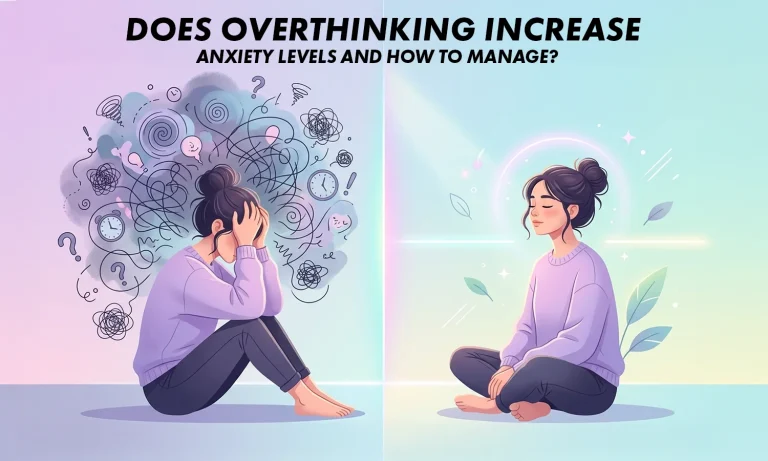
Anxiety and overthinking form a loop where worry fuels repetitive thought, and repetitive thought fuels more worry. Fear of uncertainty and ongoing stress often sit behind this pattern, sometimes deepening into an overthinking disorder or low mood over time. Learning practical anxiety coping strategies, alongside simple grounding practices, helps interrupt the cycle and restore a steadier, calmer state of mind.

Understanding the Connection Between Anxiety and Overthinking

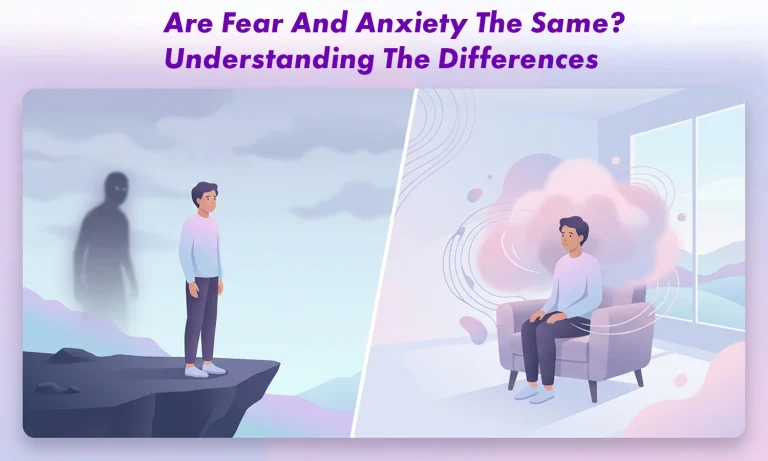
Anxiety and overthinking rarely show up alone. Anxiety creates a sense of unease about something uncertain, and the mind responds by trying to think its way to safety. This produces the familiar loop of replaying conversations, rehearsing worst-case scenarios, and searching for reassurance that never quite arrives.

Coach Geeta, an ontological coach and author of “The Game of Change,” describes this pattern as the mind mistaking motion for progress. The thoughts feel active and urgent, yet they rarely produce a decision or a solution, only more fatigue.

How Stress Feeds the Cycle

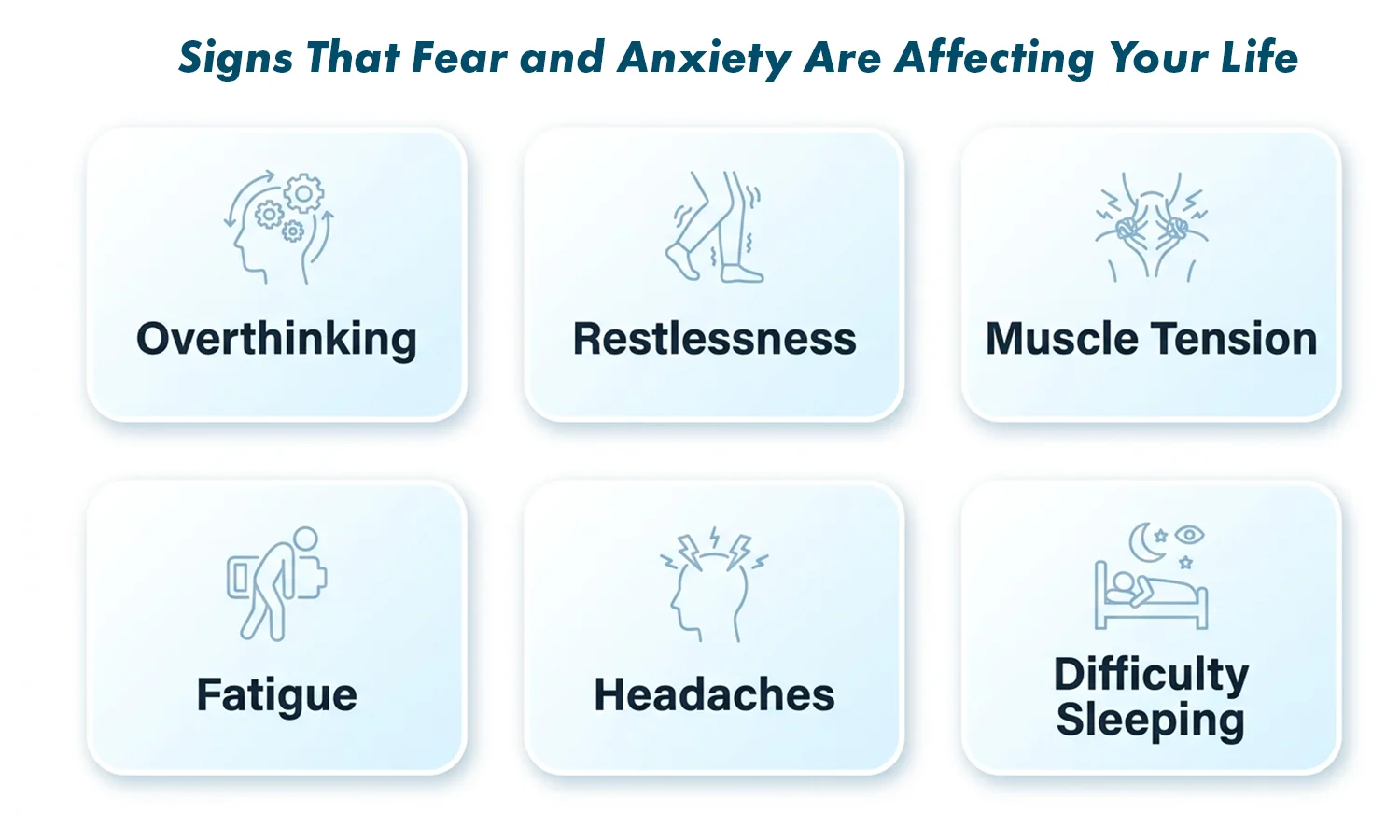
Stress and overthinking are closely linked, since ongoing pressure at work or at home keeps the nervous system in a heightened state. In this state, even small decisions, such as replying to a message or planning a weekend, can trigger disproportionate mental effort. The body stays tense, sleep becomes lighter, and the mind keeps circling unresolved concerns late into the night.

Fear of Uncertainty at the Centre

Fear of uncertainty plays a defining role in this pattern. When the future feels unclear, whether in a career decision or a family matter, the mind tries to eliminate every unknown before it can feel settled. Coach Geeta’s coaching sessions often help clients see that certainty is rarely available in advance and that comfort with not knowing is itself a skill that can be built over time.

When the Pattern Becomes an Overthinking Disorder

For some people, this cycle becomes persistent enough to resemble an overthinking disorder, marked by constant worry, difficulty relaxing, and physical tension that does not ease even during rest. While it may not always carry a formal clinical label, it is a recognized pattern closely tied to generalized anxiety, and it deserves the same level of care and attention.

How to Deal With Anxiety Alongside Overthinking

Anxiety and Overthinking

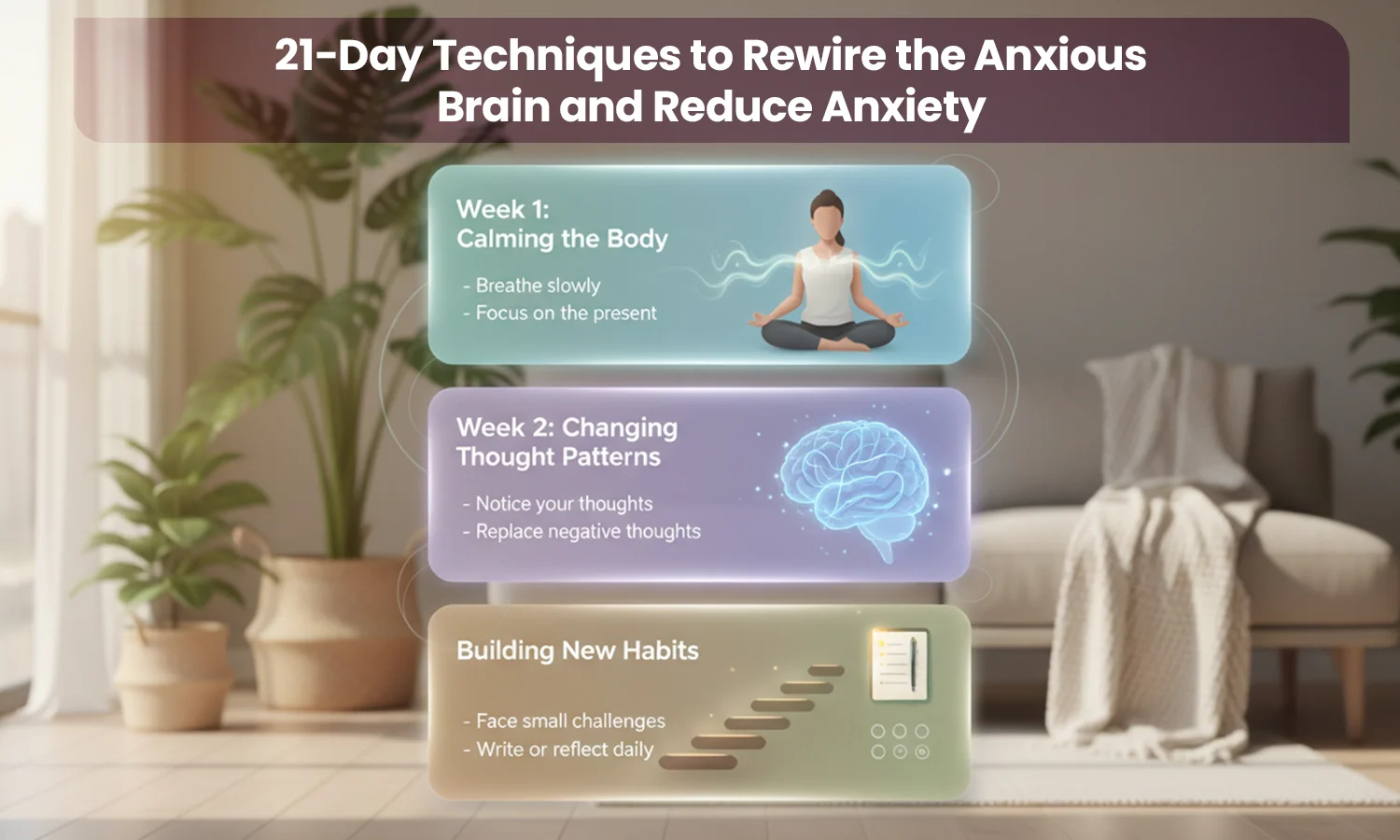
How to deal with anxiety effectively usually means addressing both the emotional wave and the mental loop it creates. A few practices that support both include the following.

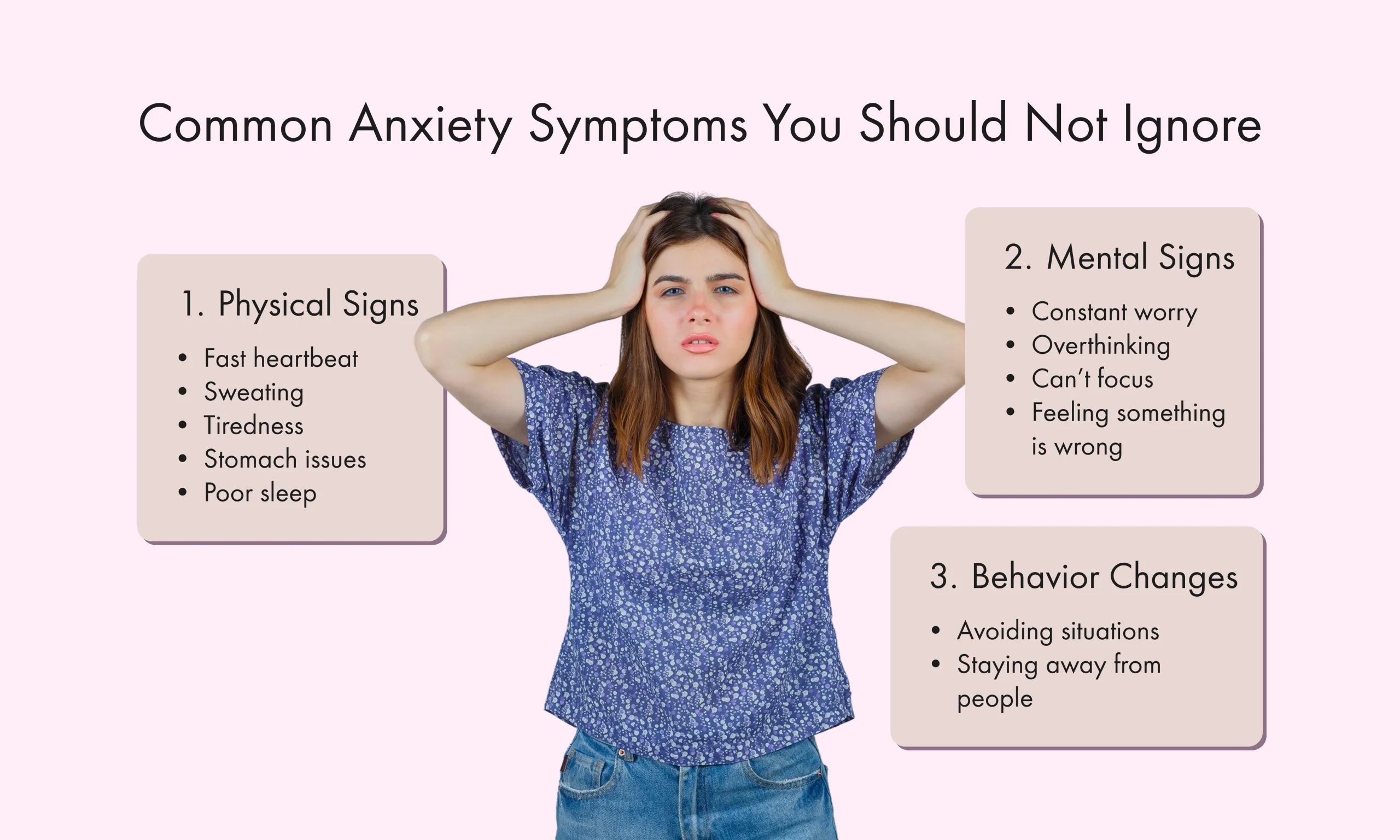
  • Naming the anxious feeling directly, rather than only analyzing the thought behind it
  • Practicing slow, extended exhales to calm the nervous system
  • Limiting reassurance-seeking, since it often reinforces the cycle instead of resolving it
  • Scheduling a short, dedicated “worry window” each day to contain the spiral

These simple anxiety coping strategies work because they give the nervous system permission to settle instead of staying on alert.

How to Calm Your Mind From Overthinking

Calming your mind from overthinking often starts with the body rather than the mind. A short walk, a warm drink, or a few minutes of quiet breathing can lower the physical intensity that keeps thoughts circling. Once the body settles, the mind tends to follow.

Coach Geeta encourages clients to build a small evening ritual around this idea, helping them stop overthinking and relax before bed instead of carrying the day’s worries into their sleep.

Building Long-Term Calm

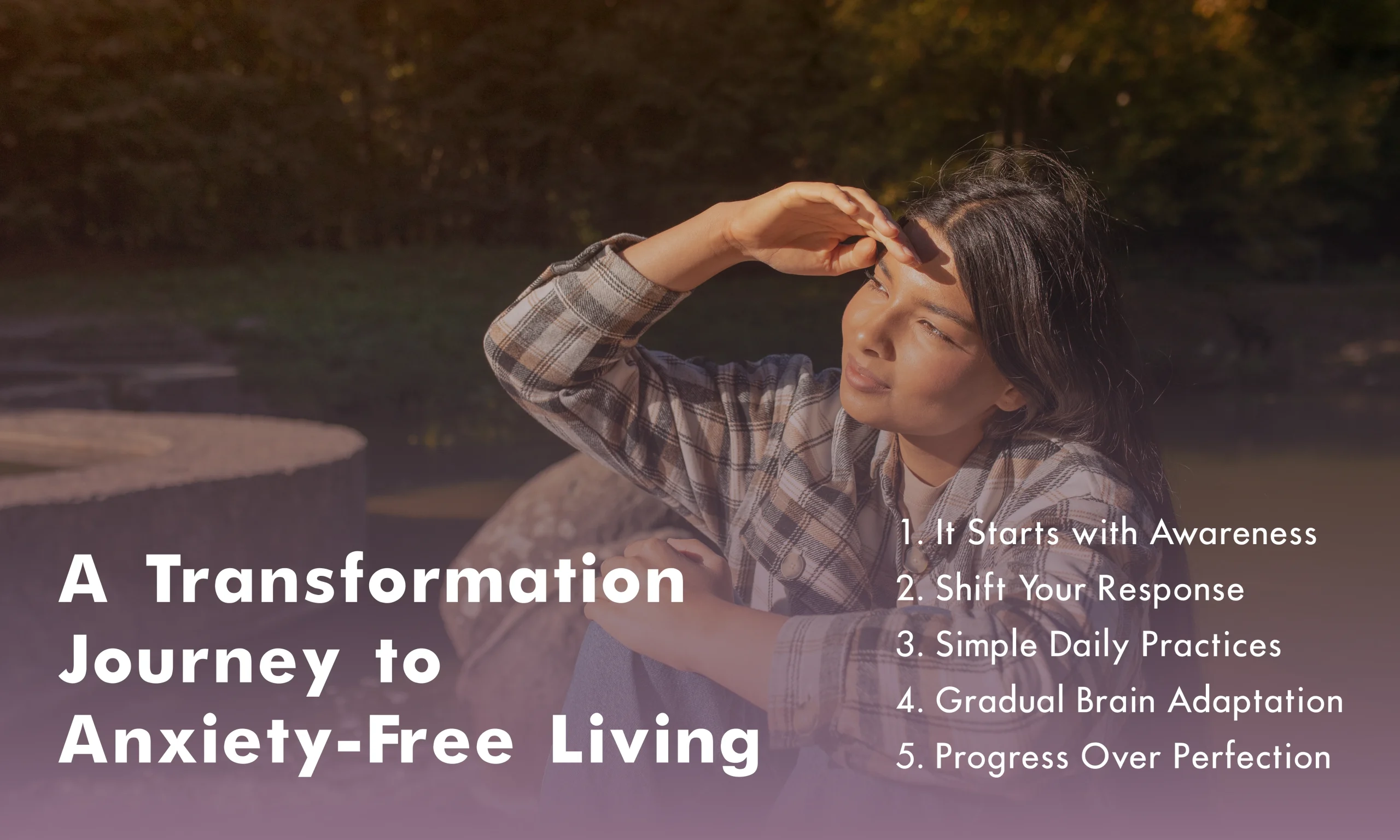
Anxiety and overthinking rarely disappear overnight, but with consistent, small practices and, where needed, guided coaching, the loop can loosen its grip. Coach Geeta’s book, “The Game of Change,” offers a structured path for readers who want to understand their own anxious patterns and build lasting calm rather than temporary relief.

Key Takeaways

  • Anxiety and overthinking reinforce each other, so addressing only one rarely brings lasting relief.
  • Stress and overthinking intensify when the nervous system stays alert well after the actual pressure has passed.
  • Fear of uncertainty is often the hidden driver behind constant analysis and worry.
  • Simple anxiety coping strategies, like scheduled worry windows and slow breathing, can interrupt the cycle quickly.
  • Evening rituals that help you stop overthinking and relax protect both sleep quality and next-day clarity.

Calming the Mind and Tackling Anxiety

If anxious thoughts keep circling long after the moment that triggered them has passed, you do not need to manage them alone. Coach Geeta’s coaching sessions and transformational programs are designed to help you break this exact loop with steady, practical guidance. Pick up “The Game of Change” or book a session with Coach Geeta to start building a calmer, more settled mind.

FAQs

Why do anxiety and overthinking always seem to happen together?

Anxious feelings prompt the mind to search for certainty through repeated analysis, and that analysis keeps the anxious feelings active, creating a loop where anxiety and overthinking sustain each other.

What is one quick way to deal with anxiety in the moment?

Slow, extended exhales signal safety to the nervous system almost immediately, making them one of the simplest ways to deal with anxiety without any special equipment.

Can an overthinking disorder be managed without medication?

Many people manage an overthinking disorder through consistent coaching, grounding practices, and lifestyle changes, though a doctor should always be consulted for a proper evaluation if symptoms are severe.

How long does it take to feel calmer using these strategies?

Some anxiety coping strategies, such as slow breathing, bring relief within minutes, while deeper patterns often need several weeks of consistent practice or coaching to shift meaningfully.

Filed Under: Uncategorized

What Causes Overthinking? Understanding the Roots of a Racing Mind

August 19, 2026 By Geeta

what causes overthinking

What Causes Overthinking?

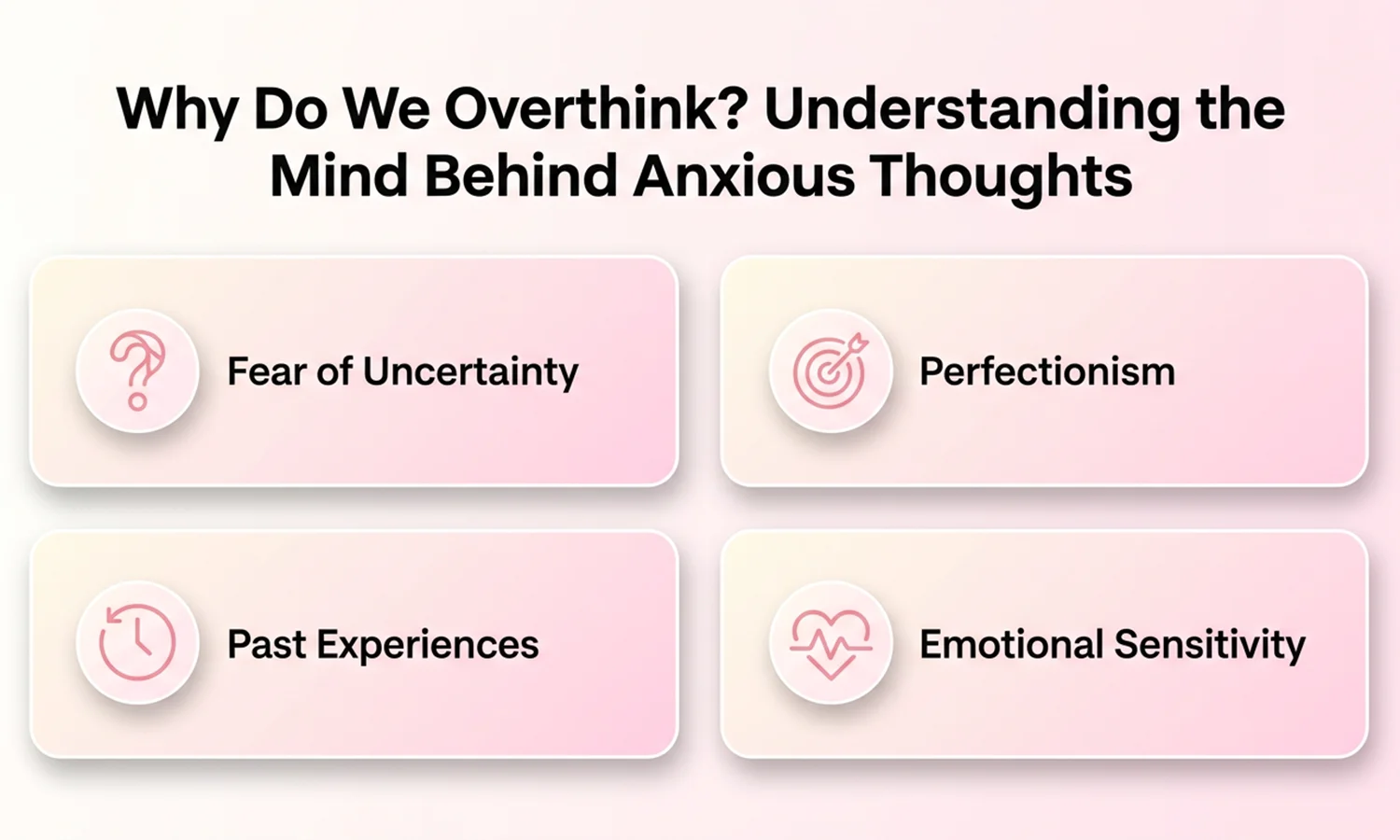
What causes overthinking? It is rarely one single event. It usually forms from a mix of fear of uncertainty, perfectionism, past emotional wounds, and an untrained nervous system that treats ordinary decisions like threats. Left unaddressed, this pattern can deepen into an overthinking disorder connected with anxiety and low mood. Understanding the trigger is the first real step toward a calmer, steadier mind.

Why the Mind Keeps Replaying the Same Thoughts

Why overthinking happens is a question Coach Geeta hears often in her coaching practice. Most people assume their mind is simply “too active,” but the pattern usually has a clear root. The brain is wired to scan for danger, and when real threats are rare, it turns ordinary uncertainty into something to solve endlessly.

This is where stress and overthinking intersect. A demanding job, family responsibilities, and financial pressure can keep the nervous system on alert long after the actual stressful event has passed. The mind, still in scanning mode, latches onto smaller worries and inflates them into ongoing loops.

Fear of Uncertainty as the Core Driver

Fear of uncertainty sits at the centre of most overthinking patterns. When an outcome is unknown, the mind tries to predict every possibility so it can feel prepared. This feels productive in the moment, yet it rarely leads to a decision. Instead, it produces exhaustion and a sense of being stuck between options that never resolve.

Coach Geeta often explains this using a simple frame from her ontological coaching background: the mind is not solving the problem; it is trying to eliminate the discomfort of not knowing. Recognizing this distinction is often the first shift her clients experience.

Perfectionism and the Fear of Getting It Wrong

Perfectionism and overthinking are closely linked, especially among high-achieving professionals and homemakers who hold themselves to exacting standards. When every decision feels like a referendum on someone’s worth, the mind naturally slows down, checking and rechecking before allowing any action.

This pattern often begins early, shaped by environments where mistakes were met with harsh criticism rather than gentle correction. Over time, the person learns to over-prepare and over-analyze as a form of protection, even when the situation does not call for it.

When Overthinking Becomes a Pattern, Not a Moment

For some, this way of thinking becomes so frequent that it starts to resemble an overthinking disorder, showing up as constant worry, difficulty concentrating, and a persistent sense of dread about ordinary tasks. It is not always classified as a distinct clinical diagnosis, but it is widely recognized as a symptom cluster tied to generalized anxiety.

Anxiety and overthinking feed each other in a loop. Anxious feelings prompt the mind to search for reassurance through repeated analysis, and that repeated analysis keeps the anxious feelings active. Breaking this cycle usually requires addressing both the thought pattern and the underlying emotional state.

The Link Between Overthinking and Low Mood

In more persistent cases, overthinking and depression can appear side by side. Rumination, the technical term for repetitive negative thinking, is a well-documented feature of low mood, since it keeps attention fixed on past regrets or perceived failures rather than present possibilities. Coach Geeta’s coaching approach gently interrupts this fixation by guiding clients toward small, present-focused actions rather than continued analysis.

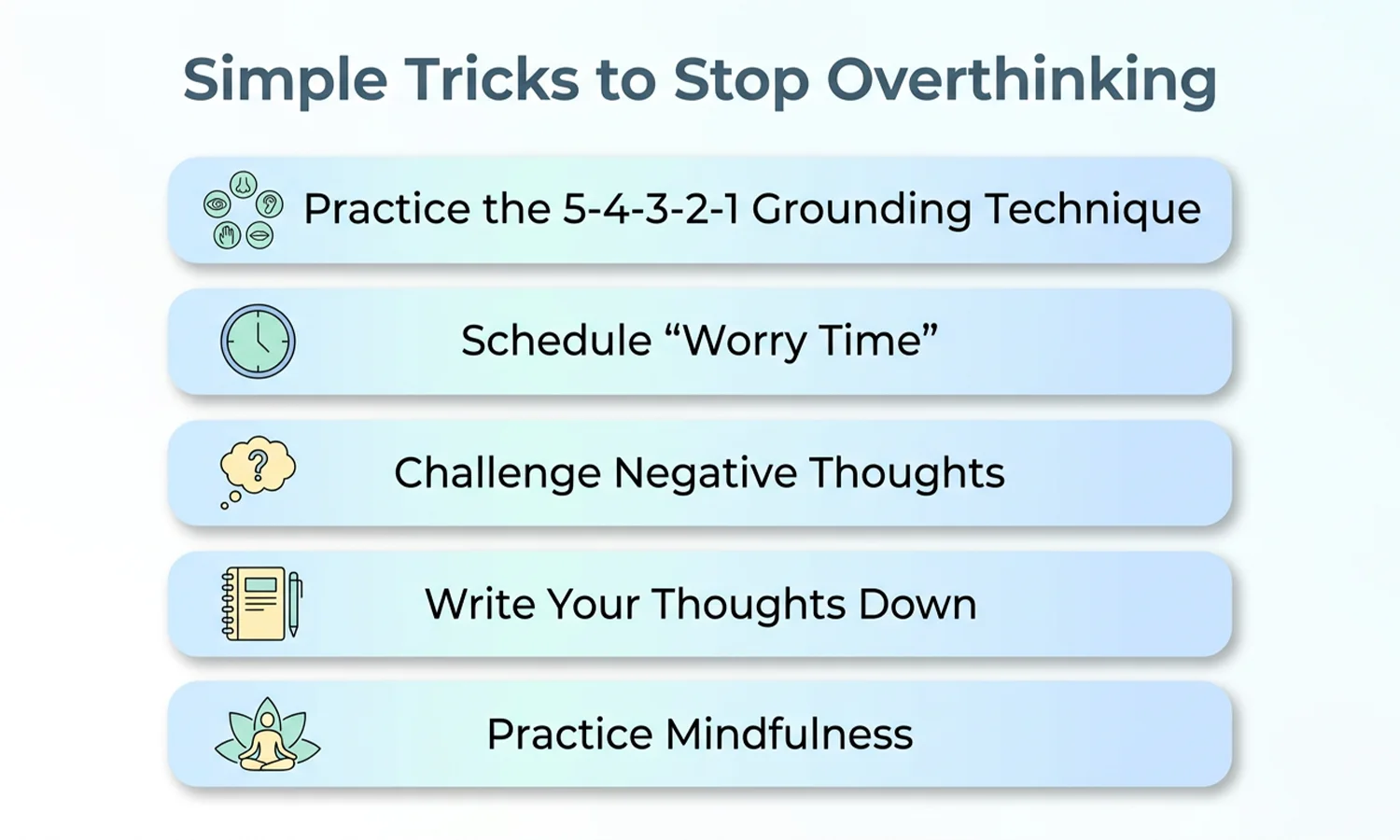
5 tips to stop overthinking

Moving From Cause to Change

Understanding what causes overthinking does not remove the pattern by itself, but it does remove the confusion around it. Once a person can name the trigger, whether it is fear of uncertainty, perfectionism, or unresolved stress, they can begin responding differently instead of getting pulled back into the same loop.

Coach Geeta’s book, “The Game of Change,” walks readers through this process step by step, connecting the root cause of a thought pattern with practical tools for building a steadier, more grounded mind.

Key Takeaways

  • What causes overthinking? It usually traces back to fear of uncertainty rather than the situation itself.
  • Perfectionism and overthinking often develop together, especially in high-pressure work and home environments.
  • Stress and overthinking reinforce each other when the nervous system stays alert long after the stressful moment has passed.
  • Anxiety and overthinking create a loop that needs both emotional and mental attention to break.
  • Recognizing the true trigger is the first practical step toward calmer, more decisive thinking.

Take the Next Step

If you keep asking yourself why your mind will not settle, understanding the cause is only the beginning. Coach Geeta’s one-on-one coaching sessions help you trace your own triggers and build a calmer, more confident way of responding to daily pressure. Explore “The Game of Change” or reach out to Coach Geeta directly to start working through your patterns with personal guidance.

FAQs

What is the single biggest cause of overthinking?

For most people, fear of uncertainty is the biggest driver, since the mind tries to predict every outcome to avoid feeling unprepared. This search for certainty rarely succeeds, which is why the thought loop continues.

Can childhood experiences cause overthinking as an adult?

Yes, environments where mistakes were harshly judged often teach the mind to over-analyze as a form of protection. This connects closely with perfectionism and overthinking patterns seen later in life.

Is overthinking always linked to anxiety?

Not always, but anxiety and overthinking are frequently connected, since anxious feelings often trigger repetitive thought loops as a way of seeking reassurance.

Can overthinking lead to depression?

Persistent rumination is a recognized feature of low mood, so overthinking and depression can develop together if the pattern goes unaddressed for a long time.

Filed Under: Uncategorized Tagged With: anxiety, fear, overthinking, racing mind

  • Page 1
  • Page 2
  • Page 3
  • Interim pages omitted …
  • Page 27
  • Go to Next Page »
  • Facebook
  • Twitter
  • Instagram
  • LinkedIn
  • YouTube
  • Connect

Copyright © 2026 · Infinity Pro On Genesis Framework · WordPress · Log in